Purifying Water With a Gravity Bag Filter System
You hang the dirty water bag above your clean container, and gravity pulls the water through the hose into the filter. It uses a 0.1–0.2 micron hollow fiber or ceramic membrane to trap bacteria and protozoa. Most systems deliver 1–2 liters per minute, filtering up to 4 liters hourly with no pumping. Pre-filter silty water to avoid clogs. Clean with backflushing after use and store dry to maintain flow. Lightweight and low effort, it’s efficient for base camps-but how it compares to other methods comes down to your needs.
Notable Insights
- Gravity bag filters purify water by using elevation to passively move dirty water through a filter into a clean container.
- They typically use hollow fiber or ceramic membranes with 0.1–0.2 micron pores to remove bacteria and protozoa.
- Pre-filter cloudy water to prevent clogging and maintain optimal flow rates of 1–2 liters per minute.
- No pumping or power is needed-just hang the dirty bag above the clean reservoir to start filtration.
- Regular backflushing and proper drying after use extend filter life and prevent microbial buildup.
How a Gravity Bag Filter Works
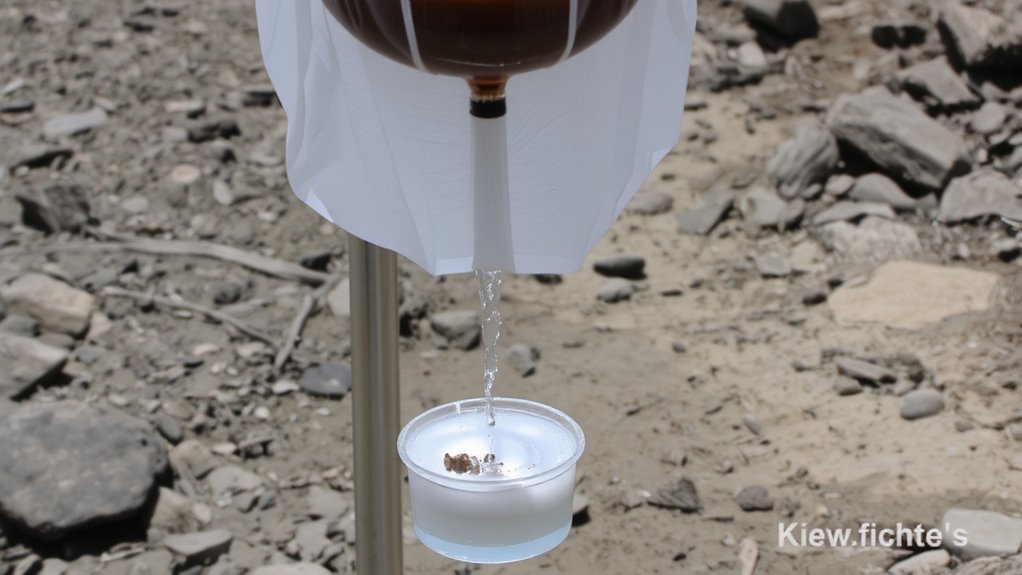
When water’s unsafe to drink on the trail, a gravity bag filter gives you a simple way to treat large volumes without pumping. You fill the dirty water bag, hang it from a limb, and let gravity do the work. The water travels through the hose to the filter, where the internal filtration mechanism traps bacteria, protozoa, and sediment. Clean water drips into the clean reservoir below. Most systems deliver a flow rate between 1 and 2 liters per minute, though clogging from silty water can slow it. You don’t have to manually pump, so it’s easier on your hands and faster for groups. The trade-off is weight and setup space-larger bags and hanging points are needed. Flow rate drops over time as the filter element loads, so pre-filtering cloudy water helps. It’s reliable when maintained, with few moving parts to fail. The filtration mechanism is effective, but performance depends on water clarity and proper hose positioning.
Which Filter Type and Pore Size Is Safest?
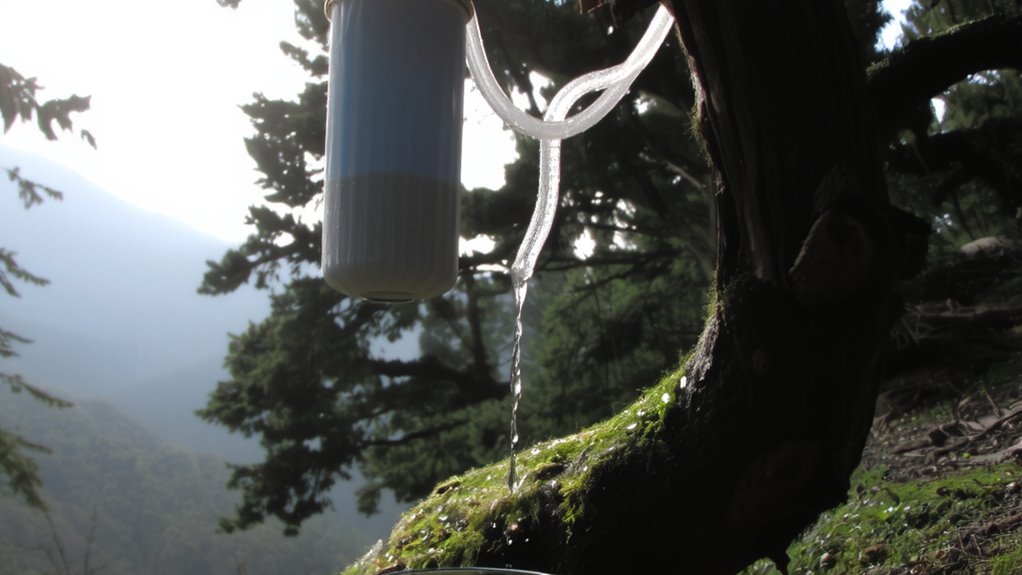
You’re probably wondering what actually makes one gravity filter safer than another, especially since they all claim to clean water. The answer comes down to filter materials and pore efficiency. Filters using ceramic or hollow fiber membranes with a pore size of 0.1 to 0.2 microns effectively block bacteria and protozoa. Anything larger risks letting pathogens through. Hollow fiber filters are lightweight and fast, but can clog if water is silty. Ceramic lasts longer and can be cleaned, though it’s heavier. Pore efficiency isn’t just about size-it’s consistency. Poorly manufactured filters might have uneven pores, creating leaks. Look for filters independently tested to meet NSF standards. Avoid those rated above 1 micron-they won’t stop harmful microbes. Your safety depends on reliable materials and tight, uniform pores. Choose accordingly.
How to Use a Gravity Water Filter in 5 Steps
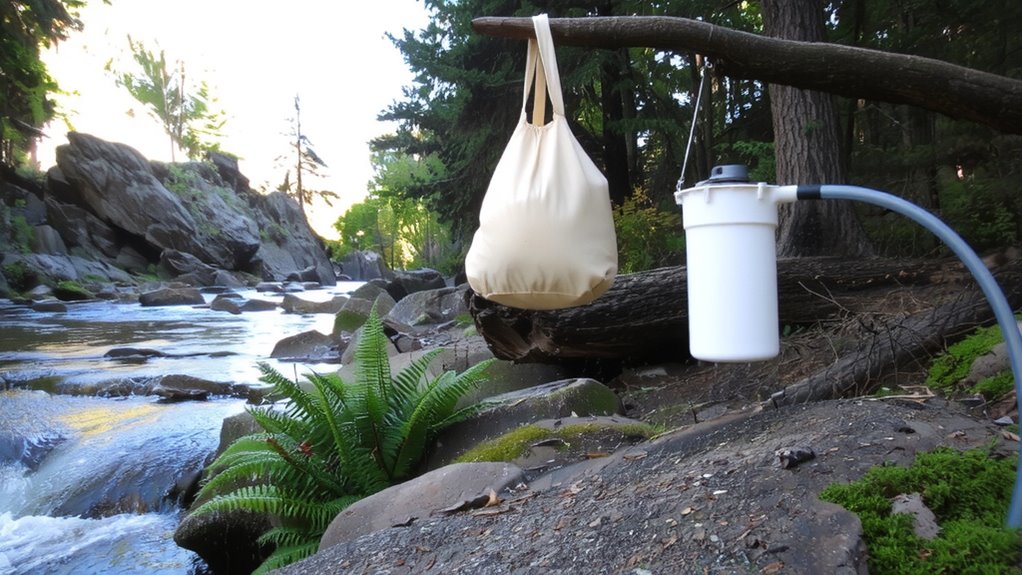
Though setup can vary slightly by model, most gravity filters work the same way once you follow the core steps. Start by filling your dirty reservoir with untreated water-bag placement matters: hang it high enough to allow smooth water flow into the clean container below. Open the outlet valve on the filter, then let gravity pull water through the membrane. Once filtration finishes, close the valve to preserve the filter’s life.
| Step | Action |
|---|---|
| 1 | Hang dirty bag above clean container |
| 2 | Open valve to start water flow |
| 3 | Monitor bag placement for consistent flow |
Proper bag placement guarantees consistent water flow. Filters handle silt well, but clogging happens if intake is submerged in debris. Pre-strain murky water if needed.
Why Gravity Bag Filters Beat Other Systems
Gravity bag filters outperform other systems because they don’t rely on manual pumping, batteries, or complex parts to deliver clean water. You just fill the upper bag, hang it, and let gravity do the work-no effort required during filtration. That’s a clear ease of use advantage over pump models, which demand repetitive motion and maintenance. Compared to UV pens or chemical tablets, gravity bags provide larger volumes of safe water faster, without waiting or electricity. Their design also gives you a portability advantage: lightweight, compact, and simple to pack, they’re ideal for base camps or group use where bulkier systems fail. There’s no setup hassle-attach the bag, hang it from a tree or branch, and walk away. While they aren’t instant, they filter up to 4 liters per hour depending on sediment load. You trade speed for minimal effort, which most users find a fair trade-off in the backcountry.
How to Clean and Extend Your Filter’s Life
A clean filter lasts longer and performs better, so flushing it after each use is key to maintaining flow rate and efficiency. Set up a simple backflush routine using clean water and the included syringe or pump-this removes trapped particles and restores performance. Do it after every trip, especially if filtering silty or cloudy water. Avoid letting the filter dry with debris inside, as that can clog the membrane. When storing, make certain the unit is completely dry to prevent mold and bacterial growth. Follow the manufacturer’s storage tips: keep it disassembled, in a cool, dry place, away from direct sunlight. Reassemble only before next use. Most filters last 1,000 to 2,000 liters, but neglect cuts that short. A consistent backflush routine and proper storage tips extend life and keep your system reliable in the field.
On a final note
You’ll get clean water fast with a gravity bag filter, as long as you pick one with a 0.1–0.3 micron absolute pore size. It requires no pumping, works in groups, and handles sediment well. But it’s slow if clogged and needs regular cleaning. Compared to straws or UV, it’s more reliable for volume. Just don’t expect instant flow-setup and wait time matter. Your best bet: a ceramic or hollow fiber filter you can backflush.