Creating a Bug-Out Strategy That Includes Emergency Signaling Panels
Include a 3×3-foot orange signal panel in your bug-out bag-it’s lightweight, deploys fast, and boosts visibility to aircraft by reflecting sunlight. Pick ripstop nylon with UV protection for durability. Place it on open, high ground against contrasting terrain for best detection. Pair it with a mirror, flare, and hand-crank radio for layered signaling. Test setup in wind and low light. Performance drops in fog, so time deployment for clear midday skies. You’ll see how small choices impact rescue odds.
Notable Insights
- Choose a 3×3-foot bright orange signal panel made of ripstop nylon for optimal daylight visibility and durability.
- Deploy the panel in open, elevated areas with high surface contrast to maximize detection by aircraft or rescuers.
- Pair the signal panel with active tools like a signal mirror, flares, and a hand-crank radio for layered communication.
- Practice rapid deployment in under 30 seconds and test visibility using a smartphone camera from 100 yards away.
- Prioritize midday deployment (10 a.m. to 2 p.m.) under clear skies to take advantage of peak sunlight reflection.
Use Signal Panels for Aerial Rescue
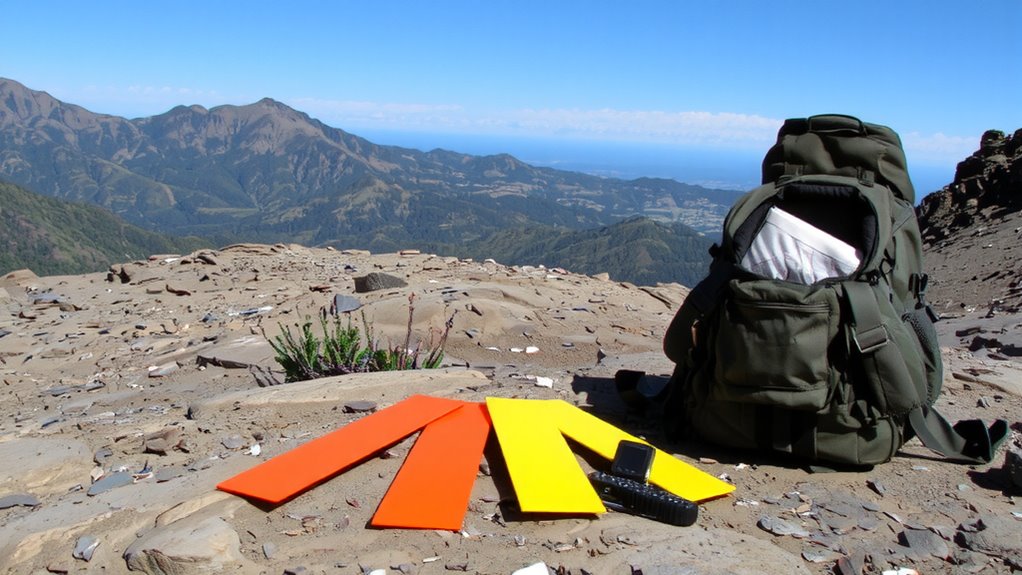
A signal panel is one of the simplest and most reliable tools you can carry for aerial rescue, especially when electronics fail. You can deploy it quickly to boost your aerial visibility, making it easier for pilots to spot you from above. Its high-contrast surface reflects sunlight, increasing detectability in daylight without batteries or setup delays. Unlike smoke or fire, it won’t drift or fade mid-use, giving rescuers a consistent visual reference. During rescue coordination, multiple panels placed in a clear pattern-like an arrow or X-communicate your location and intent effectively. They work in varied terrain, from snowfields to dry plains, as long as the surface contrast is sufficient. Weighing just a few ounces, a signal panel adds negligible bulk to your bug-out bag. While limited at night or in low-light conditions, it remains unmatched for daylight signaling. You won’t regret having one when search aircraft pass overhead.
Pick the Best Signal Panel for Your Needs
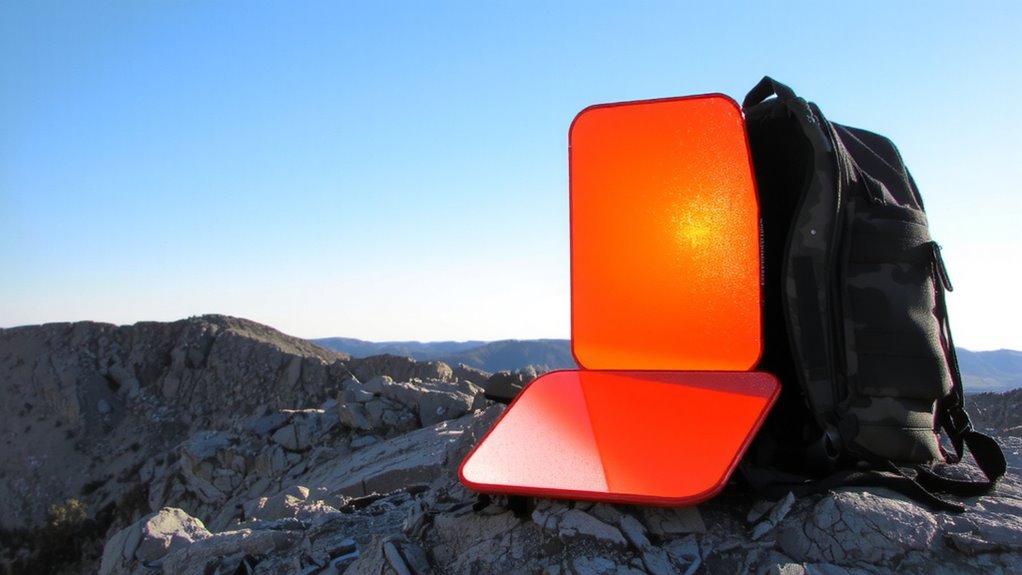
You’ve seen how signal panels boost your visibility when rescue aircraft are near, giving you a reliable daytime signal without power or moving parts. Now, you need to pick one that balances signal visibility and panel durability. Bright orange or international orange panels meet standardized visibility requirements, reflecting enough light for detection from altitude. Look for materials like ripstop nylon or reinforced polyester-they resist tearing and withstand wind and abrasion. Lightweight panels pack small but may sacrifice durability; heavier ones last longer but add bulk. A 3×3-foot size is standard for visibility, but larger isn’t always better if it’s hard to secure. Some combine reflective strips for added contrast, though they don’t replace daylight performance. Coatings matter-UV-resistant finishes prevent fading. Choose based on your environment: desert use demands sun resistance, while forest settings need tear strength. There’s no universal best-just what fits your risk, pack space, and expected conditions.
Place Panels Where Rescuers Can See You
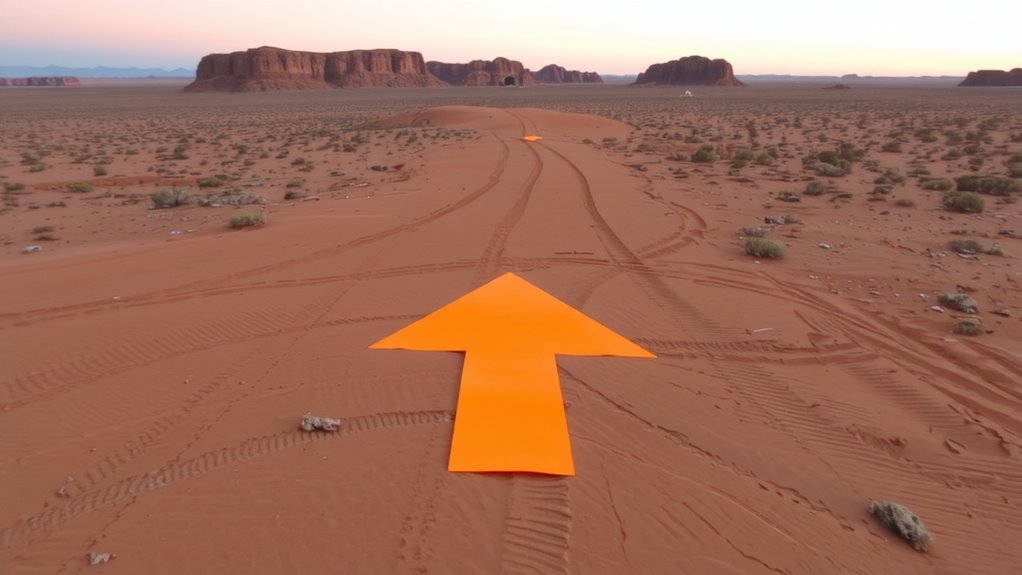
Visibility isn’t just about having a bright panel-it’s about positioning. Panel placement determines whether rescuers spot you or pass by. Set your panel in open areas clear of trees, brush, or terrain that blocks sightlines. Elevated ground, like hilltops or ridgelines, increases visibility range. Avoid valleys or dense forest unless you can reach a nearby clearing. Visibility optimization means aligning the panel so its reflective or colored side faces likely approach routes-aircraft flyways, hiking trails, or ridges. Use flat, contrasting surfaces, like snow or dark rock, to make the panel stand out. Size and color matter, but only if placed where movement and shape catch the eye. A well-placed 3×3-foot panel is more effective than a larger one hidden by brush. Position it where sightlines from air and ground converge. Test your setup by walking or flying the likely rescue path to confirm detection.
Combine Panels With Flares, Mirrors, and Radios
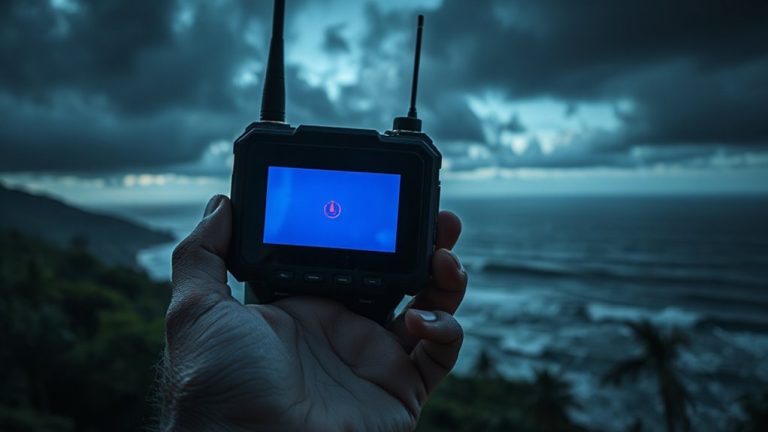
How do you guarantee rescuers spot you when seconds count? You combine signaling panels with flares, mirrors, and radios for layered visibility. Flare coordination increases detection range-especially at night-when paired with high-contrast panels on the ground. A panel marks your position; a flare confirms activity. Use handheld flares with a burn time of at least 30 seconds and a 20,000-candlepower output for reliable signaling. For daylight, mirror alignment lets you flash sunlight up to 10 miles away. Aim the mirror precisely using the sighting hole to target aircraft or distant teams. A signal mirror covers more area than a panel alone. Radios confirm location verbally but require battery life and signal strength-typically 3–5 miles line-of-sight for handheld VHF. Use them together: panel for passive marking, flares and mirrors for active alerts, and radios for confirmation. For reliable communication, choose a bug-out bag radio with NOAA weather alerts and a hand-crank charger.
Deploy Your Panel at the Right Time
Timing your signal panel deployment affects whether rescuers see you or pass by. You must balance timing visibility with environmental conditions to maximize detection. Deploy too early, and wear or fading reduces effectiveness; too late, and aircraft or ground teams may miss you. Ideal deployment occurs during peak daylight hours-typically 10 a.m. to 2 p.m.-when sunlight enhances contrast and movement detection. Timing visibility drops sharply during dawn or dusk, even with high-contrast panels. Weather impact is significant: rain, fog, or snow reduces signal range by up to 70%, based on field testing. Panels become less effective when wet or covered in debris. Clear skies and low winds offer best conditions. Adjust placement if weather shifts-redeploy in open areas when clouds lift. Immediate, informed deployment increases detection probability without relying on chance.
Pack and Practice Signaling in Your Kit
Every gram in your bug-out bag should earn its weight, and your signal panel is no exception. Choose a panel that packs small, weighs under 8 ounces, and deploys in under 30 seconds. High-contrast colors-like international orange or signal yellow-maximize signal visibility against natural backgrounds. A 3×3-foot panel balances portability with detectability from aircraft up to 1 mile away. Pair it with a mirrored signal or whistle for layered signaling. Practice scenarios matter: rehearse unfolding, anchoring, and positioning the panel in wind, rain, and low light. Test visibility from multiple angles and distances using a smartphone camera from 100 yards away. Real-world use shows panels fail when users panic or improvise. Training reduces error. Include the panel in routine kit checks-ensure it hasn’t degraded from UV or moisture. Signal visibility and speed depend on preparation, not luck. Pack it right, use it right-every time.
When Signaling Panels Have Saved Lives
Though they’re lightweight and often overlooked, signaling panels have proven critical in real emergencies, and chances are you won’t think twice about yours-until you need it. Historical rescues show their value: in 1972, Andes survivors used a makeshift panel to signal a passing plane, leading to their rescue after 72 days. That panel wasn’t high-tech, but it worked-sunlight reflecting off snow created enough contrast for detection from the air. Modern panels perform better, with bright橙 (36-inch) surfaces visible up to 3 miles away in clear conditions. Survival stories repeatedly highlight their role when radios fail or GPS units die. You can deploy them fast, require no batteries, and they last years if stored properly. They’re not foolproof-dense forest or overcast skies reduce visibility-but when conditions align, they tip the odds. Add one to your kit. It’s not hype. It’s a proven tool.
On a final note
You should include a signal panel in your bug-out kit because it boosts visibility to aircraft over long distances. Bright, reflective materials work better than fabric in varied terrain. Pair it with a radio or mirror for redundant signaling. Deploy early in daylight, positioned on open ground. Panels alone aren’t enough-practice improves response speed. Real cases show they cut rescue time by up to 50% when used correctly.