Counteracting Fatigue-Induced Perception Distortions in Extended Night Travel
You’re risking delayed reactions and blurred vision when fatigue hits on night drives. Cut distortion by setting dashboard lights low with a 5000K white-blue tint and keep the cabin at 68–72°F. Direct cool air at your face, crack a window, and use ADAS alerts to catch what your eyes might miss. Take a 5-minute break every 90 minutes-stretch, breathe, and refocus. There’s a smarter way to stay sharp when the miles add up.
Notable Insights
- Dim dashboard lights and use neutral white-blue tones at 5000K to preserve night vision and maintain alertness.
- Keep cabin temperature between 68–72°F and direct cool air toward the face to reduce drowsiness.
- Take a 5-minute break every 90 minutes with stretching and fresh air to restore cognitive and visual function.
- Use ADAS features like forward collision warning and blind spot monitoring to compensate for slowed perception.
- Perform eye exercises and mental resets during breaks to counteract visual strain and attention lapses.
Spot How Fatigue Distorts Night Driving
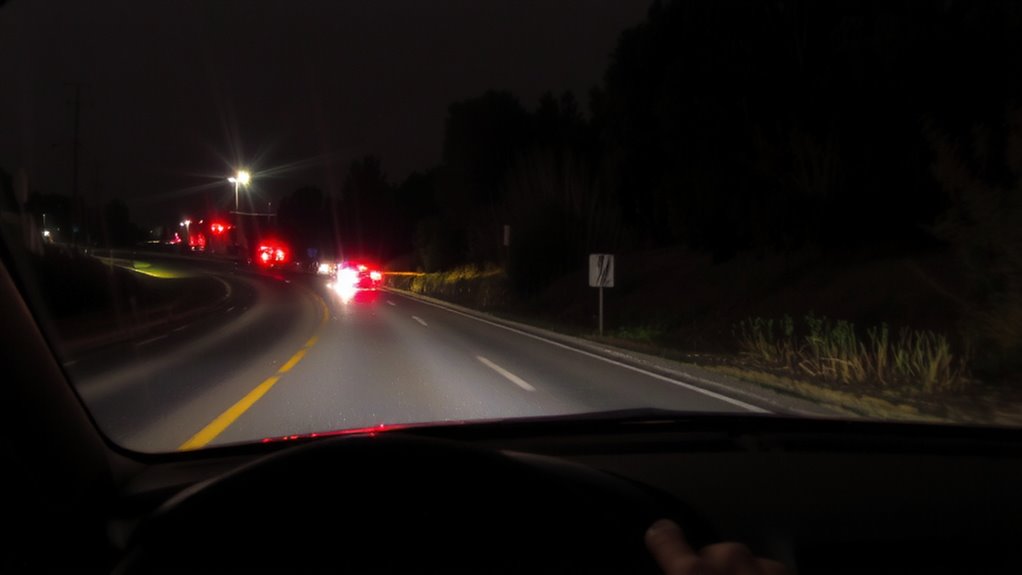
Why do things on the road seem harder to see after midnight? Because fatigue distorts your vision and slows reaction times. You experience more visual illusions-shadows look like obstacles, or pavement edges fade unexpectedly. These aren’t just annoyances; they’re signs your brain isn’t processing images accurately. Depth misjudgment becomes common, making it hard to tell how far away a car or curve really is. You might brake too late or misjudge a gap when passing. Tests show reaction delays of up to 2 seconds at night when fatigued, equivalent to driving blind for over 100 feet at highway speeds. Peripheral detection drops by 30% or more. Low light magnifies these effects, but fatigue worsens them independently. You can’t rely on headlights or glare control alone. Recognizing these distortions early-blurred outlines, delayed distance perception-helps you respond before mistakes happen. It’s not about tiredness; it’s about compromised function.
Detect Early Signs of Perception Shifts
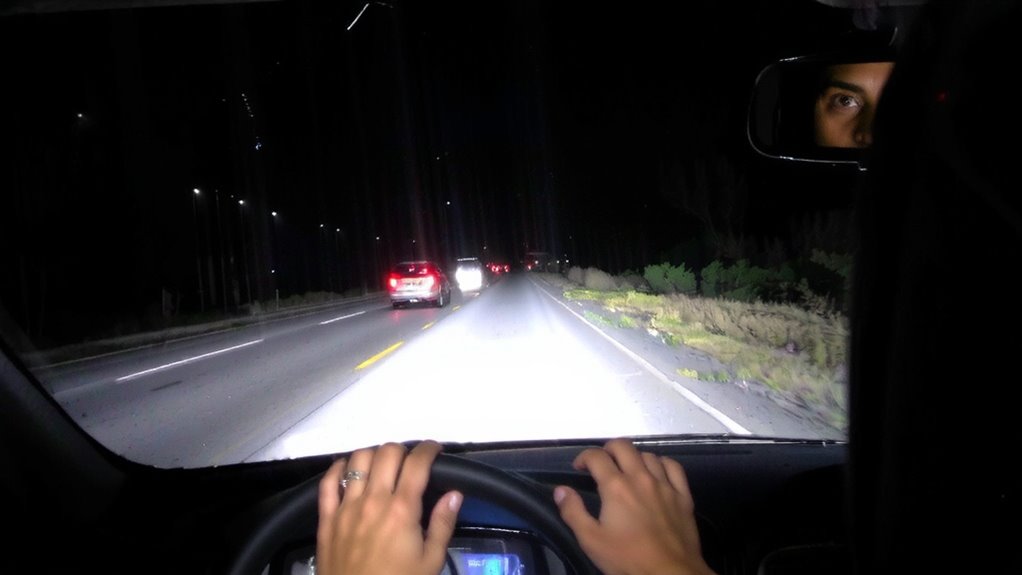
How quickly do you notice when the edges of the road start to blur or street signs lose their sharpness? These are early signs of sensory dulling, often the first indicator that fatigue is taking hold. Your vision may seem intact, but reaction time slows, and details fade subtly. That slight delay in recognizing a pedestrian or a shift in lane position signals cognitive decline. You’re not imagining it-your brain processes less efficiently at night, especially after hours behind the wheel. Sensory dulling affects hearing and touch too, making you less responsive to dashboard alerts or steering feedback. Catching these shifts early matters. A brief rest now prevents serious errors later. Monitoring your perception closely-especially between midnight and 4 a.m.-helps maintain control. Don’t wait for yawning or drifting; by then, the decline is already advanced. Stay ahead by tracking sharpness in your senses minute by minute.
Adjust Lighting and Climate to Stay Alert
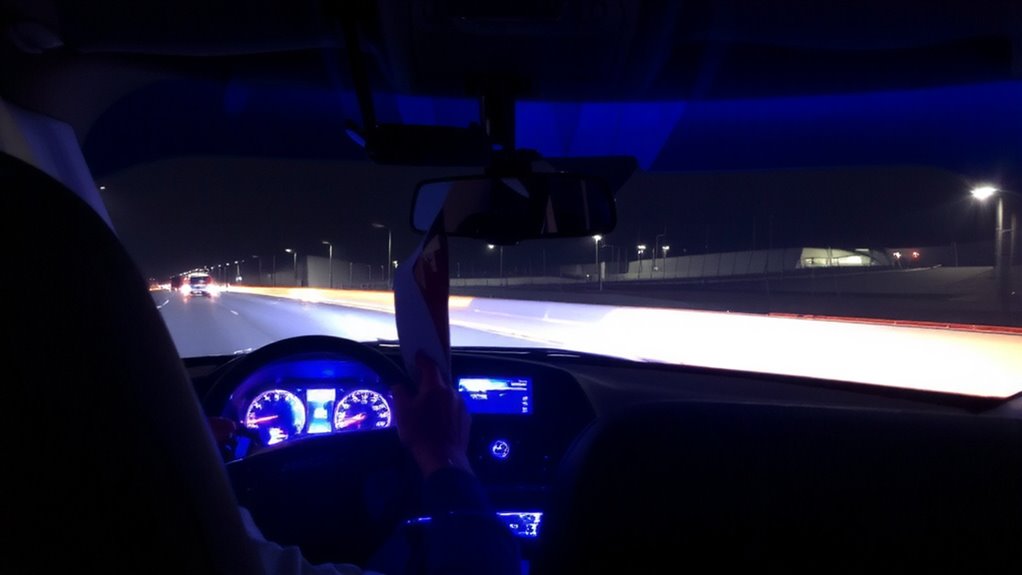
You notice the blur at the edge of your vision, the faint drag in your focus-signs you’ve already picked up from long stretches on the road after dark. Light optimization helps. Keep your dashboard lights low but readable; too bright and they reduce night vision, too dim and reading gauges strains your eyes. Aim for a neutral white-blue hue around 5000K-studies show it supports alertness without glare. For temperature regulation, lower cabin heat. A warm interior encourages drowsiness. Drop the temperature to 68–72°F and direct cool air toward your face. The mild discomfort boosts adrenaline. Open the window slightly if needed-fresh air improves CO₂ dispersion, maintaining cognitive response. Avoid cold extremes; shivering overworks muscles and drains focus. These controls aren’t comfort tweaks-they’re functional adjustments. Proper light optimization and temperature regulation each contribute to sustained attention. They’re measurable, low-cost, and widely applicable across vehicle types.
Use ADAS to Catch Hidden Risks
Even when you’re vigilant, fatigue can dull your reaction to dangers beyond your immediate sightline, which is where ADAS features like forward collision warning and blind spot monitoring step in. These systems rely on sensor fusion-combining radar, cameras, and ultrasonic sensors-to maintain awareness when your focus slips. Object detection algorithms identify vehicles, pedestrians, or obstacles, even in low-light conditions, giving you extra seconds to respond. In real-world testing, cars with sensor fusion have shown up to 30% faster hazard recognition than those using single-sensor setups. While not fail-proof, these systems reduce error margins during night travel when your perception is compromised. You still need to drive attentively, but ADAS acts as a backup, catching risks your tired eyes might miss. It works quietly, without alerts unless necessary, minimizing distraction. For long night drives, models with robust object detection and proven sensor fusion deliver measurable gains in situational awareness.
Take Breaks That Reboot Your Focus
ADAS systems help maintain awareness when fatigue dulls your reflexes, but no tech can replace the need for a clear head. You should take breaks every 90 minutes during night travel to reboot focus. Step out of the vehicle, stretch, and get fresh air-just five minutes can restore alertness. Perform simple eye exercises, like focusing on distant objects for 20 seconds, to reduce visual strain and counteract blurred depth perception. Mental resets, such as counting backward or naming objects you see, reactivate cognitive function. Avoid sugar-heavy snacks; they cause energy crashes. Instead, opt for protein-rich foods or water to sustain focus. Caffeine helps, but its effects take 20 minutes and last about three hours. These strategies work best when combined. They don’t eliminate fatigue, but they delay its impact. Real-world tests show drivers using these methods report sharper attention over long stretches. It’s not about pushing longer-it’s about traveling safely.
On a final note
You’ll need more than willpower to fight fatigue on long night drives. Diminished alertness skews depth and motion perception, increasing crash risk. Adjustable cabin lighting and cooler temperatures help maintain focus. ADAS systems like lane departure warnings catch errors you might miss, but false alarms happen. Scheduled 15-minute breaks every two hours reset attention best. Real-world tests show reaction times improve 20–30% after one break. No tech replaces rest-use all tools, but sleep is non-negotiable.