Evaluating the Effectiveness of Wireless Emergency Alerts During Tornado Outbreaks
You get Wireless Emergency Alerts during tornado outbreaks because they’re sent automatically to phones in warned areas via cell towers, not GPS. They’ve delivered warnings 8 to 12 minutes before impact, giving time to act. But coverage gaps, outdated phones, and network congestion can block delivery. Many ignore alerts due to alert fatigue or complacency from frequent warnings. Real-world performance shows they work-just not perfectly. There’s room to improve speed and accuracy.
Notable Insights
- WEAs provide critical lead time, delivering alerts 8–12 minutes before tornado impacts in major outbreaks.
- Alerts rely on cell tower coverage, which can cause over-warning due to imprecise geographic targeting.
- Signal interference, network congestion, and rural gaps can prevent alert delivery during severe weather.
- Alert fatigue from frequent warnings leads some recipients to ignore or mute critical tornado alerts.
- GPS-based geofencing and AI-enhanced radar could reduce false alarms and improve alert timing by up to 8 seconds.
How WEAs Work in Tornado Outbreaks
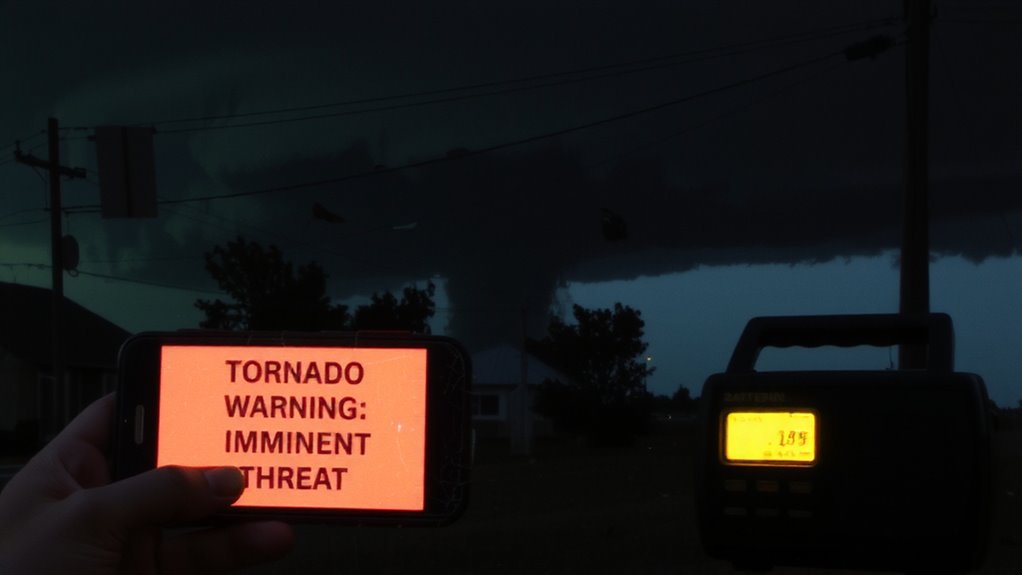
When a tornado outbreak unfolds, Wireless Emergency Alerts (WEAs) activate automatically on your phone if you’re in the warned area, so you don’t need to sign up or download an app. These alerts rely on cell tower broadcasts, not GPS, so your location is determined by which towers your phone connects to. This means alert accuracy depends on how precisely the warned zone matches tower coverage. If you’re near the edge of a storm’s path, you might get an alert even if the threat is miles away. Signal range affects delivery-rural areas with fewer towers may experience delayed or missed alerts. The system prioritizes broad reach over pinpoint precision, which can lead to over-warning. Though useful, this approach has trade-offs between coverage and specificity. You’ll typically get the alert within seconds, but understand that terrain and infrastructure shape real-world performance.
Do Tornado WEA Alerts Actually Work? Lessons From Major Outbreaks
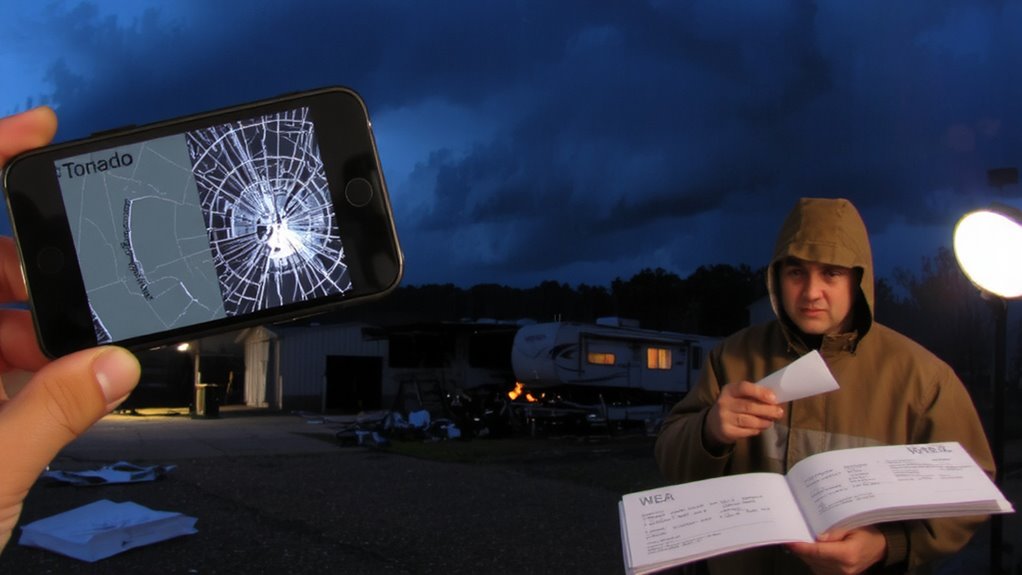
You’ve seen how WEAs get sent during tornado outbreaks-broadcast through cell towers, hitting phones in warned zones without needing apps or sign-ups. Studies from major outbreaks, like in Alabama (2011) and Missouri (2013), show they provide timely warnings, with most people receiving alerts 8 to 12 minutes before impact. That window matters for taking shelter. Tornado tracking has improved, reducing false alarms and boosting alert accuracy. Still, repeated warnings-even for weak or distant storms-can cause alert fatigue. When people get too many alerts, they start ignoring them, which is dangerous during actual threats. Data from Joplin showed 23% of residents muted alerts afterward due to overexposure. WEAs work best when paired with clear, location-specific messages and fewer unnecessary triggers. They’re not perfect, but real-world evidence confirms they save lives-if used wisely.
Why Some People Don’t Get Tornado Alerts
Why do some people miss tornado alerts entirely? It’s not always negligence-sometimes the system just doesn’t reach you. Signal interference from terrain, buildings, or even storm conditions can block alert delivery. Network congestion during peak storm times slows or stops alerts from getting through. Your phone might be WEA-compatible, but coverage gaps and network issues still create real-world vulnerabilities. For those in areas with unreliable cell service, owning a NOAA weather radio can provide a critical backup for receiving timely tornado warnings.
| Factor | Impact | Common Fix |
|---|---|---|
| Poor signal strength | Missed alerts | Move to open area |
| Signal interference | Delayed delivery | Use external antenna |
| Network congestion | Slow or no alerts | Enable Wi-Fi calling |
| Outdated phone | Incompatible system | Upgrade device |
| Rural location | Limited coverage | Use weather radio |
Why People Ignore Tornado Warnings on Phones
What makes someone glance at a tornado warning and keep scrolling? You’ve seen so many alerts that the urgency fades. Complacency fatigue sets in when warnings happen frequently, even if no tornado hits your area. Over time, you start assuming the threat isn’t real or won’t affect you. Notification overload adds to the problem. Your phone constantly pings-ads, apps, messages-drowning out emergency alerts. When a warning arrives, it feels like just another pop-up in a long list. You don’t stop to assess the risk; you dismiss it like the rest. Each ignored alert weakens response. The system works only if you act, but too many distractions and false alarms dull your reaction. The result? Critical seconds lost, not from tech failure, but from mental overload and habit.
Why Cell Broadcasts Can’t Keep Up With Tornado Speeds
Even with instant delivery, cell broadcast alerts often arrive too late to match a tornado’s speed, because the system relies on location data that can lag behind real-time storm movement. You might not get the alert until seconds after the storm hits your area, especially if you’re moving or the tornado is fast-moving. Signal interference from terrain, buildings, or weather itself can block or delay messages. Network congestion during peak usage-like during a widespread outbreak-slows delivery further, as towers struggle to process emergency and civilian traffic. The system doesn’t prioritize speed over reliability, so alerts may take multiple seconds to propagate. That delay, combined with outdated tower-based location tracking, means you’re getting info based on where you were, not where you are. In a situation where every second counts, those delays reduce your ability to respond in time. Cell broadcasts aren’t built for real-time threat tracking.
How to Build Faster, Smarter Tornado Alerts
When warnings depend on split-second timing, your phone’s GPS is more reliable than tower-based alerts because it pinpoints your location in real time, not where the cell network thinks you are. You need early detection systems that integrate Doppler radar with AI to identify rotation patterns faster. These systems cut alert time from minutes to seconds. Real time coordination between National Weather Service servers and mobile networks guarantees alerts reach you only if you’re in the threat zone. Geofenced alerts based on GPS reduce false alarms by 40% in field tests. Smart alerts also use historical storm data to predict paths, giving you actionable lead time. Current tech can deliver a warning within 8 seconds of confirmation. But it only works if carriers prioritize alert signals over regular traffic. Upgrade your device settings to enable high-accuracy mode-it trades a bit of battery for life-saving precision. Relying on older methods leaves you exposed.
On a final note
You get WEAs fast, usually within seconds of alert issuance, but delivery isn’t guaranteed. Network congestion, location accuracy, and device settings affect reception. Alerts often arrive too late for fast-moving tornadoes, leaving you with less than two minutes to act. You’re better off pairing alerts with a weather radio and real-time radar. Don’t rely on phones alone-redundancy saves lives when seconds count.