Evaluating Scene Safety in a Bear Encounter During Patient Care
You’re responsible for spotting threats fast-watch if the bear retreats or stays alert, as that shapes your next move. Keep 100 yards away and use optics to monitor. Check for tracks, scat, or disturbed soil to gauge recent activity. Treat patients quietly, stay downwind, and limit noise. Evacuate only when the bear’s gone and the route’s clear. Tools like satellite messengers get help fast while reducing risk. Knowing these steps strengthens your response in high-stakes moments.
Notable Insights
- Continuously monitor bear behavior for signs of de-escalation or persistent threat before treating a patient.
- Maintain a minimum 100-yard distance from the bear while using optics to observe without approaching.
- Assess environmental indicators like fresh tracks, scat, or disturbed soil to gauge recent bear activity.
- Position patient and caregiver with the wind at their backs to avoid detection by bear scent.
- Delay evacuation if bears are active; prioritize shelter, stealth, and midday travel when safer.
Assess the Immediate Threat: Is the Bear Still a Danger?
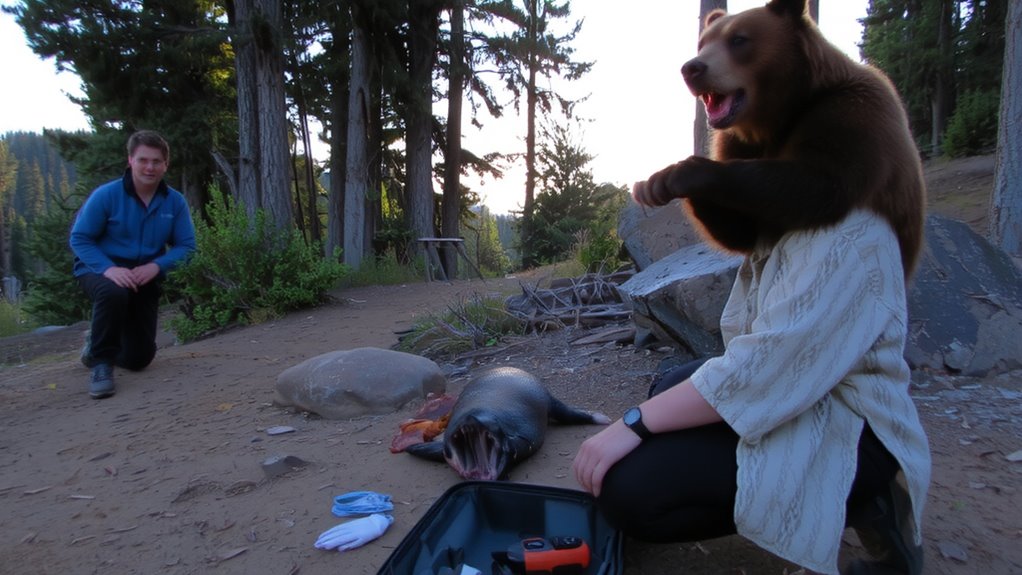
How do you know when the danger’s passed? You watch the bear’s behavior closely. If it’s moving away, not making direct eye contact, or resuming natural activities like grazing, the immediate threat’s likely over. But if it stands its ground, ears flat, or makes mock charges, the threat assessment isn’t complete. You stay alert. Bears often bluff; that doesn’t mean they’re safe. Distance matters-stay at least 100 yards away before considering the scene secure. Use binoculars or a camera zoom to monitor without approaching. Never assume calm behavior means non-aggression. Sows with cubs or surprised bears can re-engage fast. Your assessment must be ongoing. If the bear’s actions shift, so should your response. Only when it’s clearly disengaged and retreating should you shift focus to patient care. Constant reassessment keeps you safe.
Spot Early Signs of a Bear Encounter
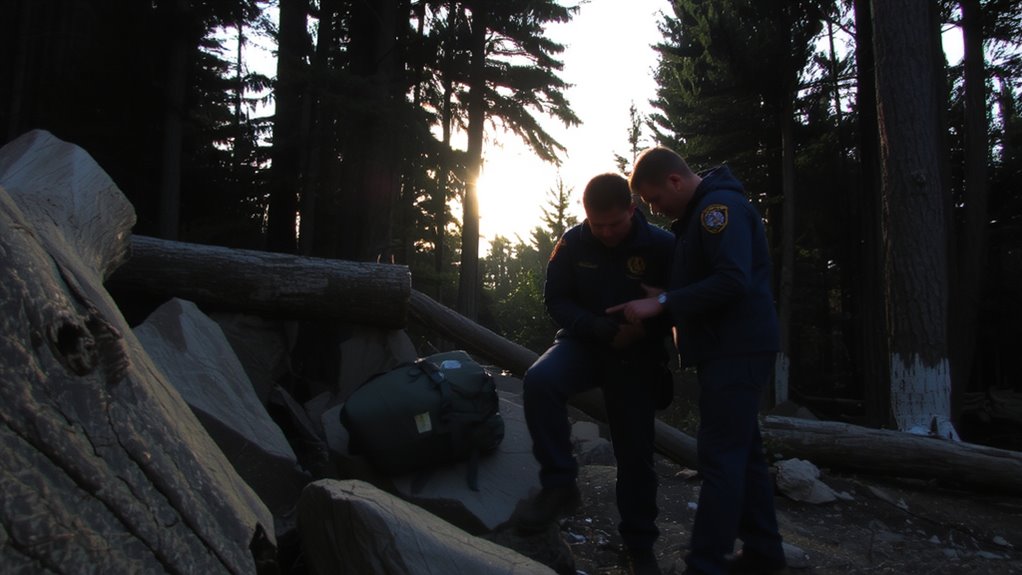
While you’re moving through bear country, staying aware of subtle environmental cues can make the difference between a close call and a dangerous encounter. You might notice overturned rocks or dug-up soil-signs of recent foraging that suggest bear activity nearby. Fresh tracks or scat also indicate bear behavior you should take seriously. Listen for twigs snapping or birds suddenly going quiet, as these often precede an unexpected sighting. Spotting a trail blocked by dense brush limits your escape routes, so plan your path accordingly. Open areas with multiple egress points are safer. Bears often avoid confrontation if they detect humans early, so recognizing these signs helps you assess risk before a threat develops. Avoid narrow gullies or blind ridges, which restrict movement. Know your surroundings-they give you time to react, adjust, and stay in control without escalating the situation.
Stay Safe While Treating the Patient
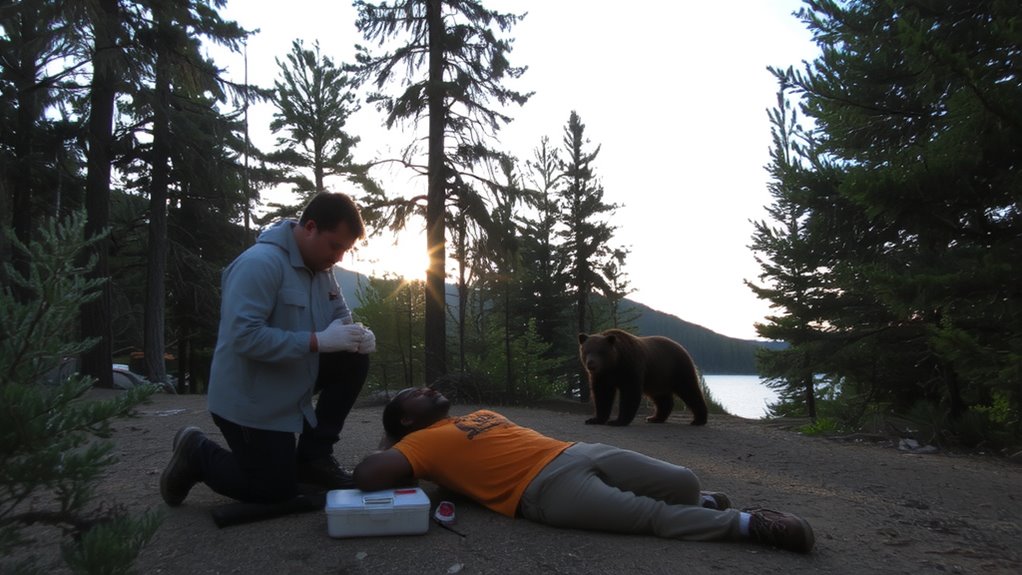
You’ve spotted the signs-a turned rock, a distant snap of a branch-and you’ve avoided surprise. Now, treat the patient without drawing attention. Stay calm, keep movements small, and speak in low tones to avoid provoking nearby wildlife. Position yourself and the patient with the wind at your back so scent doesn’t carry toward potential threats. Maintain patient privacy by using a shelter or blanket as a screen, but don’t compromise visibility-ensure you can monitor surroundings. Use medical discretion: limit noisy equipment and bright lights that could attract unwanted attention. Prioritize quiet, essential interventions. Keep your pack ready and tools within reach, but avoid sudden motions. Every decision should balance care with caution. You’re not just treating injuries-you’re managing risk. Patient privacy and medical discretion aren’t luxuries; they’re part of survival. Stay aware, stay quiet, stay focused. Safety hinges on preparation and restraint.
Decide Whether to Evacuate or Treat on Scene
What’s your next move when the patient’s stable but the trail out is miles through bear country? You weigh evacuation risks against on-scene care, guided by bear behavior and patient priority. If bears are active nearby, especially during dawn or dusk when they’re most aggressive, delaying movement may reduce encounters. But staying requires shelter, clear visibility, and bear-resistant containers for food-failure to secure provisions increases danger. Assess how long treatment takes; a minor injury treated in an hour may justify staying. But if evacuation demands traversing dense cover or recent bear sign, moving fast during midday may be safer. Patient priority means stabilizing before travel, but not at the cost of prolonged exposure. You’re balancing survival needs: treat long enough to prevent deterioration, then move with awareness. Every minute counts, and your call hinges on observed bear behavior, terrain, and the patient’s real-time condition. A well-prepared survival backpack can provide critical supplies for both treatment and safe evacuation.
Alert Responders to Bear Threats Fast
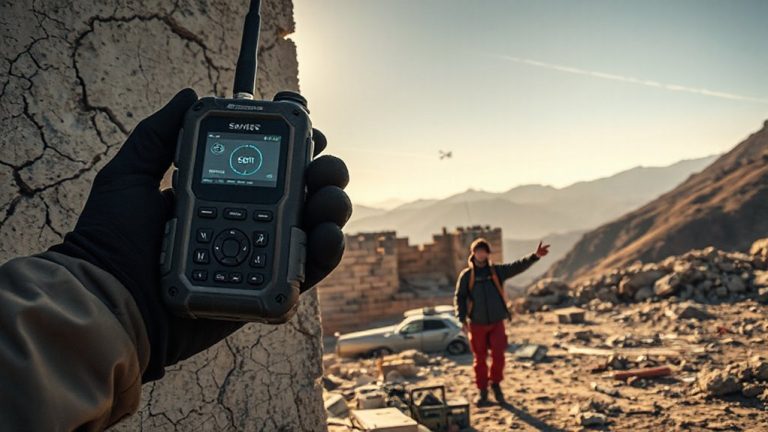
How do you guarantee help arrives without putting rescuers at risk? Use bear detection tools like motion-sensor cameras or infrared scopes to confirm presence early. Once spotted, initiate rapid notification through satellite messengers or emergency radios-devices with proven range and reliability in remote terrain reduce delays. You can’t afford dropped signals when seconds count. Pair GPS tagging with your alert so responders know exactly where you are and what you’re facing. Studies show rapid notification cuts response time by up to 40%, but only if the system works in dense forest or poor weather. Avoid consumer apps that lack offline function-they fail when needed most. Bear detection isn’t optional; it’s part of threat assessment. Delayed warnings increase danger for patients and teams. Test your gear monthly. Real-world conditions demand dependable performance. Choose tools that match your environment. For seamless communication in isolated areas, consider the best off-grid radios.
On a final note
You assess the bear’s presence first-no point treating a patient if you’re next. If the bear’s gone, work fast but stay alert. If it’s near, retreat immediately. Stabilize only if safe. Evacuate when the threat drops, but don’t delay care unnecessarily. Alert teams with clear location and bear activity. Real-world cases show quick decisions cut fatalities. Know the trade-off: time vs. safety. Your judgment is the most critical tool.