How to Evaluate Your Home’s Exposure to Urban Blight Hazards
Look around: cracked sidewalks, peeling paint, and overgrown lawns signal neglect that can lower your home’s value. Check for abandoned vehicles or boarded-up buildings-these attract crime and pests. Rising break-ins or vandalism suggest deeper blight. Weak schools and spotty city services like trash pickup mean declining oversight. Use city data tools to track crime, permits, and vacancies over time-trends reveal risks before they worsen. You’ll see how close you are to turning a corner-or not.
Notable Insights
- Inspect nearby properties for peeling paint, broken windows, and overgrown yards to assess visible neglect.
- Monitor for abandoned vehicles and trash accumulation, which signal declining maintenance and potential blight.
- Review local crime statistics for rising property crimes, especially if rates are 20% higher than neighboring areas.
- Evaluate school ratings and enrollment trends, as declining performance may precede neighborhood disinvestment.
- Use city data tools to track vacancy rates, code violations, and zoning changes impacting your block’s stability.
Look for Visible Signs of Neighborhood Decline
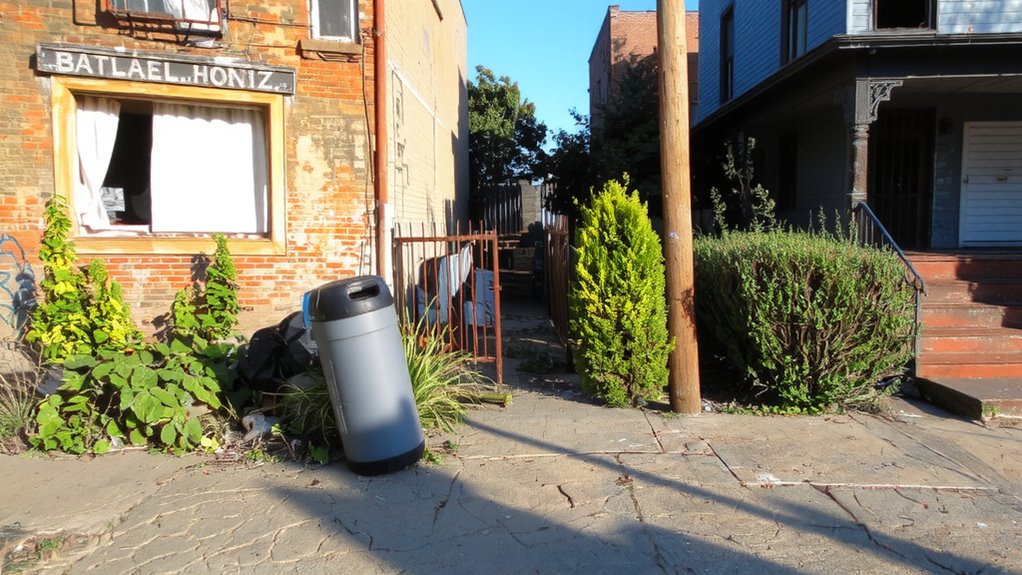
Neglect is the first red flag. You see it in cracked sidewalks, peeling paint, and overgrown lawns-clear signs of property neglect. These aren’t just eyesores; they signal declining upkeep and owner disengagement. You’ll likely notice abandoned vehicles parked for weeks, rusting on blocks or missing tires. These aren’t temporary setbacks-they’re markers of long-term decay. Such vehicles attract pests, reduce curb appeal, and often leak fluids that damage pavement and soil. Together, property neglect and abandoned vehicles create a cycle: one neglected home lowers neighboring values, encouraging further disrepair. You can’t assume it won’t spread. What starts on one lot can expand block by block. Survey your street regularly. Count how many properties show consistent maintenance-or don’t. Track how many abandoned vehicles appear monthly. These are measurable indicators. Use them to assess your home’s exposure before deeper issues take root.
Check Local Crime Trends Linked to Urban Blight
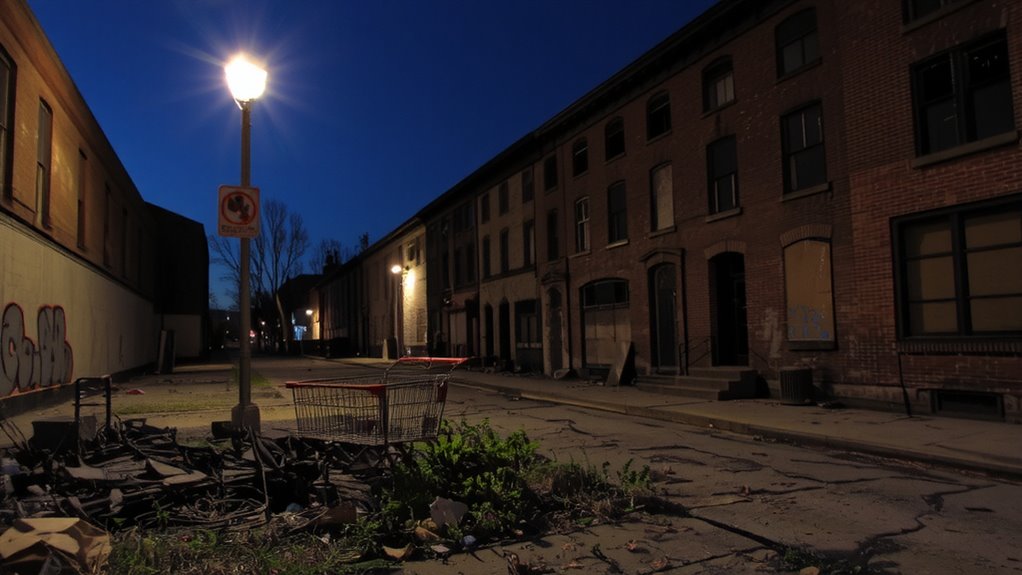
How safe does your neighborhood really feel at night? You should check local crime data to know for sure. Rising property crime often signals deeper urban blight issues. Cities usually publish crime statistics online-use them. Look specifically at trends over the past two to three years. A steady increase in break-ins or thefts from vehicles suggests growing risk. High vandalism rates also correlate with declining areas. When windows are repeatedly broken or graffiti isn’t removed, it shows reduced community oversight. Compare your block’s numbers to nearby neighborhoods. If your area has 20% higher property crime than adjacent zones, that’s a measurable red flag. Don’t rely on feelings-use the data. Lower crime doesn’t just mean safety; it reflects maintenance, engagement, and investment. Consistently elevated vandalism rates undermine property values and attract further neglect. Check the trends regularly. Being informed helps you act early.
Inspect Buildings and Vacant Properties Nearby
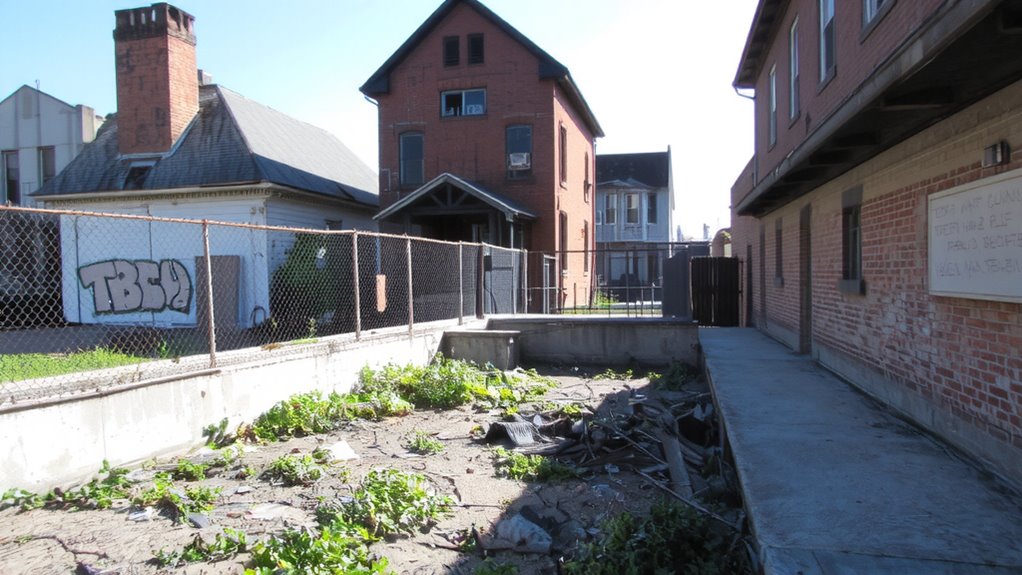
You’ve checked the crime stats-now take a closer look at the buildings around you. Signs of building deterioration or property abandonment nearby can signal long-term decline. Peeling paint, broken windows, and overgrown yards aren’t just eyesores-they often precede further disinvestment. Vacant properties attract vandalism and reduce neighboring property values. Walk the block and assess structural conditions, roof integrity, and signs of occupancy.
Use this quick reference to rate what you see:
| Condition | Indicator | Risk Level |
|---|---|---|
| Stable | Well-maintained, occupied | Low |
| Deteriorating | Cracked walls, boarded windows | Medium |
| Abandoned | Trash piles, no utilities | High |
Property abandonment accelerates building deterioration, making recovery harder. Frequent vacancies suggest deeper economic stress. You’re not just evaluating aesthetics-you’re measuring neighborhood resilience. Address issues early or choose areas with consistent occupancy and upkeep.
Review School Ratings and Essential City Services
A neighborhood’s long-term stability often shows up in its school ratings and city services more clearly than in curb appeal. You should check school performance data from state departments or sites like GreatSchools, not just reputation-low test scores and declining enrollment often predict future disinvestment. Strong schools tend to keep families in the area, supporting property values. Equally important is service reliability: consistent trash collection, timely snow removal, and working streetlights signal effective local governance. Sporadic repairs or chronic delays in response times reflect deeper municipal issues. Poor service reliability weakens quality of life and encourages vacancy. These aren’t just inconveniences-they’re early markers of urban blight. By reviewing public reports and talking to residents, you get a clearer picture of whether community systems are maintained. Don’t overlook these metrics; they’re practical indicators of resilience.
Monitor Neighborhood Health With City Data Tools
What if you could spot trouble in a neighborhood before it shows up on the street? You can-by using city data tools. These platforms track metrics like crime rates, code violations, and building permits. Watch for zoning changes; they often signal upcoming development or industrial shifts that affect your area. A sudden shift from residential to commercial zoning might boost foot traffic but could lower property values over time. Public data dashboards let you monitor trends monthly or quarterly. If nearby blocks show rising vacancy rates or delayed repairs, it’s a red flag. Consistent declines in property values in adjacent areas often precede visible blight. Accessing this data is free and takes minutes. Use it to assess risk early. You won’t stop every change, but you’ll see it coming. That’s how you stay ahead.
On a final note
You now know the key signs of urban blight. Check for graffiti, trash, and abandoned buildings-they signal neglect. Rising crime or falling school ratings often reflect deeper issues. Use city data tools to verify trends. Nearby vacant properties increase risk. Poor street lighting or delayed trash pickup show service gaps. These factors lower property values and safety. Stay alert. Regular checks help you act early. Knowledge protects your investment.