Using Solar Ovens to Dehydrate Wild Edibles Off-Grid
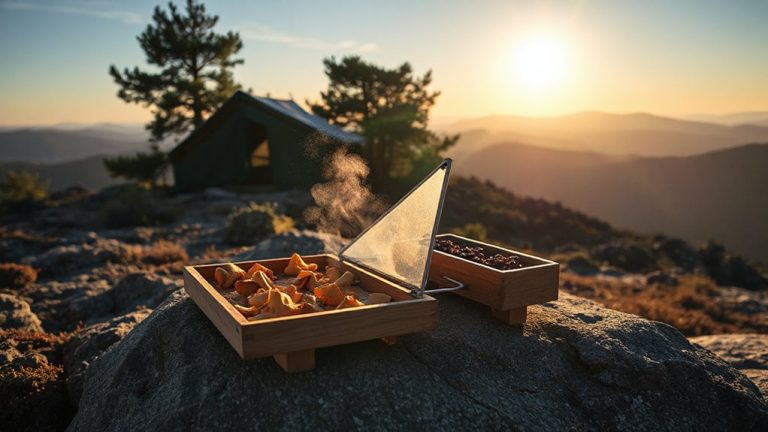
You can dry wild edibles off-grid with a solar oven that has dual reflectors and UV-resistant aluminum-it handles rugged use and hits 110–140°F reliably. Sage, raspberries, chanterelles, and nettles dry well when sliced evenly and spaced for airflow. Avoid mold by using vents and rotating trays. Store the results in airtight jars in a cool, dark spot-they’ll last up to a year. Built-in thermometers and midday sun adjustments make the difference. There’s a proven way to get it right every time.
Notable Insights
- Choose solar ovens with dual reflectors and adjustable angles to maintain 110°F–140°F for safe dehydration.
- Harvest wild edibles like sage, raspberries, chanterelles, and nettles at peak season for best drying results.
- Clean and slice foraged foods uniformly to ensure even drying and prevent spoilage.
- Avoid overloading trays and use top vents to ensure airflow, reducing mold risk.
- Store dried foods in airtight, labeled containers in a cool, dark place for up to one year.
Choose the Best Solar Oven for Foraged Foods
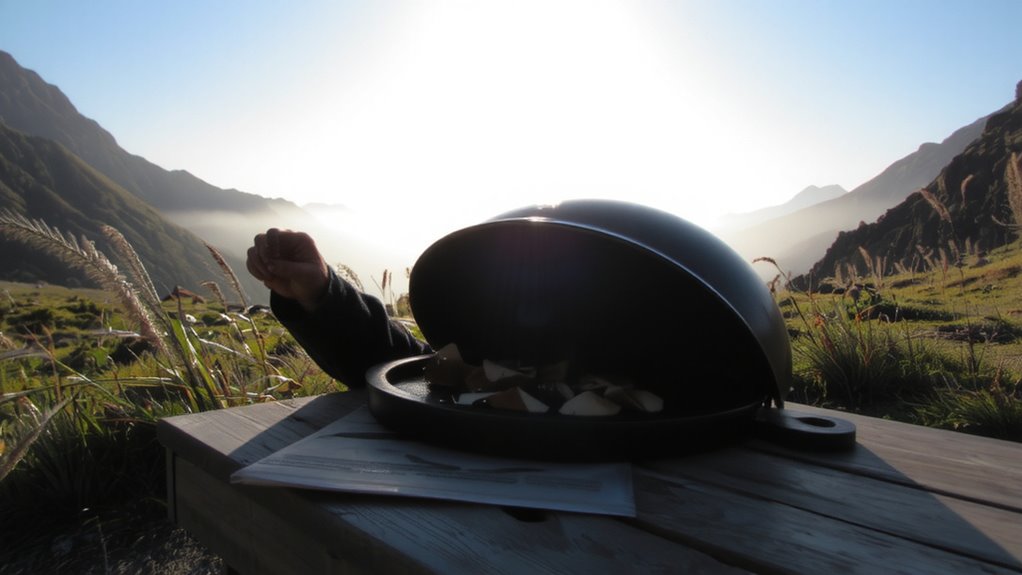
Why settle for a solar oven that barely works when you’re relying on foraged foods in the wild? You need consistent oven efficiency to dehydrate greens, roots, or fungi without spoilage. Models with dual reflectors and adjustable angles maintain higher internal temps, even under partial cloud cover. Look for ovens that reach and sustain 110°F to 140°F-that’s the safe dehydration range without cooking delicate plants. Material durability matters just as much. Units built with reinforced polyester, UV-resistant coatings, and aluminum frames survive wind, abrasion, and repeated packing. Cheaper versions often crack or warp after a few field uses. Folding designs balance portability and stability, but check hinge strength before buying. Prioritize ovens tested in rugged environments-verified performance in mountains or deserts beats lab claims. A reliable solar oven won’t fail when sunlight is limited or terrain rough. Choose one that’s tough and efficient, not flashy.
What Wild Edibles Dry Best in a Solar Oven?
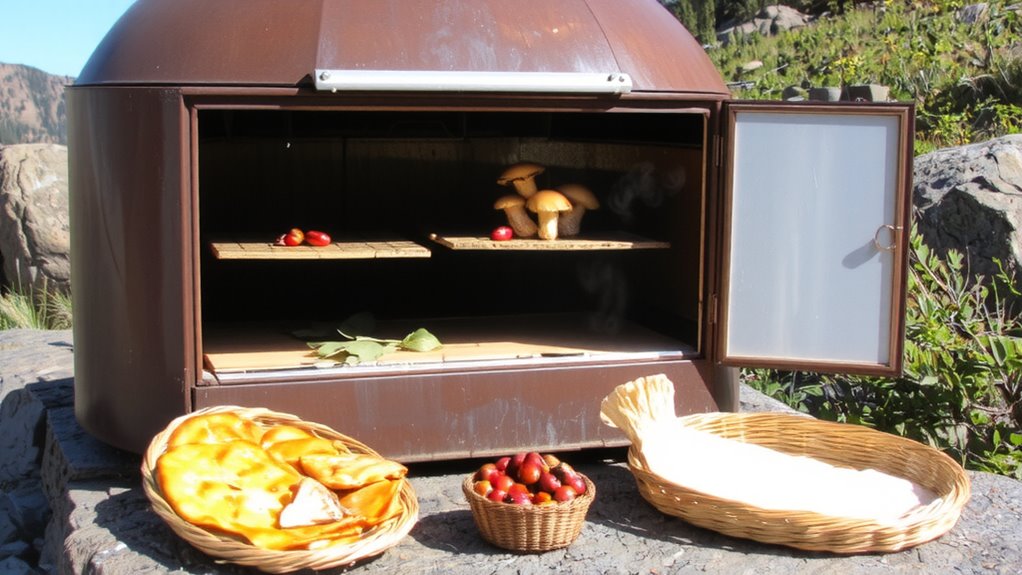
While some wild edibles lose flavor or break down during drying, others respond well to the low, steady heat of a solar oven. Choose items with low moisture and high structural integrity for best results. Your success hinges on foraging safety and seasonal availability-always ID plants with certainty and harvest at peak times.
| Edible | Best Harvested | Notes |
|---|---|---|
| Sage | Late spring | High oil content, dries crisp |
| Raspberries | Mid-summer | Shrink well, retain tang |
| Chanterelles | Early fall | Firm flesh, even dehydration |
| Nettles | Early spring | Lose sting, keep nutrients |
Drying works best when you match plant type to oven performance. Solar ovens lack precise controls, so rely on proven candidates. Skip high-water greens or toxic-lookalikes. Stick to reliable picks that dry evenly and store well.
Dry Herbs, Fruits, and Mushrooms in 5 Steps
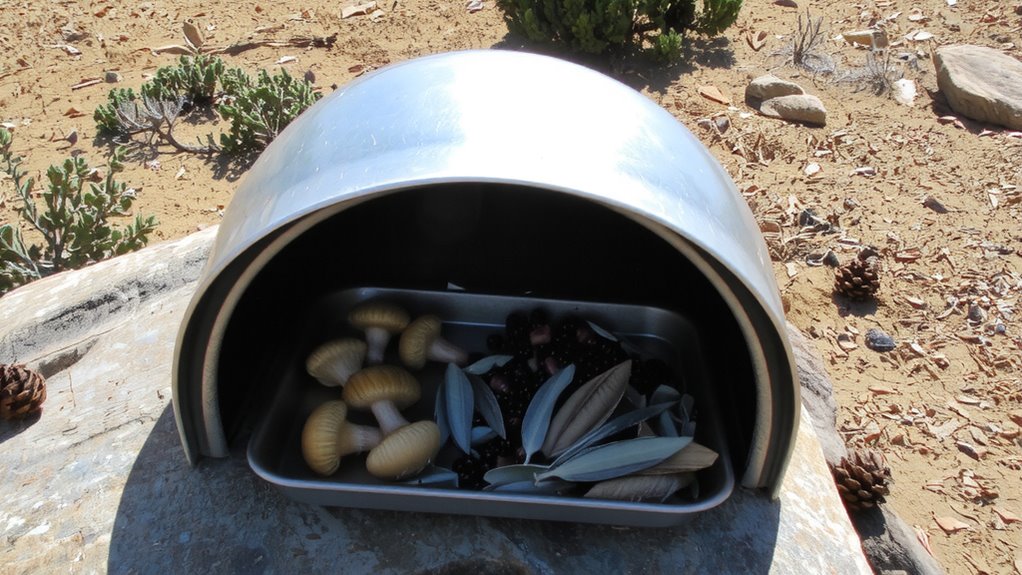
You’ve picked the right plants-now it’s time to get them dried safely and efficiently. Start by cleaning and slicing uniformly-thin slices dry faster and more evenly. Lay herbs in a single layer to guarantee proper herb timing; they usually dry within 4 to 6 hours in strong sun. For fruits, use ample fruit spacing on trays to prevent sticking and promote airflow-crowding adds hours. Mushrooms need slightly thicker cuts but still require space for moisture to escape. Place trays in your solar oven, positioning it to face the sun directly. Rotate trays every few hours for even exposure. Check regularly; ideal dryness means brittle herbs, leathery fruit, and crisp mushrooms. Total drying time ranges from 6 to 12 hours, depending on sun intensity and humidity. When done, store in sealed, dark containers away from heat. This method preserves nutrients and flavor without power. For long-term storage success, consider pairing your solar drying efforts with a reliable backup method like a best food dehydrator.
Stop These Solar Drying Mistakes
How quickly can uneven drying ruin a hard-earned harvest? Fast-especially when you’re dealing with improper ventilation and inconsistent temperatures. You’re setting yourself up for mold and spoilage if air can’t circulate freely through your solar oven. Trapped moisture means your wild edibles won’t dry evenly, and that’s the last thing you want after foraging for hours. Inconsistent temperatures, often caused by poor oven placement or cloudy shifts, slow the drying process and compromise food safety. If your unit doesn’t maintain a steady 110–140°F, you’re not dehydrating-you’re risking bacterial growth. Use a thermometer to monitor heat, and adjust reflector angles every few hours. Never overload the trays; crowding causes moisture buildup and promotes improper ventilation. Opt for single layers, midday sun exposure, and ovens with top vents. These fixes aren’t fancy, but they keep your food safe and your effort worthwhile.
Store Solar-Oven-Dried Foods for Year-Long Use
Once your wild edibles are evenly dried and cooled, the next step is locking in that quality for long-term storage. Use airtight glass jars or heavy-duty vacuum-sealed bags to limit moisture and oxygen exposure-both degrade dried foods over time. Proper storage methods directly affect shelf life; clear jars let you check for condensation or spoilage without opening, while vacuum sealing removes air but requires reliable equipment. Store containers in a cool, dark place-consistent temperatures below 70°F extend shelf life up to one year. Light and heat accelerate nutrient loss and texture changes. For long-term monitoring, label each container with the contents and drying date. Rehydrate a sample monthly to assess quality; if flavor or texture declines noticeably after six months, adjust your storage method. Some herbs and mushrooms last longer than berries, which have marginally shorter shelf life even under ideal conditions.
Why Solar Oven Drying Beats Electric Methods
While electric dehydrators offer convenience, solar ovens deliver a more sustainable and cost-effective option for drying wild edibles-especially in off-grid or emergency situations. You’re not tied to a power source, and once the sun’s up, your energy efficiency soars-no fuel, no electricity bills. Solar ovens leverage free, consistent solar energy, reducing your environmental impact markedly compared to electric models that rely on grid power or generators. They work steadily in full sunlight, achieving safe drying temperatures over 12–24 hours, depending on conditions. Though slower, they’re reliable when fuel is scarce or costly. Electric units dry faster but demand constant energy input, making them less practical long-term. You’ll save resources over time with solar, especially in remote areas. There’s a trade-off in speed, but the gain in sustainability and independence is measurable. For survival use, solar drying’s low overhead and minimal footprint make it the clear choice where reliability and conservation matter most.
On a final note
You get reliable dehydration with a solar oven if you pick one that hits and holds 140°F. Wild herbs, fruits, and mushrooms dry well, losing moisture in 2–5 hours under direct sun. Avoid overcrowding trays or skipping midday checks-both cause uneven results. Once crisp, store in vacuum-sealed jars away from light. Solar drying uses no fuel, cuts energy costs, and works off-grid, though it depends on weather. It’s slower than electric but more sustainable.