Food Supply Disruptions: The Ultimate Guide to Ensuring Access When Supplies Run Dry
You need a two-week emergency food supply that’s non-perishable and easy to prepare-think freeze-dried meals, canned proteins, and bulk grains. Store them in airtight containers with a 5+ year shelf life and rotate every six months. Pair this with a water plan: one gallon per person per day, purified via filters or bleach. When stores fail, tap local sources like foraging or community farms. A stocked pantry plus backup options guarantees you stay fed when supply chains break-there are smarter ways to prepare you should know about.
Notable Insights
- Store a two-week supply of non-perishable foods like canned beans, freeze-dried meals, and bulk staples for sustenance during sudden shortages.
- Prioritize calorie-dense, nutritious foods providing over 2,000 calories per day to maintain energy and health.
- Extend shelf life by storing food in airtight, moisture-proof containers and rotate stock every six months.
- Use multiple water purification methods-filters, bleach, and boiling-to ensure access to safe drinking water.
- Supplement stored food with local sources like community farms or foraged edibles during prolonged supply disruptions.
Understand Why Food Shortages Happen

While it might seem like food shortages come out of nowhere, they’re usually the result of predictable disruptions in supply chains, production, or distribution. You’ll often see shortages tied to global conflicts, which block trade routes, damage infrastructure, and displace farmers. When war hits a major grain-producing region, exports slow, prices rise, and your access shrinks. Climate events also play a clear role-droughts, floods, and extreme heat reduce crop yields. A bad growing season in a key area affects global supply fast. These aren’t rare flukes; they’re recurring risks with measurable impacts. You can expect delays at ports, empty shelves, and higher costs when either occurs. Sometimes, both hit at once, compounding the strain. You don’t need speculation to see the pattern. Real-world data from past disruptions confirms it. Understanding these causes helps you anticipate problems before they reach your table.
Build a Two-Week Food Supply Fast
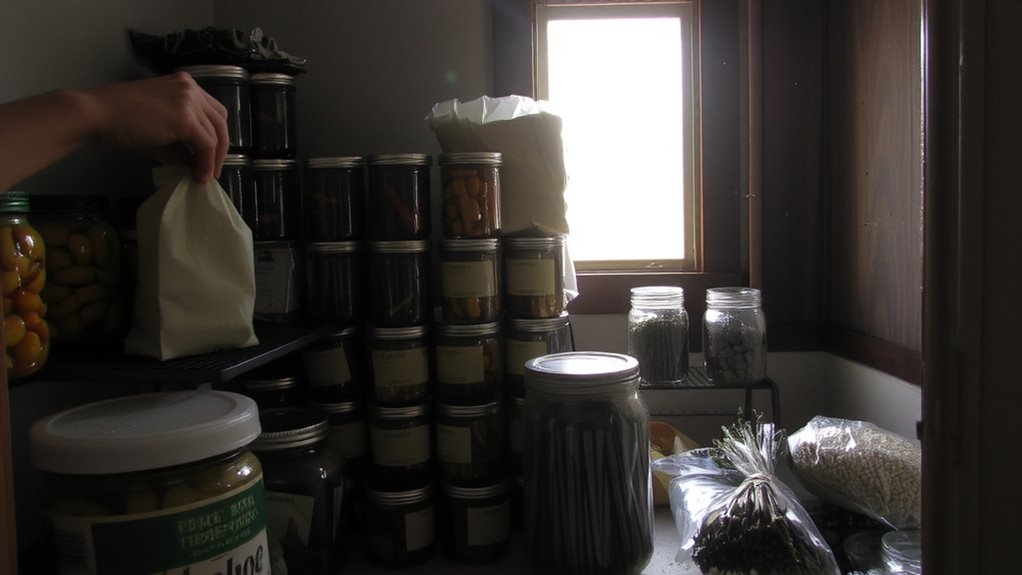
You can’t control global conflicts or extreme weather, but you can act quickly to secure your food supply when disruptions loom. Start with rapid meal prep by choosing non-perishable meals that require minimal cooking, like instant rice, canned beans, or freeze-dried entrees-most need only hot water and rehydrate within 10 minutes. These save time and fuel during emergencies. Pair this with bulk food sourcing: buy staples like oats, lentils, and pasta in larger quantities to reduce cost per meal and extend shelf life. Store them in airtight, moisture-proof containers to prevent spoilage. Prioritize calorie density and nutrition over preference. A two-week supply should provide 2,000+ calories per person daily. Rotate stock every six months to maintain freshness. This approach balances speed, efficiency, and nutrition without relying on refrigeration or complex prep. For reliable long-term options, consider top-rated freeze-dried meals that offer balanced nutrition and extended shelf life.
Stock Emergency-Ready Pantry Staples
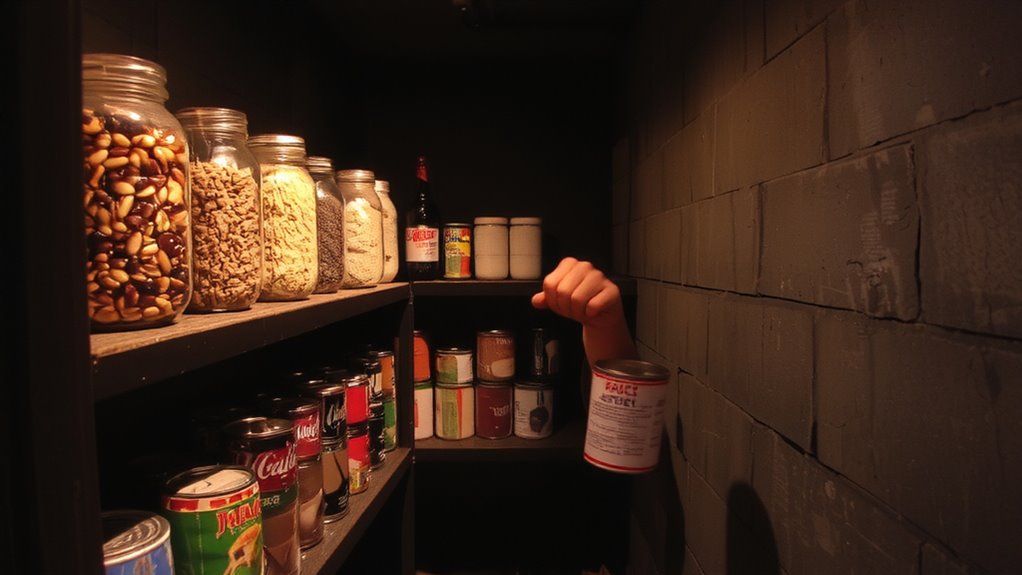
Pantry staples are the backbone of any reliable food reserve, and your choices should prioritize shelf life, calorie density, and minimal prep requirements. You need long shelf life-think five years or more-so rotate less and waste nothing. Opt for non perishable choices like canned beans, dehydrated rice, and sealed oats. These keep for years without climate control. Add powdered milk, canned meats, and vacuum-packed pasta-they deliver protein and carbs with zero refrigeration. Choose items needing only boiling water or no prep at all. Salt, sugar, and cooking oil last long and boost flavor and calories. Avoid anything with high moisture or artificial preservatives that degrade over time. Buy in bulk only if storage is airtight and cool. Each addition should serve a measurable role: energy, nutrients, or usability under stress. Your pantry isn’t just food-it’s functional insurance. A reliable option for long-term preparedness includes best survival food kits, which are pre-packaged with balanced nutrition and extended shelf stability.
Find Local Food During Supply Shortages
How do you keep eating when shelves go empty? You shift to local sources fast. Start by trying to forage wild edibles-plants like dandelions, elderberries, and cattails are common and nutritious if properly identified. Misidentification risks toxicity, so use a field guide or app with verified entries. Better yet, join community farms where food production is shared and reliable. These networks often distribute fresh produce even during broader shortages.
| Strategy | Access Speed | Risk Level |
|---|---|---|
| Forage wild edibles | Immediate | Moderate |
| Join community farms | 1–2 weeks | Low |
| Rely on stores | Unpredictable | High |
Community farms offer consistency; foraging offers independence. Neither replaces a stocked pantry, but both improve resilience when supplies fail. Choose based on your location, skills, and timeframe.
Grow Emergency Food Fast
When the supply chain stutters, growing your own food becomes less a hobby and more a necessity. You can sprout seeds in a jar within 2–5 days using only water and a warm spot-mung beans and lentils yield up to 300% growth in weight, offering protein and fiber fast. Sprouting requires minimal space and no soil. For longer-term supply, grow greens like kale, spinach, and arugula in containers or raised beds. These mature in 25–40 days and produce multiple harvests. Leafy greens provide essential vitamins A, C, and K. Use compost-rich soil and position plants where they get at least four hours of sunlight. Grow lights add 15–20% faster growth if natural light is limited. Both methods let you produce food quickly with low investment. Sprout seeds for immediate nutrition, grow greens for sustained output. Each step increases self-reliance when stores run low.
Store and Purify Water During Food Crises
Where will you get safe water if stores close and delivery stops? You’ll need reliable water storage and purification methods. Store at least one gallon per person per day in food-grade containers-rotate every six months to prevent algae or contamination. Five-gallon jugs are practical; 55-gallon barrels save space but require siphons and thorough cleaning. For purification, boiling kills pathogens but uses fuel. Better options include microfilter pumps (e.g., LifeStraw Family), which remove 99.9999% of bacteria and protozoa, or squeeze-style filters with 0.2-micron pores. Chemical treatments like unscented bleach (8 drops per gallon) work when filters fail-wait 30 minutes before drinking. UV pens like SteriPEN are fast but depend on batteries. No single method is perfect. Combine water storage with multiple purification methods to guarantee you can consistently access clean water when systems fail. Choose containers made from food-grade plastic to ensure long-term safety and prevent chemical leaching.
Trade and Share Food When Supplies Run Out
What happens when your pantry’s bare and stores stay shut? You’ll need to rely on food bartering and community sharing to get by. Food bartering lets you trade surplus items like canned goods or seeds for needed supplies-say, exchanging a jar of honey for rice or beans. It works best when both sides agree on value upfront. Community sharing, like organized potlucks or food swaps, spreads available resources more evenly and reduces waste. These systems depend on trust and clear rules. You’ll get better results by participating early, not waiting until you’re desperate. Keep a list of tradable goods and know what others might need. Success isn’t guaranteed, but cooperation improves odds more than isolation. Plan now-you’ll need contacts, fair standards, and a way to store trade items safely.
On a final note
You’ve got control when stores empty. A two-week pantry of shelf-stable staples buys time. Prioritize calories, water, and nutrients-beans, rice, canned proteins, and dried goods last. Store 1 gallon of water per person daily. Grow fast plants like radishes or greens in containers. Local networks and trade expand access. Water filters and purification tablets work-boiling takes fuel. Trade surplus for gaps. Each step cuts risk with minimal gear and proven methods. No magic, just planning.