Grid Down Survival Food Storage Tips: Securing Long-Term Supplies With Canning Techniques
Canning beats dry storage when the grid fails because it gives you ready-to-eat meals without needing fuel, water, or cooking skills. High-acid foods like tomatoes and fruits store 12–18 months using water bath canning, while pressure canning preserves low-acid foods like beans and meats for 2–5 years by killing dangerous botulism spores. You’ll save time, retain more nutrients, and avoid spoilage with proper jars, tested recipes, and storage in cool, dark places-just check seals and rotate stock. Smart choices now mean reliable food later, and there’s more to get right.
Notable Insights
- Canned foods require no cooking or refrigeration, making them ideal for long-term survival when power is unavailable.
- Use pressure canning for low-acid foods like meats and vegetables to prevent botulism and ensure safe long-term storage.
- Water bath canning is suitable for high-acid foods such as fruits and pickles with a pH below 4.6.
- Store canned goods in a cool, dark place to preserve nutrients and extend shelf life up to five years.
- Always use tested recipes, inspect jars, and test pressure gauges annually to maintain safety and prevent spoilage.
Why Canning Beats Dry Storage In A Grid Down
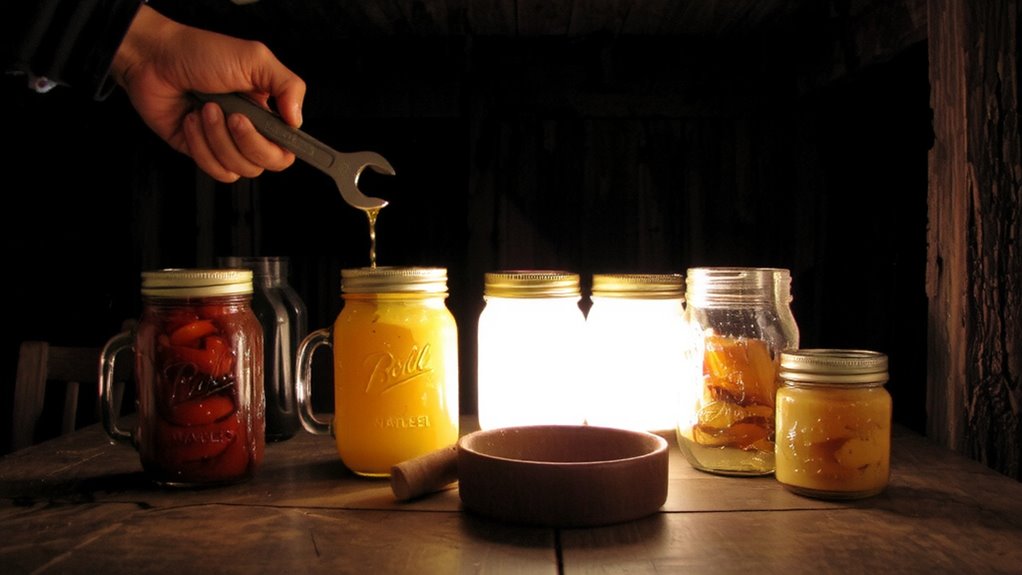
While dry storage keeps staples like rice and beans usable for years, canned food often outperforms it in a grid down scenario because it requires no cooking and resists spoilage even when left unrefrigerated. You can eat it straight from the can, which saves fuel and time. Canned goods also offer better flavor retention over long periods-what you taste after five years closely matches the initial profile. Dry-stored foods often degrade in taste and texture, especially if exposed to moisture or pests. Nutrient preservation is another advantage; the canning process locks in vitamins and minerals effectively, outperforming many dry-stored alternatives that lose nutritional value over time. You don’t need power, special tools, or prep skills to access the food. Shelf stability, safety, and reliability make canned food a practical choice when systems fail. Real-world testing confirms this in prolonged outage scenarios.
Choose Between Water Bath And Pressure Canning
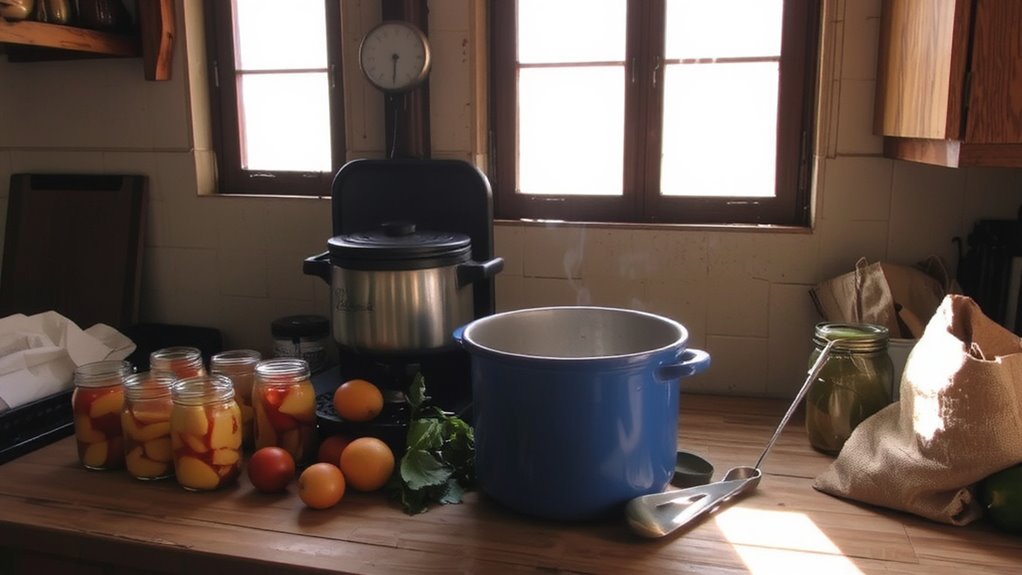
Water bath canning works best for high-acid foods like fruits, tomatoes, and pickles-anything with a pH below 4.6-because the boiling water (212°F at sea level) kills mold, yeast, and bacteria that cause spoilage. You’ll need to adjust for altitude effects-boiling point drops about 1°F every 500 feet above sea level, so processing times must increase to guarantee safety. This method relies on proper lid sealing to create a vacuum; always check for a firm, concave seal after cooling. Pressure canning is required for low-acid foods like meats and vegetables, as it reaches 240°F, destroying botulism spores. It also compensates for altitude effects automatically when you follow gauge adjustments. Lid sealing is equally critical here-any failure means the food isn’t shelf-stable. Choose the method based on food acidity, not convenience. Both require precise timing, clean jars, and fresh lids to work reliably in long-term storage.
Can These Survival Foods For Long-Term Storage
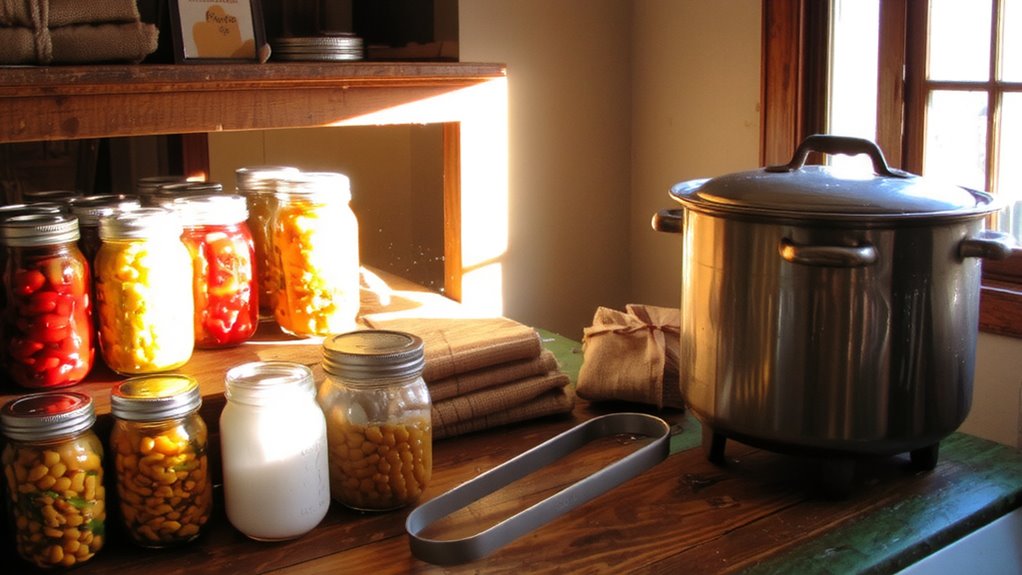
Why bother canning certain foods if they won’t last? You need long-term storage that maintains both safety and quality. High-acid foods like fruits and tomatoes can be water bath canned and will keep 12–18 months with minimal flavor degradation, while low-acid foods like beans and meats require pressure canning and stay stable up to 2–5 years when sealed properly. Even so, some nutrient retention drops over time-vitamins like C and B degrade fastest. Still, canned food keeps most calories and macros intact. Dark, cool storage slows spoilage and preserves taste. You’ll notice texture changes in softer veggies, but the food remains edible. Don’t assume “canned = forever”-rotate stock and label jars with dates. Realistic expectations matter: flavor degradation is inevitable, but smart methods limit it. Nutrient retention isn’t perfect, but it’s better than starvation. Canned food won’t win taste tests after years, but it’ll keep you fed when the grid’s down.
Follow These 5 Steps To Can Safely At Home
Canning at home gives you control over what goes into your jars, but doing it safely means following a clear process. Start with canning safety: always use tested recipes and never improvise acidity levels or processing times. Inspect jars for chips or cracks-any flaws can lead to seal failure. Perform routine equipment checks: make sure your pressure canner’s gauge reads accurately, the vent is clear, and the lid seals properly. For water bath canning, confirm the pot fully covers jars by at least one inch of water. Clean lids and bands before use, but don’t overtighten-they need slight flexibility to vent during processing. Use a reliable timer and keep altitude adjustments in mind. Processing times are non-negotiable; shortening them risks spoilage. These steps aren’t optional-they’re essential to prevent foodborne illness and make certain shelf stability for long-term storage.
Avoid These Dangerous Canning Mistakes
One wrong move can compromise every jar on your shelf, and skipping the pressure gauge test is among the most dangerous. You risk under-processing, which fails to kill harmful bacteria like *Clostridium botulinum*. Always test your gauge yearly-many units drift over time, leading to inaccurate readings. Improper sealing often follows, especially if you ignore jar preparation. Don’t use chipped or scratched rims; they prevent airtight closures. Also, avoid reusing lids-once-sealed rubber becomes unreliable. Expired jars, particularly older Ball jars with weakened glass, can crack under pressure or fail vacuum testing. Never assume all jars are equal-check manufacturing dates if possible. Over-tightening bands doesn’t help and may block venting, causing seal failure. Fill according to tested recipes; overfilling leads to trapped air. You’re aiming for safety, not improvisation. Stick to reliable guidelines-your health depends on precision, not guesswork. Every mistake adds risk you can’t see.
Store Canned Food To Last 5+ Years
Most properly canned goods can last 5+ years if stored under stable conditions. You need consistent temperatures between 50°F and 70°F to maintain shelf stability. Avoid areas with temperature swings, like garages or attics, since heat accelerates spoilage. Keep cans dry and away from direct sunlight to prevent corrosion and label degradation. Use clear, date-based rotation methods-such as “first in, first out”-to guarantee older stock gets used first. This simple system maintains freshness and reduces waste. Don’t stack cans too tightly; allow airflow to prevent moisture buildup. While metal lids can rust over time, proper storage slows this risk. Vacuum-sealed jars also last long but must be shielded from light. Shelf stability depends more on storage conditions than container type. With careful handling and organization, your canned food remains safe and nutritious well past five years.
Check And Use Canned Food After The Grid Fails
How do you know if your stored canned food is still safe after the grid goes down? Check each can for dents, swelling, or rust-discard any with damage or bulging lids, as these can signal spoilage. Use expiration tracking to identify older cans first; even shelf-stable food degrades over time. Canned goods typically last 2–5 years, but acidity matters-low-acid foods like meats last longer than high-acid tomatoes. Rotate stock using the FIFO method (first in, first out) to maintain freshness. Food rotation prevents waste and guarantees you use older cans before newer ones. Don’t rely solely on dates-inspect, smell, and boil contents when in doubt. A working pressure canner lets you reprocess questionable jars. In extended outages, proven storage and consistent expiration tracking reduce risk. Trust process, not guesswork. For long-term resilience, consider pairing your home canning efforts with trusted best emergency food picks that complement your stockpile.
On a final note
You’ll get safer, longer-lasting food by canning instead of relying on dry storage alone. Water bath works for high-acid foods, but pressure canning is necessary for low-acid items like meats and vegetables. Follow tested guidelines, avoid common mistakes like sealing with paraffin, and store jars in a cool, dark place. Properly canned food lasts 5+ years. Check seals and inspect for spoilage before eating-especially after a grid-down event.