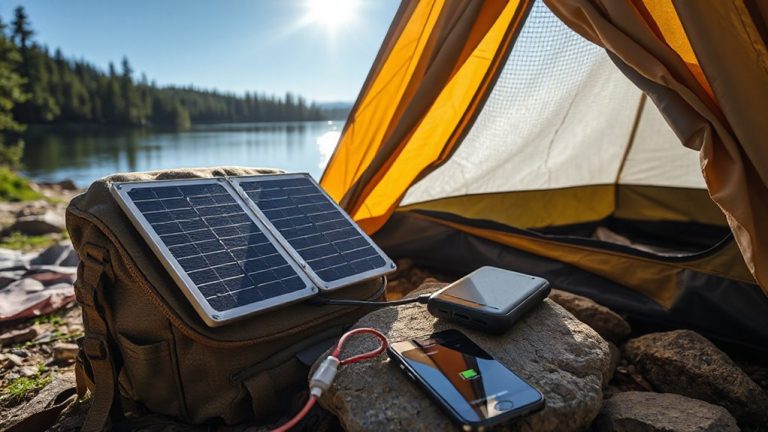
Harnessing Solar Power for Charging Portable Electronics During Daylight Hours
You can charge your phone or tablet in daylight with a solar panel, but efficiency drops to 20–25% due to conversion and environmental factors. Monocrystalline panels outperform amorphous ones, especially in uneven light. USB-C PD devices charge faster, and keeping your screen dim helps. Shading cuts output by up to 50%, so position matters. Real-world gains are modest, but consistent exposure delivers results. Better setups include smart regulation and proper alignment-details that make a clear difference when relying on sun-powered performance.
Notable Insights
- Solar chargers convert sunlight into DC electricity using photovoltaic cells, ideal for charging phones and tablets during daylight.
- Rigid or foldable monocrystalline panels offer 20–24% efficiency, outperforming amorphous types in variable sunlight conditions.
- Charging speed depends on panel wattage, sunlight intensity, and device battery capacity, with USB-C PD devices charging most efficiently.
- Position solar panels perpendicular to the sun and avoid shading, as poor orientation or partial shade can reduce output by up to 50%.
- Using solar reduces reliance on grid electricity, cutting fossil fuel emissions while providing sustainable power for portable electronics.
How Solar Chargers Power Your Devices
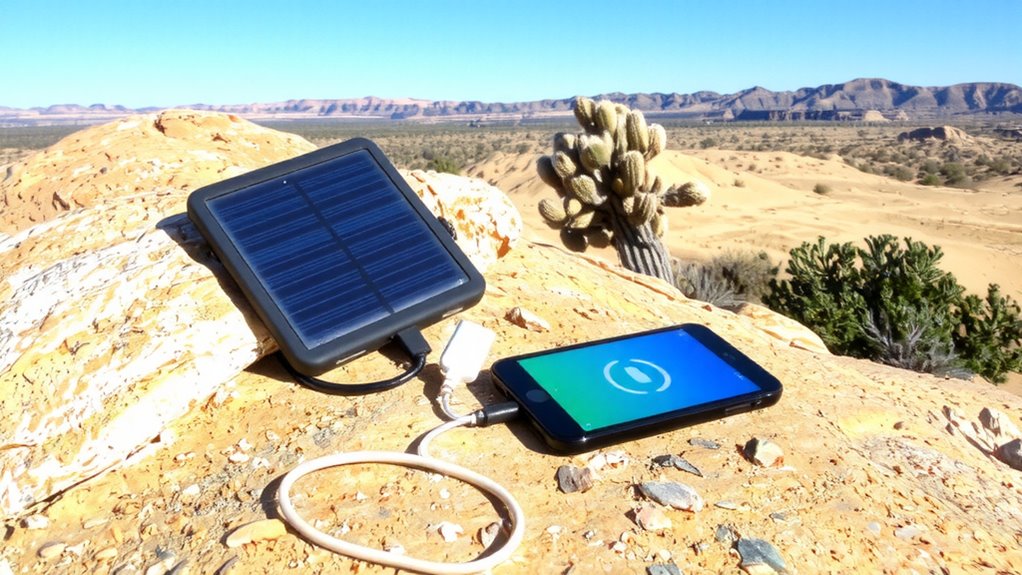
A solar charger converts sunlight into electrical energy using photovoltaic cells, and that’s what powers your devices. The core of this process is energy conversion-sunlight becomes usable power through semiconductor materials in the cells. You get direct current (DC) output, which most portable electronics need, though some devices may require a voltage regulator or USB adapter. This direct current works efficiently with battery-powered gear, but conversion losses can reduce overall output by 10–20%. Charging speed depends on sunlight intensity, panel wattage, and battery capacity. On a clear day, a 20-watt panel delivers around 1.5 amps, enough to charge a phone in two to three hours. Shading or poor angles cut performance fast. These units offer reliable off-grid power if matched to your needs, but they won’t outperform wall outlets. You’re trading convenience for independence, and that’s the real trade-off. For emergency preparedness, consider a model from the top solar charger picks to ensure reliability when off-grid.
Types Of Solar Chargers That Work Best In Daylight
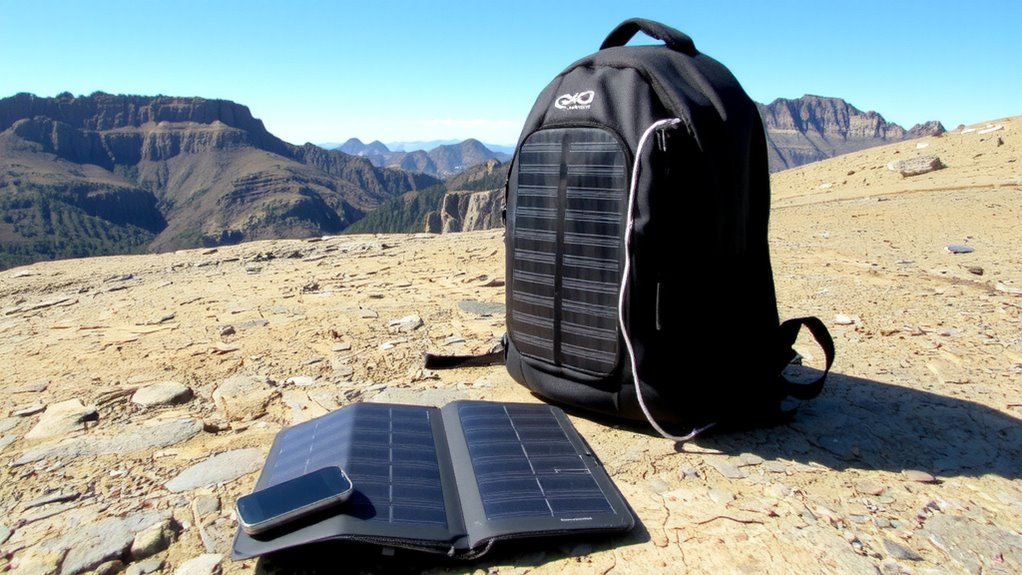
You’ve seen how solar chargers turn sunlight into usable power, but not all perform the same when the sun’s out. Rigid solar panels typically offer higher panel efficiency, often hitting 22–24%, making them reliable under peak sunlight intensity. They’re durable and work well when angled directly at the sun. Lightweight foldable models use monocrystalline cells too, balancing portability with solid output. While slightly less efficient-around 20%-they still deliver steady power in full sun. You’ll get better results with chargers that include smart charge controllers, as they regulate voltage and protect your devices. Avoid amorphous panels; their low panel efficiency-below 15%-means slow charging even in strong sunlight intensity. For consistent daylight use, pick a charger with high conversion rates and weather-resistant materials. Size matters, but efficiency matters more. A compact, high-efficiency panel outperforms a larger, low-grade one when sunlight intensity drops. For reliable performance, consider models featured in expert-tested roundups, such as those found in the best solar chargers guide.
Which Phones And Tablets Charge Best With Solar?
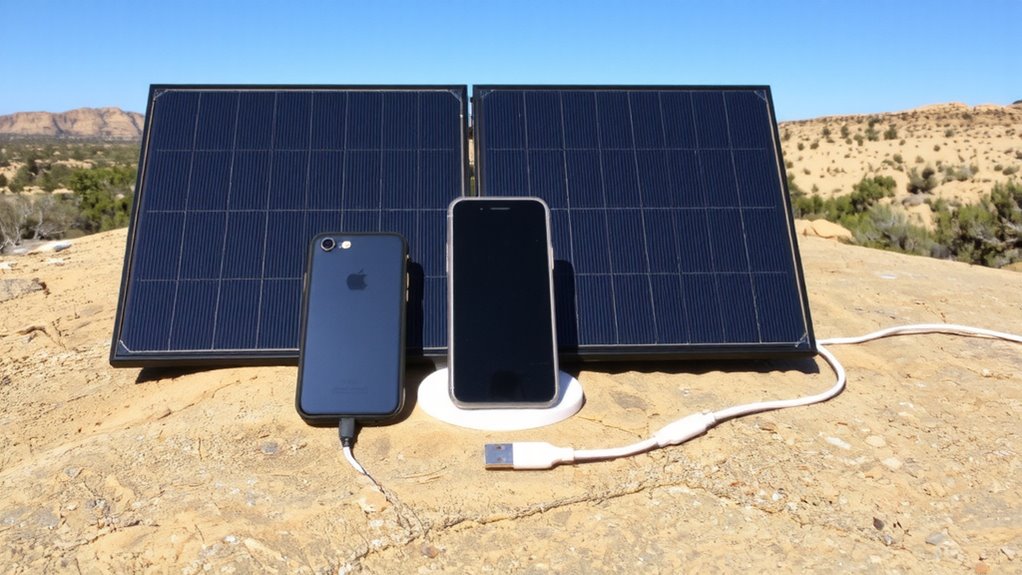
Efficiency matters most when choosing which phones and tablets charge reliably with solar power. You need strong charging efficiency to make the most of limited sunlight, and not all devices perform equally. Modern smartphones with USB-C PD support, like recent Samsung Galaxy and Google Pixel models, offer better device compatibility and faster power intake. Mid-range Android tablets, such as the Samsung Galaxy Tab A series, often charge more predictably than high-end iPads, whose power demands can exceed typical solar output. Devices with battery capacities under 10,000 mAh tend to reach usable charge levels faster. Lower screen brightness and disabled background apps improve charging efficiency. Avoid power-hungry devices unless your solar panel delivers high sustained output. Prioritize models with proven device compatibility and efficient power management for real-world reliability.
7 Ways To Maximize Solar Charging Speed In Sunlight
When the sun’s out, positioning your solar panel at a perpendicular angle to the sunlight gives you the strongest charge, since even a 15-degree tilt away can cut output by up to 30%. You need consistent angle adjustment throughout the day as the sun moves-panels lose efficiency quickly with poor panel orientation. A fixed position works poorly after mid-morning. For best results, adjust the angle every two hours to maintain direct exposure. Flat surfaces collect less energy than tilted ones, especially in morning and afternoon. Reflective surfaces nearby, like sand or snow, can boost input slightly, but only if the panel orientation maximizes exposure. Avoid shading-even partial coverage on one cell can reduce total output by 50%. Use a stand or mount that allows quick, secure angle adjustment. Real-world tests show these steps can improve charging speed by up to 40% compared to unattended setups. Top-rated models often include built-in adjustable kickstands for optimal positioning.
Solar Panels Vs. Power Banks: Which Should You Choose?
Why carry a heavy power bank when the sun’s free energy’s right above you? Solar panels offer endless power during daylight, while power banks rely on pre-stored electricity. For an efficiency comparison, solar panels convert 20–25% of sunlight into usable power, but only with direct exposure. Power banks deliver near 100% efficiency in energy transfer, but their capacity is fixed. You’ll wait longer with solar, especially on cloudy days. A cost analysis shows solar panels cost more upfront-$50 to $150-but no recurring energy costs. Power banks range from $20 to $100 and charge fast via wall outlets, but need frequent recharging. If you’re off-grid often, solar pays off over time. For occasional use, a power bank is cheaper and more reliable. Choose based on your access to sunlight and charging needs.
Why Your Solar Charger Isn’t Working (And How To Fix It)
Is your solar charger underperforming despite hours in the sun? First, check for faulty connections at the cable joints or USB ports-loose or corroded points disrupt power flow. A damaged wiring issue often hides beneath the surface, especially if the cable bends sharply or shows visible frays. Even minor internal breaks stop charging entirely. Test with a multimeter: if voltage reads below the rated output, the panel or circuitry may be compromised. Guarantee direct sunlight exposure-shading or indirect light reduces efficiency fast. Dust or debris on the panel surface also cuts output. Clean it with a dry cloth. If the problem persists, try a different device to rule out compatibility issues. Most failures trace back to physical defects, not panel weakness. Inspect regularly, store carefully, and replace units with consistent power loss.
How Solar Charging Helps The Planet
Though it might seem small, switching to solar charging cuts your reliance on grid electricity, which often comes from fossil fuels. You’re using free, renewable energy, and that directly leads to reduced emissions over time. Every kilowatt-hour pulled from the sun is one less from coal or natural gas. Solar chargers are compact, efficient, and work reliably in daylight, giving you energy independence in situations where outlets aren’t available. That’s practical in emergencies or remote locations. While the initial output is lower than wall charging, the long-term environmental benefit is measurable. You’re not eliminating charging needs, but you’re making them cleaner. There’s no complex maintenance or infrastructure-just panels, cables, and sunlight. Trade speed for sustainability, and you still come out ahead in emissions savings. It’s not a complete fix, but it’s a functional step with real impact.
On a final note
You’ll get consistent power from solar chargers in direct sunlight, but output depends on panel wattage and device compatibility. A 20W panel charges most phones in 2–3 hours under ideal conditions. Power banks store energy for low-light use, while solar-only units cut weight. Efficiency drops in shade or cloudy weather. Choose based on your environment, usage patterns, and need for reliability. Solar helps reduce grid dependence, but has real limits-plan accordingly.