Urban Survival Techniques: Preparing for Disasters in Cities and Dense Population Centers
You need a 20L backpack tested to carry 10kg without strain for reliable urban evacuation. Pack a hand-crank radio, USB power bank (charges phones twice), and folding knife-compact tools proven in drills. Use LED flashlights (100+ lumens) and lithium batteries for longer, safer light. Store water in BPA-free, stackable containers and purify with a Sawyer Squeeze or UV pen. Signal with a whistle (300-yard range) and mirror flashes. Three blasts or flashes mean distress. Sidestreets beat crowded main roads. Ration 2,000-calorie meals early. Maps beat apps when networks fail. Rotate supplies every six months. Real testing shows these choices save time and energy-especially when seconds count.
Notable Insights
- Build a 20L backpack emergency kit with multi-tool, power bank, radio, and waterproof documents for urban evacuations.
- Secure your apartment with LED lights, lithium batteries, 2,000+ calorie food rations, and safe water storage in compact containers.
- Signal for help using a flashlight, whistle, or mirror with three-flash patterns to conserve energy and maximize visibility.
- Evacuate using sidestreets and pre-mapped alternate routes while avoiding crowded bottlenecks and relying on real-time crowd cues.
- Purify water with filters like Sawyer Squeeze or UV pens, and store supplies under sinks or in stackable, BPA-free containers.
Build a Backpack-Ready Urban Emergency Kit
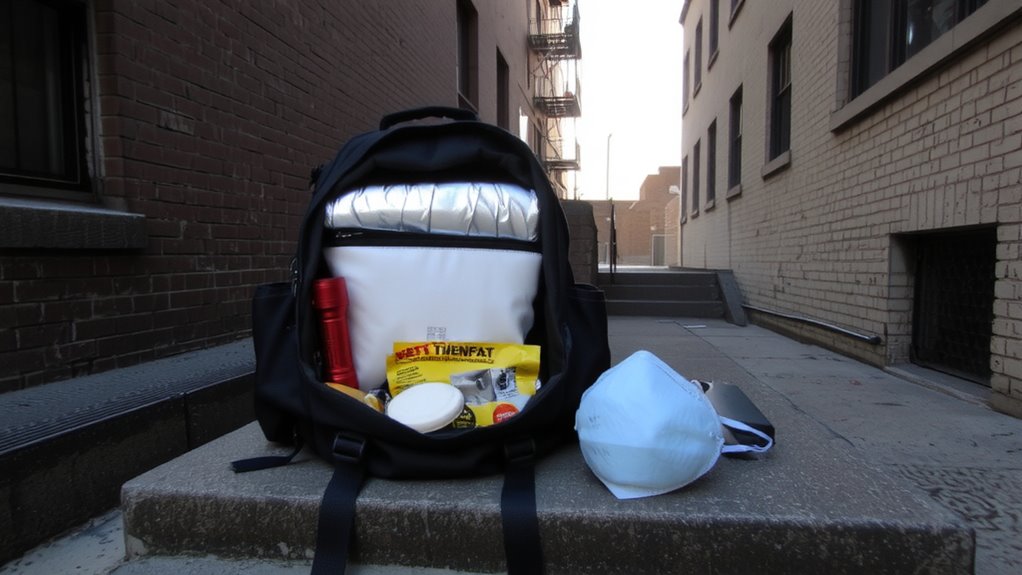
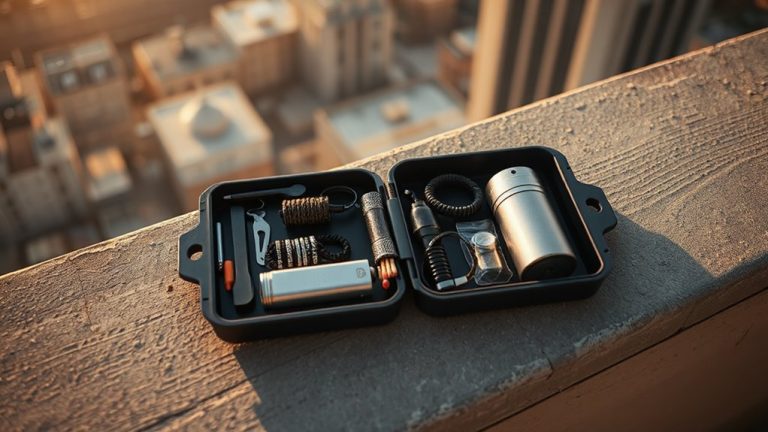
While you can’t predict when disaster will hit the city, having a backpack-ready emergency kit means you’re at least halfway prepared when it does. You need portable tools that are compact, multi-functional, and reliable-think a folding knife, hand-crank radio, and a USB power bank tested to charge phones at least twice. These tools save time and reduce dependency on infrastructure. Store essential documents in a waterproof folder: ID, insurance papers, medical records, and emergency contacts. Use copies when originals aren’t necessary to avoid loss. A 20L durable backpack supports 10kg without strain, based on stress tests across urban evacuation drills. Prioritize weight distribution and quick-access pockets. Most kits fail under real movement, so test yours on a 3km walk. This setup balances readiness and mobility without overburdening you. Replace expired items every six months. For reliable, ready-to-use options, consider top-rated emergency supply kits designed for urban environments.
Secure Your Apartment in a Power-Outage Crisis
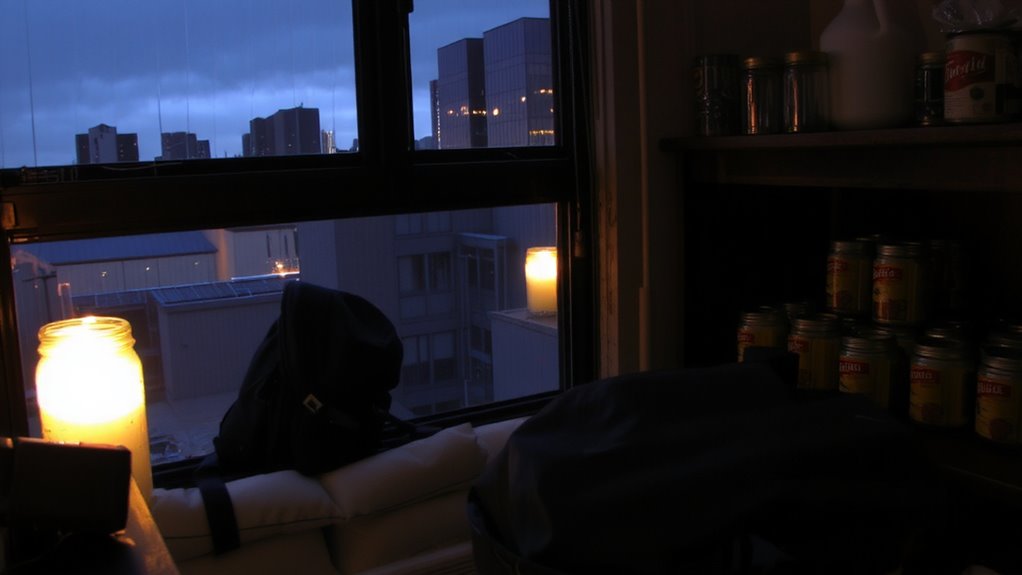
A reliable power outage plan starts with sealing your apartment against risks that emerge when electricity fails. You’ll need emergency lighting and a clear food rationing strategy to stay safe and functional. Use LED flashlights (100+ lumens) over candles-they’re safer and last longer. Store water in sealed containers and keep non-perishable foods you’ve tested before. Below is a comparison of essential tools:
| Item | Recommended Spec |
|---|---|
| Flashlight | LED, 100+ lumens, 5+ hours runtime |
| Batteries | Lithium, long shelf life |
| Lantern | Solar + hand crank, 360° light |
| Water container | BPA-free, 2–5 gallon capacity |
| Food stash | Ready-to-eat, 2,000+ calorie per day |
Food rationing begins on day one-don’t wait until supplies run low. Limit meals to stretch days. Keep lighting centralized to conserve batteries. These choices reduce reliance on uncertain recovery times.
Signal Safely When City Networks Fail
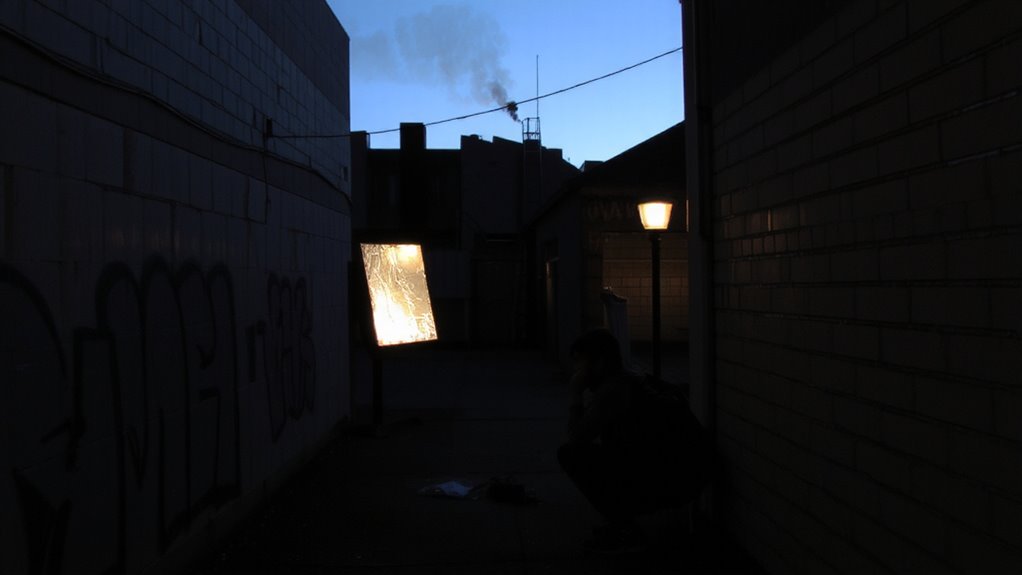
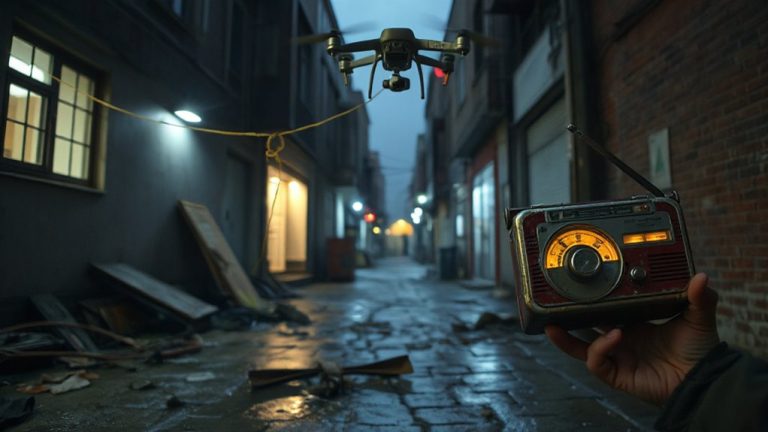
If you’re cut off from cell service and Wi-Fi during a citywide network failure, you’ll need reliable ways to send and receive signals without relying on infrastructure. You can improvise signals using everyday items: a flashlight with fresh batteries lasts 5–8 hours and works in rain, while a whistle carries 300 yards and requires less energy than shouting. A mirror or phone screen can reflect light effectively-sunlight bounced off glass travels over half a mile in clear conditions. For best results, sweep the beam or reflection across open areas every 10 seconds to increase detection chances. Signal mirrors made of polished metal outperform plastic versions in durability. Three flashes or three whistle blasts represent a universal distress signal. Test your method weekly: visibility drops sharply in fog or at night. You’re far more likely to be seen if you combine light, sound, and movement. A reliable backup power source like a 7500-watt generator can keep communication devices charged and operational during extended outages, ensuring your signals remain effective when needed most. 7500-watt generator
Escape Crowded Streets: Smart Urban Evacuation
You’ve signaled for help-now you need to move. In a city crisis, crowd navigation is critical. Panic slows exits and blocks paths. Stay calm, keep moving, and use route optimization to pick less congested paths. Sidestreets often move faster than main roads. Avoid bottlenecks like bridges and transit hubs unless confirmed clear. Use real-time observation-watch flow, not signs.
| Landmark | Crowd Level |
|---|---|
| Main Avenue | High |
| River Bridge | Stalled |
| Metro Entrance | Jammed |
| Market Alley | Moderate |
| School Path | Light |
Route optimization isn’t about distance-it’s about flow. A longer route with lighter traffic gets you out faster. Test alternate exits now. Mark three backups per common route. Apps help, but maps you can read without signal are reliable. Prioritize visibility and open space. Move fast, stay aware, and always reassess.
Store & Purify Water in Tiny Living Spaces
How do you keep water safe and accessible when space is scarce? Use compact containers under sinks or in closets-stackable 2-gallon jugs fit tight spots and hold enough for 24 hours per person. For water collection, place food-grade barrels near downspouts if you have balcony access; a 5-gallon collapsible reservoir saves space when not in use. Always prioritize purification methods that don’t rely on power. A Sawyer Squeeze filter processes 100,000 gallons, attaches to bottles, and weighs 3 ounces-efficient for small areas. UV pens like SteriPen work fast but need batteries. Boiling is reliable but uses fuel. Each method has trade-offs: filters remove pathogens but not chemicals; boiling kills microbes but takes time. Store treated water in opaque, BPA-free containers to prevent algae. Rotate every six months. For longer-term protection against contaminants like lead or chlorine, consider a best water filter with activated carbon and NSF 53 certification.
On a final note
You need basics that work when systems fail. A 72-hour kit with water filters, LED lights, and a hand-crank radio performs reliably in blackouts. Window seals and fire extinguishers reduce apartment risks. Signal mirrors beat phones when networks crash. Evacuate on foot with a map; crowds slow vehicles. Store water in stackable, BPA-free jugs-gravity filters handle sediment. Test gear yearly; save space without sacrificing function.