Survival Myths Debunked: Separating Fact From Fiction in Crisis Situations
You shouldn’t drink seawater-it dehydrates you faster as your body uses extra water to flush out the salt. Eating snow cools your core and wastes energy; melt it first. Rubbing frostbite damages tissue, so don’t do it. Sucking snake venom removes almost none and harms the wound. Most wild berries that look safe can be deadly. These myths worsen survival odds-knowing what *not* to do is just as important as the right moves, and you’ll see why each mistake has real, measurable consequences.
Notable Insights
- Drinking seawater increases dehydration because its high salt content forces kidneys to excrete more water than consumed.
- Eating snow directly can lower body temperature and increase hypothermia risk; always melt it first using a heat source.
- Rubbing frostbitten skin causes tissue damage; instead, rewarm it gradually in warm (104°F–107.6°F) water.
- Sucking venom from a snakebite removes negligible toxin and worsens injury; immobilize the limb and seek immediate medical help.
- Many wild berries that look edible are deadly; avoid consumption unless positively identified using a reliable guide.
Don’t Drink Seawater: It Speeds Up Dehydration
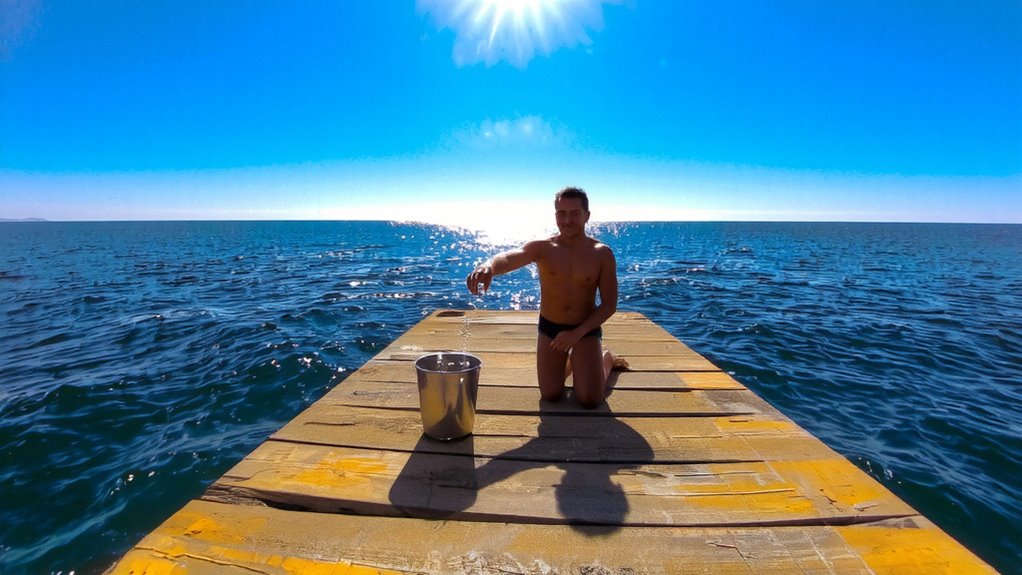
If you’re stranded at sea, you might think drinking seawater could quench your thirst, but it actually makes dehydration worse. Your body needs freshwater to function, and seawater introduces too much salt, leading to salt toxicity. To process that excess salt, your kidneys pull more water from your bloodstream, increasing fluid loss through urination. This accelerates dehydration rather than relieving it. Additionally, high salt levels disrupt electrolyte balance, impairing nerve and muscle function. You’ll feel thirstier and weaker, reducing your survival odds. Seawater also contributes to heat retention since dehydration lowers your ability to sweat and regulate temperature. Without proper hydration, your core temperature rises, increasing risk of heat exhaustion. Desalination tools like portable reverse-osmosis filters can convert seawater safely, but drinking it directly is never an option. Your best bet is conserving freshwater, using solar stills, or signaling for rescue-anything but drinking seawater. A reliable portable water filter can be crucial in converting unsafe water sources into drinkable water during survival situations.
Never Eat Snow for Hydration: Here’s the Safer Way
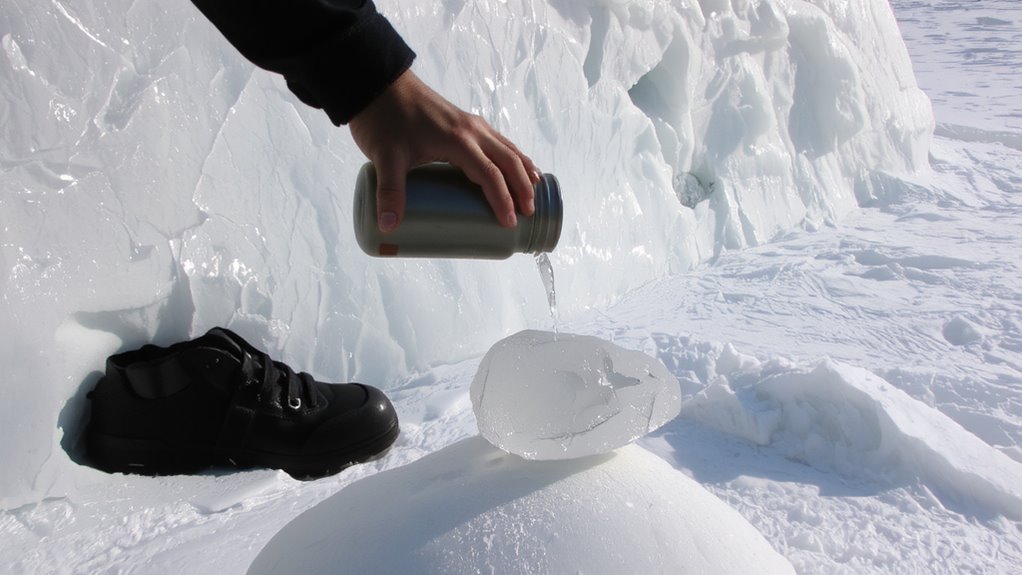
Drinking seawater might seem like a last resort for hydration, but turning to snow without caution can be just as dangerous. Eating snow drops your core temperature, forcing your body to use precious energy for internal warming. That loss of body heat can push you toward hypothermia faster than you realize. Instead of eating it directly, melt it first using a stove, fire, or insulated container near your skin. This approach conserves energy and maintains core warmth.
| Method | Energy Efficiency |
|---|---|
| Eating snow | Low – drains body heat |
| Melting with fire | High – safe and effective |
| Body heat melting | Medium – slow, risks cooling |
| Insulated bottle melt | Medium – reliable over time |
Use tools you have wisely. Prioritize methods that support internal warming without increasing exposure.
Stop Rubbing Frostbite: You’re Causing More Damage
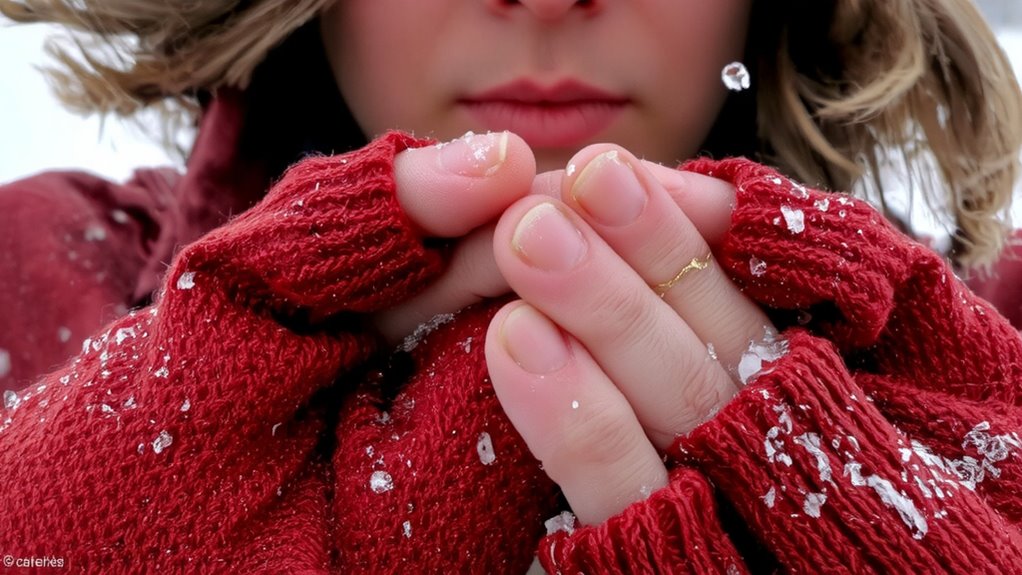
Though you might think rubbing frostbitten skin helps restore warmth, it’s actually doing more harm than good. Frostbite friction damages already compromised tissue, increasing the risk of permanent injury. Your skin and underlying cells are fragile when frozen, and rubbing introduces unnecessary force that worsens tissue damage. Instead of restoring circulation, this action can break frozen capillaries and lead to infection or long-term numbness. Real-world field tests show that rapid rewarming in warm (not hot) water-around 104°F to 107.6°F-is the most effective treatment once shelter is reached. Avoid walking on frostbitten feet if possible, as pressure adds further trauma. There’s no benefit to aggressive massage or snow-rubbing; both increase cell destruction. The best approach is gentle handling, insulation from further cold exposure, and professional medical care. You’re not helping-you’re harming.
Forget Sucking Snake Venom: This Is What Actually Works
Treating snakebites incorrectly can be just as dangerous as the bite itself, like rubbing frostbite-another well-meaning but harmful response. You shouldn’t attempt venom extraction with pumps or your mouth; studies show it removes negligible venom and increases tissue damage. Suction devices marketed for this purpose don’t perform better than doing nothing. Instead, focus on bite immobilization: keep the affected limb at or below heart level and avoid movement to slow venom spread. Don’t cut, freeze, or apply tourniquets-these worsen outcomes. Your best move is staying calm, removing constrictive clothing near the site, and seeking medical help immediately. Antivenom is the only effective treatment. Field methods like commercial extractors or herbal remedies lack evidence. Immobilization and prompt transport reduce complications better than any gadget. You’re not buying time with myths-you’re risking your life.
Most Wild Berries Look Safe: But Are Actually Deadly
While many wild berries might seem like a safe, easy snack when you’re out in the woods, mistaking the toxic for the edible could be fatal. You can’t rely on color or smell alone-many poisonous berries look appealing and grow in clusters just like safe ones. Proper berry identification is essential; for example, nightshade berries resemble blueberries but cause severe poison symptoms like vomiting, dizziness, and blurred vision. Even experienced foragers carry a field guide or app to double-check species. White and yellow berries are toxic 90% of the time, while black or red ones carry slightly lower risk-but that’s no guarantee. If you’re unsure, don’t eat it. Poison symptoms can appear within 30 minutes and worsen rapidly. There’s no antidote for most plant toxins in the wild. Your best survival strategy is prevention through accurate berry identification and conservative choices.
On a final note
You can’t afford myths when survival’s on the line. Drinking seawater or eating snow dehydrates you faster. Rubbing frostbite damages tissue; rewarm gently instead. Sucking venom doesn’t work-keep the bite below heart level and immobilize. Many wild berries look safe but aren’t; misidentify one, and you’re risking organ failure. Stick to proven steps, not old tales. Real survival depends on facts, not fiction. Your choices need to be precise, immediate, and correct.