Mountain Survival Techniques: Adapting Your Skills at High Altitudes
You need to recognize altitude sickness early-headache, nausea, or dizziness above 8,000 feet mean stop ascending and rest. Descend 1,000 feet if oxygen drops below 85%. Breathe in for three steps, out for two, and slow your pace-performance drops 10–15% every 5,000 feet. Drink 3–4 liters daily and eat 200-calorie snacks regularly. Storms hit by afternoon, so move early. Use a compact shelter with R-value over 4 to retain heat. There’s more to managing risk when you know how your body and gear truly perform up high.
Notable Insights
- Recognize altitude sickness early by checking for headache, nausea, and fatigue above 8,000 feet, and respond immediately with rest, hydration, and descent if needed.
- Maintain steady breathing and pacing by taking short steps and using a 3-step inhale, 2-step exhale rhythm to conserve energy above 10,000 feet.
- Stay hydrated with 3–4 liters of purified water daily and fuel your body frequently with 200+ calorie snacks rich in carbs and protein.
- Monitor weather hourly and avoid high-exposure areas by early afternoon to escape sudden storms that often develop between 2 p.m. and 5 p.m.
- Build compact, wind-protected shelters using natural barriers and insulated bedding with an R-value above 4 to retain body heat and prevent hypothermia.
Recognize Altitude Sickness Before It Worsens
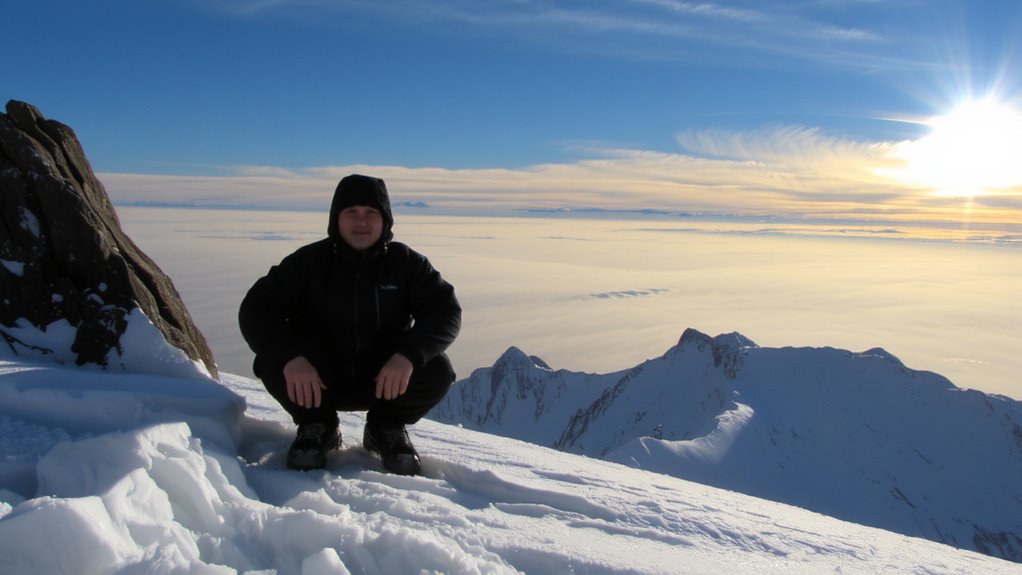
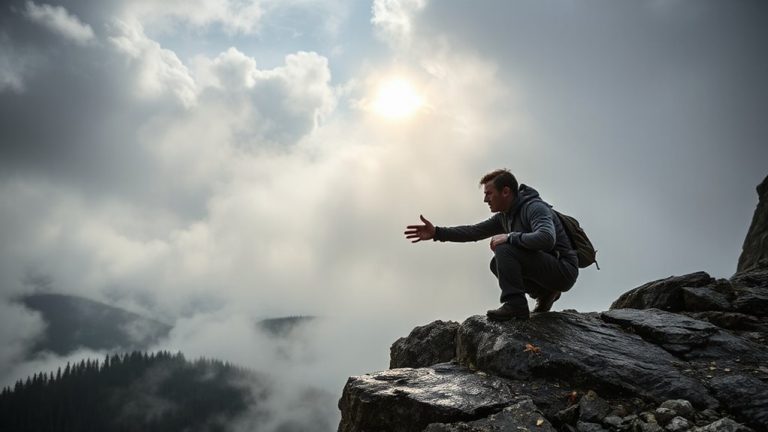
Why do some climbers struggle just hours after reaching base camp? You might feel fine at lower elevations, but altitude sickness can hit fast above 8,000 feet. The drop in oxygen triggers early symptoms like headache, nausea, dizziness, and fatigue-don’t ignore them. Your body is warning you it’s not adapting. These signs mean you need an immediate response: stop ascending, rest, and hydrate. Pushing on risks progression to serious conditions like HAPE or HACE. A pulse oximeter helps; if your oxygen saturation drops below 85%, descend at least 1,000 feet. Medications like acetazolamide can help, but they’re not a substitute for descent. Monitoring symptoms hourly is more reliable than gadgets. Early detection and immediate action are your best tools. No product replaces sound judgment.
Adjust Your Breathing and Pace for Thin Air
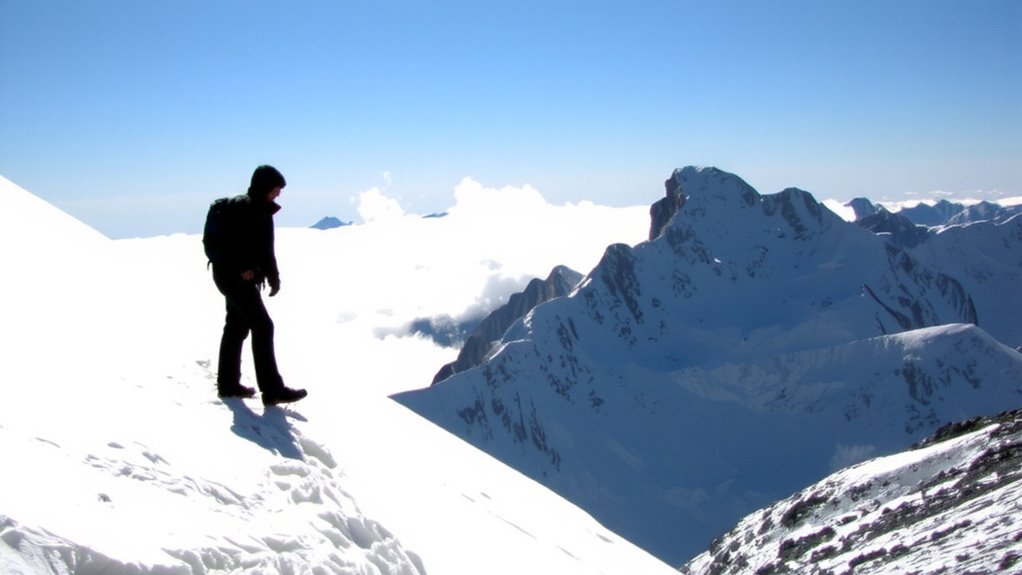
Even if you’re in good shape, the air above 10,000 feet holds less oxygen, so you’ll need to slow your pace and focus on steady breathing to maintain stamina. Your body requires time to adjust, and rushing leads to fatigue and poor decision-making. Use deliberate pace control-take shorter steps and pause often. This conserves energy and reduces strain on your heart and lungs. Establish a consistent breathing rhythm: inhale deeply through your nose for three steps, then exhale slowly through your mouth for two. This pattern maximizes oxygen intake and helps prevent hyperventilation. Avoid sprinting uphill or matching sea-level speeds; performance drops roughly 10–15% per 5,000 feet gained. Walking too fast disrupts breathing rhythm and depletes reserves. Stick to a sustainable rate, especially on ascents. With proper breathing rhythm and pace control, you’ll climb more efficiently and reduce the risk of altitude-related issues.
Stay Hydrated and Fuel Your Body at Altitude
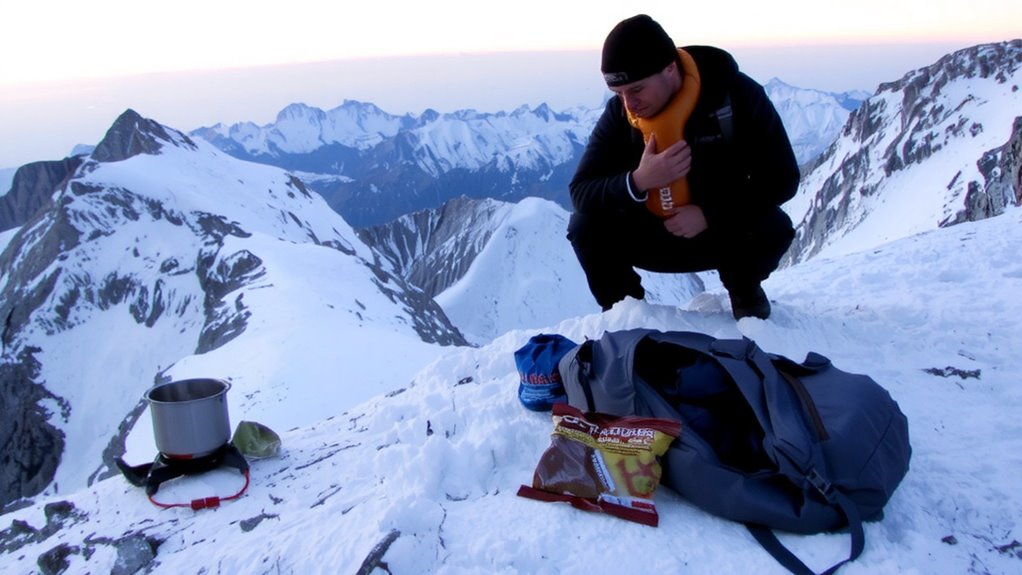
Because the air at high altitudes is colder and drier, you’ll lose more water through breathing and sweat without noticing, so staying hydrated is critical-you should drink 3–4 liters of water daily above 8,000 feet. Rely on known water sources like springs or melted snow, but always purify them; boiling or using a microfilter removes pathogens effectively. Dehydration impairs endurance and mental clarity faster at elevation. For fuel, consume energy snacks every few hours-nuts, dried fruit, or bars with at least 200 calories each. These deliver fast and sustained energy without heavy digestion. Avoid sugary foods alone; combine carbs and protein for stable output. Your body burns more calories at altitude, so consistent intake matters more than taste. Over time, neglecting hydration or calories increases fatigue and risk. Simple discipline here prevents serious problems later. A reliable survival water purifier can ensure safe drinking water in remote mountain environments.
Navigate Mountain Weather and Terrain Safely
When you’re above treeline with storm clouds building fast, knowing how to read the weather and terrain can keep you out of trouble-most sudden storms hit between 2 p.m. and 5 p.m., so plan your route to be off exposed ridges by early afternoon. You need to monitor weather patterns hourly; a clear morning can still lead to dangerous afternoon thunderstorms. Use a reliable altimeter and barometer to track pressure changes-drops of more than 4 hPa in an hour signal approaching storms. For terrain assessment, avoid gullies and loose scree during rain, as they increase avalanche and slip risks. Solid rock and lower-angle slopes offer safer retreats. GPS devices help, but always carry a map and compass-electronics fail. Reading cloud types, wind shifts, and temperature swings gives you early warnings. Combine real-time data with terrain awareness to adjust your route before conditions worsen. It’s not about speed-it’s about staying aware and getting down safely. A dedicated AM/FM weather radio can provide critical updates even when other communication channels fail.
Build Heat-Retaining Shelters at Altitude
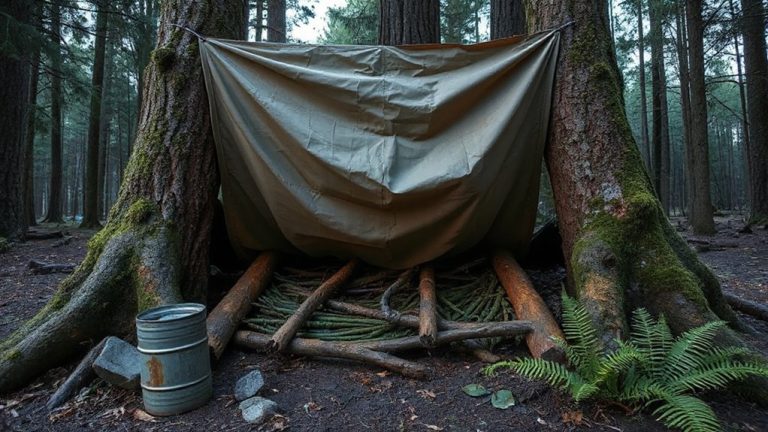
A well-constructed shelter can cut heat loss by up to 50% in alpine environments, and at high altitudes where wind chill and dropping temperatures amplify hypothermia risks, your best bet is a compact, insulated setup that blocks wind and traps body heat. Use natural wind barriers like rock outcrops or snow drifts to reduce exposure, and reinforce them with a tarp or snow wall. A small shelter retains heat better than a large one, minimizing the volume you need to warm. Pair insulated bedding-such as closed-cell foam pads or inflatable sleeping pads with R-values above 4-with your shelter to prevent conductive heat loss to the ground. Combining wind barriers and insulated bedding typically maintains core temperature 5–10°F higher than using either alone. Test shelter setups in controlled conditions before relying on them in storms. Materials must balance weight, durability, and thermal performance without overcomplicating assembly. For long-term protection in wet conditions, choose a shelter with water-resistant materials to maintain insulation effectiveness and structural integrity.
Why High Altitude Demands New Survival Rules
You’ve built your shelter right-compact, windblocked, insulated from the ground-but that’s only step one when you’re above 8,000 feet. At this elevation, oxygen pressure drops sharply, reducing your body’s efficiency by at least 25%. That means slower movement, impaired judgment, and increased fatigue-even if you’re fit. You can’t push as hard or recover as fast. Temperature variation also intensifies: days may reach 50°F, but nights can drop below freezing, every day. Your gear must handle rapid shifts without adding bulk. A four-season sleeping bag becomes essential, not optional. Layering beats thick single insulation because it lets you adjust. Fuel efficiency drops in thin air, so your stove needs more time and gas. Boiling water may take 20% longer. These aren’t inconveniences-they’re survival thresholds. Standard lowland rules don’t apply. Your margin for error shrinks. Adapt or risk rapid deterioration.
On a final note
You’ll need to adjust fast-altitudes above 8,000 feet reduce oxygen by nearly 25%, slowing your pace and clouding judgment. Stick to steady breathing, drink 3–4 liters of water daily, and shelter from sudden storms with insulated, compact gear. High-altitude survival isn’t about strength-it’s about consistency. Your gear must be light but durable, food calorie-dense, and decisions data-driven. Test systems below 6,000 feet first; what works there often fails up high.