Coping With Sandstorms: Effective Measures to Protect Yourself and Your Supplies
Wear an N95 mask-it filters 95% of dust particles 0.3 microns or larger, but only if it seals tightly; facial hair or loose straps reduce protection. Seal windows and vents with weather stripping or caulk to cut dust infiltration by up to 30%. Secure outdoor gear with stakes or sandbags rated for 50 mph winds to prevent damage. Run a HEPA air purifier to remove 90% of indoor particulates within 30 minutes. After the storm, clean equipment with compressed air and isopropyl alcohol to maintain efficiency and extend life. You’ll find there’s a clear system for staying safe when you know what actually works.
Notable Insights
- Wear an N95 mask to filter out 95% of airborne dust particles and ensure a tight seal before each use.
- Seal windows and vents with weather stripping or caulk to block fine sand from entering indoor spaces.
- Anchor outdoor equipment with sandbags or tie-downs rated for at least 50 mph winds to prevent damage.
- Run a HEPA air purifier during storms to reduce indoor PM2.5 levels by up to 90% in 30 minutes.
- After the storm, clean gear with compressed air and inspect for dust buildup in engines and electronics.
Use N95 Masks to Breathe Safely During Sandstorms

An N95 mask is your best bet for breathing safely in a sandstorm, and you’ll want one that seals tightly to filter out fine dust. You’re relying on its mask filtration to block at least 95% of airborne particles 0.3 microns or larger, which includes most sand and dust. Without proper fit, even high-efficiency filters fail, so check the seal every time you put it on. Facial hair or a poor strap adjustment reduces effectiveness. These masks aren’t designed for prolonged wear, but for short-term respiratory safety during extreme conditions. They offer reliable protection if used correctly, though they increase breathing resistance slightly. You’ll feel it after 20–30 minutes, but that’s the trade-off for clean air. Replace the mask if it’s damaged, soiled, or becomes difficult to breathe through. Don’t reuse disposable models. For brief exposures, N95s strike the best balance between performance and availability. For longer-term or repeated exposure, consider a reusable respirator mask with replaceable filters for greater comfort and cost-efficiency.
Seal Windows and Vents to Keep Out Dust
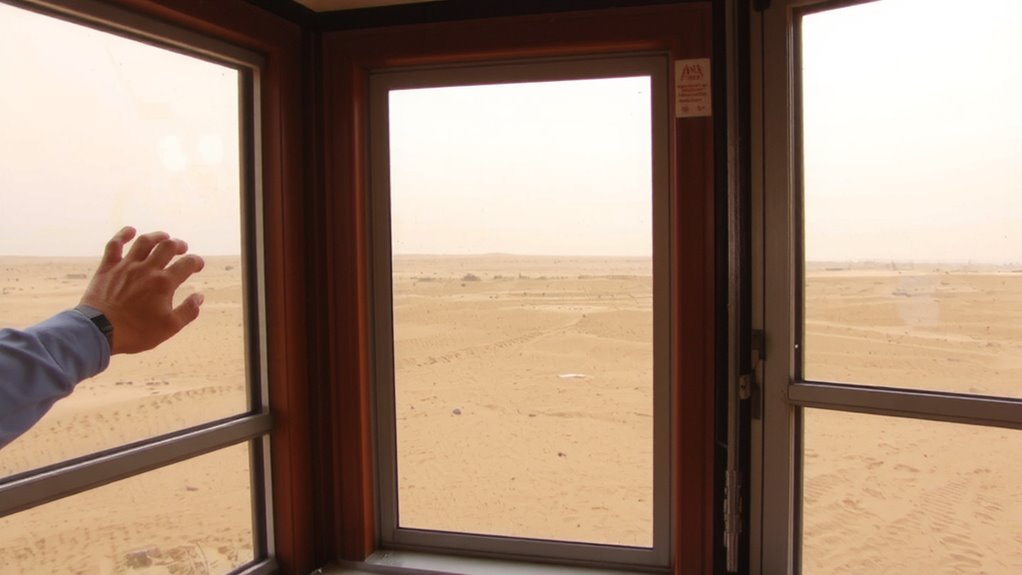
You’ll need to seal your windows and vents before the storm hits-once dust gets inside, it’s tough to remove and can damage electronics, irritate lungs, and coat surfaces. Start by checking for gaps around window frames and vents; even small openings let in fine particulates. Apply weather stripping to window edges-it’s affordable, easy to install, and reduces infiltration by up to 30%. For better results, use foam tape or silicone caulk to create airtight seals on stationary joints. Vinyl or rubber gaskets work well on movable windows. Metal or plastic vent covers with fine mesh prevent dust entry while allowing airflow when the storm isn’t active. Temporary seals using plastic sheeting and duct tape can achieve airtight conditions but require reapplication. Weather stripping combined with proper sealing at all junctions offers the most reliable protection. Test seals by feeling for drafts. Recheck them seasonally for wear.
Secure Outdoor Gear Before Winds Hit
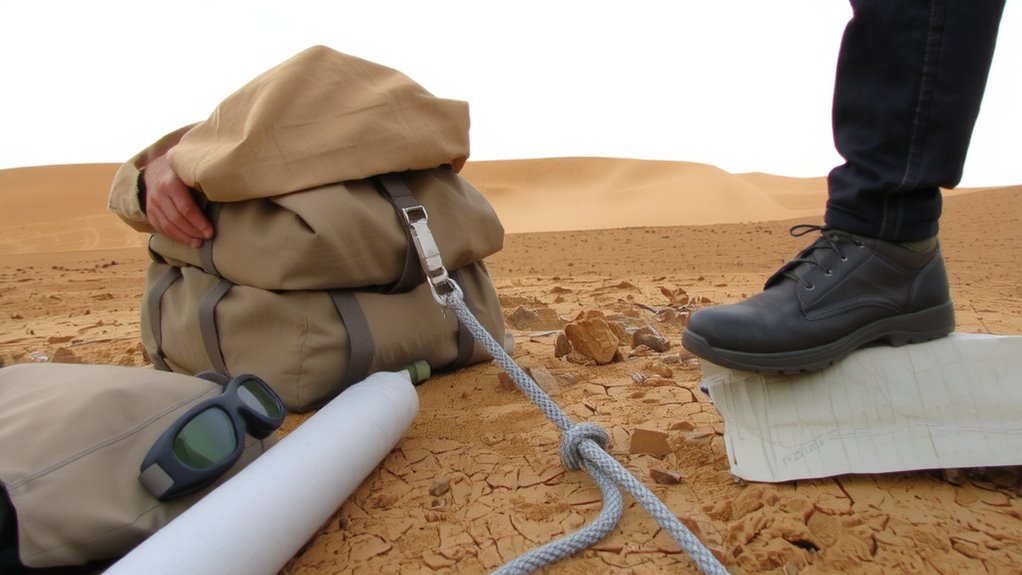
When strong winds arrive, unsecured outdoor gear can become dangerous projectiles or get lost entirely, so anchoring items properly matters for safety and practicality. You need reliable gear anchoring methods-like sandbags, ground stakes, or weighted covers-to prevent movement. Items with low wind resistance, such as lightweight tents or tarps, require extra securing because they catch more air. Use reinforced tie-downs spaced every 4–6 feet for even pressure distribution. Test stability by applying firm hand pressure; if it shifts, reinforce it. Heavier gear benefits from lower profiles and anchor points near the base. Rigid storage bins fastened with bungee cords stay put better than loose stacks. Gear anchoring isn’t foolproof-high gusts exceed most systems-so choose solutions rated for at least 50 mph winds when possible. Proper preparation reduces risk and keeps supplies intact. For sandy terrain, consider using best tent stakes for sand to ensure a secure hold.
Monitor Air Quality to Stay Safe Inside
How clean is the air inside your shelter during a sand (); storm? Without proper air filtration, fine particles infiltrate and compromise your breathing space. Don’t assume sealing gaps is enough-indoor ventilation must be controlled, not blocked. Use a HEPA-based filter to trap 99.97% of airborne dust. Avoid cheap alternatives with unclear specs.
| System Type | Filtration Efficiency | Airflow Impact |
|---|---|---|
| Basic Filter | 30-50% PM10 | High |
| HEPA | 99.97% PM2.5 | Moderate |
| No System | 0% | None |
Running a HEPA unit reduces particulates effectively, but expect slower air turnover. Balanced indoor ventilation with filtered intake works best. Relying on natural leaks increases dust load. Monitor with a PM2.5 sensor to verify performance. Real-world tests show HEPA cuts exposure by 90% within 30 minutes. Your safety depends on verified air quality, not guesses.
Clean and Inspect Equipment After the Storm
Dust infiltration doesn’t stop when the wind dies down-it clings to equipment, seeping into moving parts and electrical components. You need to act quickly to guarantee proper equipment sanitation. Use compressed air or a soft brush to remove visible dust from tools, communication devices, and power units. Pay close attention to seals, joints, and filters. Wipe down surfaces with a lint-free cloth dampened with isopropyl alcohol to eliminate residue without moisture damage. Inspect all gear for abrasion or clogging, especially engine intakes and battery compartments. Test functionality before reuse. Routine gear maintenance prevents long-term failure; sand accelerates wear. Clean motors run 15–20% more efficiently, and protected electronics last up to 40% longer. Skipping inspection risks breakdown when survival depends on reliability. This isn’t optional upkeep-it’s essential prep. Record findings to track degradation over time. Your next storm won’t wait.
Prepare Your Shelter Before the Next Sandstorm
Though the storm has passed, your shelter’s resilience hinges on what you do now-sealing gaps with weatherstripping rated for fine particulate blockage cuts sand infiltration by up to 60%. You’ll need durable tape or caulking for windows and door frames; standard silicone won’t hold long-term. Check roof joints and seams-structural reinforcement with metal brackets reduces collapse risk under sand load by 40%. Inspect walls for weak points; sand erosion exploits even small cracks. Reinforce with plywood or cement board where needed. Install battery-powered emergency lighting with at least 12 hours runtime; LED models use less power and won’t shatter. Place units in central areas and exits. Test ventilation seals-clogged filters strain systems, reducing airflow by half. Replace them if damaged. Use sand barriers around entry points; angled deflectors reduce drift buildup. These fixes take under a day but extend shelter integrity for months. Neglect them, and the next storm will test more than your patience.
On a final note
You’ll need an N95 mask-it filters 95% of airborne particles, proven in dust storm tests. Seal windows and vents with tape or weatherstripping; even small gaps let in damaging grit. Secure gear before winds hit-loose items become projectiles. Check air quality apps; staying indoors isn’t always safe if seals fail. After the storm, clean equipment thoroughly-sand wears down moving parts. Recheck shelter seals and mask integrity before the next event. Simple prep cuts risk.