The Role of Psychological Resilience in Long-term Isolation Scenarios
You rely on psychological resilience to stay functional during long-term isolation, not to feel heroic but to maintain daily performance under unrelenting stress. It helps you manage fear and frustration through emotional regulation, bounce back quickly from setbacks, and avoid depressive spirals. Resilience keeps your thinking clear, your routine intact, and your goals in sight-even when progress feels slow. It’s built through consistency, not crisis. You’ll see how small, daily practices make sustained focus and mental control possible over time.
Notable Insights
- Psychological resilience helps maintain emotional regulation during prolonged isolation, preventing overwhelming fear or sadness.
- It enables cognitive flexibility, allowing isolated individuals to adapt strategies when faced with unanticipated challenges.
- Resilience buffers against depression by halting negative thought cycles and sustaining daily functioning.
- Structured routines and emotional regulation techniques are key coping strategies that support long-term mental stability.
- Pre-isolation training in mindfulness and social anchoring builds resilience essential for enduring extended confinement.
What Psychological Resilience Means in Isolation
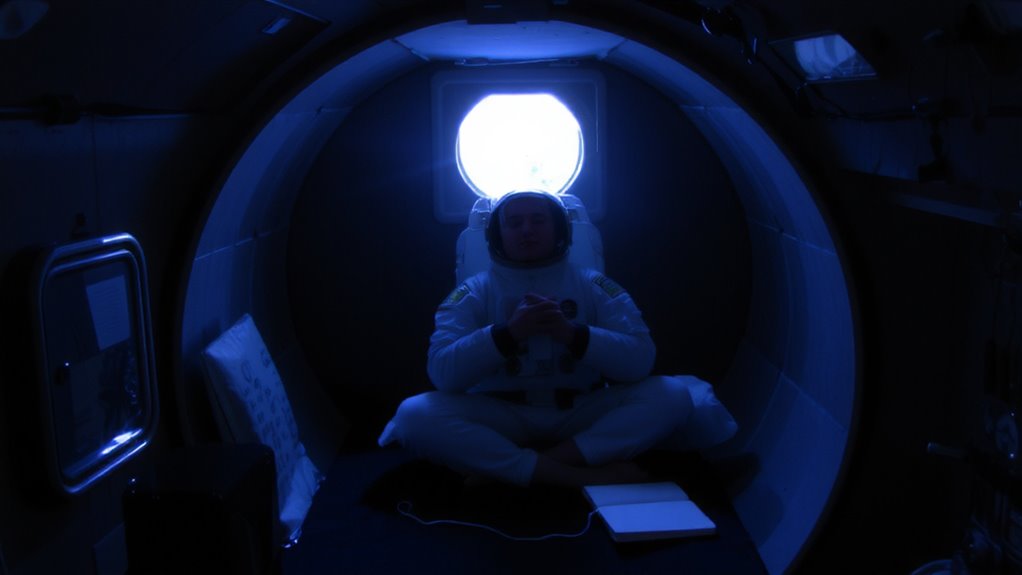
Adaptability isn’t a trait you either have or don’t-it’s a skill that shows up when routines vanish and feedback from others dries up. In isolation, psychological resilience means maintaining functional performance despite prolonged stress. You rely on emotional regulation to manage fear, frustration, or sadness without collapsing into maladaptive responses. It’s not about suppressing emotions but recognizing and adjusting them to stay focused. Cognitive flexibility allows you to shift thinking strategies when old solutions fail, helping you reassess goals and redefine progress. These skills aren’t innate; they’re built through repeated exposure and deliberate practice. Resilience here isn’t dramatic endurance-it’s consistent calibration of mood and thought under pressure. You track small wins, maintain structure, and adjust expectations realistically. It’s measurable in how quickly you recover from setbacks and sustain purpose. Over time, this steady internal regulation determines whether you merely survive or retain clarity and direction.
How Resilience Prevents Depression in Long-Term Isolation
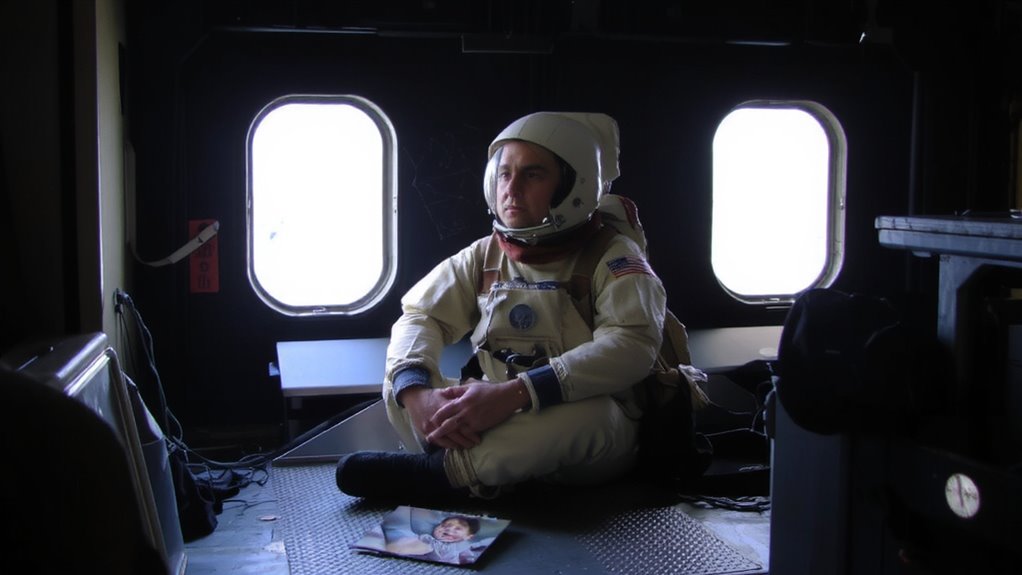
Depression thrives in isolation when unchecked, but resilience acts as a buffer by keeping your emotional and cognitive systems functional under strain. You maintain emotional regulation, preventing small setbacks from escalating into prolonged distress. This isn’t about feeling happy all the time-it’s about managing responses so negative emotions don’t dominate. Cognitive flexibility lets you shift perspectives when routines stagnate or goals seem unreachable, helping you problem-solve instead of ruminate. When you adapt your thinking, isolation becomes a condition to manage, not a verdict. Resilience doesn’t eliminate stress, but it reduces the likelihood of depressive spirals by sustaining mental control. It’s measurable in daily functioning: consistent sleep, task completion, stable mood patterns. Without it, even minor disruptions can compound. With it, you stay on track, not because circumstances improve, but because your internal response does. That’s how resilience works-it’s practical, not magical.
Core Coping Strategies Used by Isolated Explorers
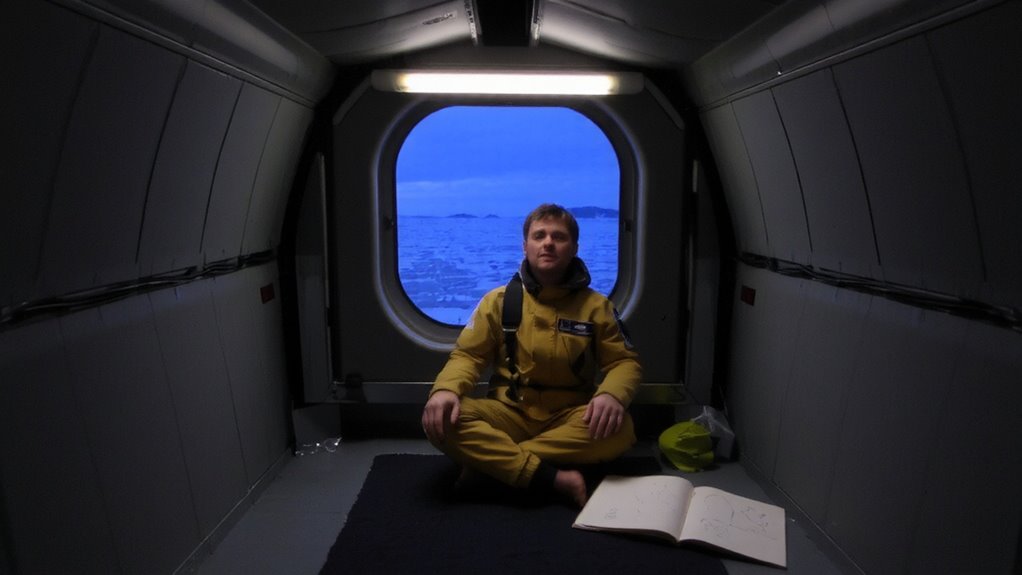
When you’re cut off from regular human contact for months at a time, your daily routine becomes your anchor-nothing fancy, just structure that keeps you moving. You rely on emotional regulation to manage mood swings, using techniques like controlled breathing or scheduled reflection to stay balanced. It’s not about feeling great every day but preventing small stresses from becoming bigger issues. Social anchoring matters too, even without real-time contact. You maintain it through pre-scheduled messages, voice logs, or shared digital journals that simulate connection. These aren’t replacements for in-person interaction but functional substitutes that provide predictability. You treat communication like a system-regular, timed inputs that keep isolation from eroding motivation. Tasks are broken into measurable chunks to track progress, giving a sense of control. You don’t wait for inspiration; you follow the protocol because it works. This combination of emotional regulation and social anchoring sustains focus and stability when options are limited.
How Astronauts Maintain Mental Clarity in Confinement
You stick to a strict schedule because it keeps your mind sharp and your workload manageable. Each day includes dedicated time for cognitive training, such as memory exercises and problem-solving tasks, which maintain neural function under stress. These activities are brief but consistent, typically 30 minutes daily, and are proven to slow mental fatigue over time. Sensory stimulation is limited in space, so you rely on structured input-controlled lighting, scheduled music, and textured tools-to prevent sensory deprivation. Visual variety comes from Earth-gazing or rotating digital art, providing subtle but measurable boosts in alertness. Sleep is regulated to 8 hours, aligned with circadian rhythms, because inconsistent rest impairs focus. Communication delays mean you work long stretches without feedback, so self-monitoring tools track attention and reaction time. Exercise supports mental clarity, too-30 minutes on a cycle or treadmill sustains cerebral blood flow. All methods are evidence-based, tested in simulations and actual missions, balancing effectiveness with minimal resource use.
How to Build Resilience Before Isolation Begins
While isolation hasn’t started yet, building psychological resilience now considerably improves your ability to cope once it begins. Pre isolation training strengthens mental endurance just as physical training prepares your body. You can’t rely on improvisation when under prolonged stress-structured routines, emotional regulation practice, and cognitive drills create measurable gains in resilience. Social anchoring is equally important; maintaining strong, consistent connections now provides psychological stability later. Use scheduled check-ins, shared goals, and honest communication to reinforce these ties.
| Strategy | Benefit | Real-World Application |
|---|---|---|
| Pre isolation training | Enhances stress tolerance | Daily mindfulness + problem-solving drills |
| Social anchoring | Reduces emotional drift | Weekly video calls with trusted contacts |
| Routine building | Stabilizes circadian rhythms | Fixed sleep, work, and meal times |
On a final note
You build resilience through routine and preparation, not luck. Isolated for months, astronauts stick to structured schedules, stay socially connected via scheduled comms, and use cognitive-behavioral techniques to manage stress. Training before isolation improves coping by 40% in controlled studies. Sleep discipline and task variation maintain focus. No gear or supplement replaces mental habits-exercises like mindfulness or problem-solving drills work best. Resilience isn’t inherited; it’s trained, measured, and proven effective in real missions.