Using Binoculars Effectively for Distance Observation and Survival Reconnaissance
Use 10×50 binoculars with nitrogen purging and rubber armor for reliable clarity and durability in rough conditions. They balance magnification and brightness while resisting fog and impacts. Set the diopter first, then focus quickly with the central wheel. Hold them steadily with elbows tucked, and scan systematically for movement or contrast. Look for damp ground, animal trails, or smoke to find water or signs of life. Proper optics and technique save time and energy-there’s more to get right in the field.
Notable Insights
- Choose 7x to 10x magnification with 30mm to 50mm objective lenses for a balance of clarity, brightness, and portability in the field.
- Ensure waterproof, fog-proof binoculars with rubber armor to withstand harsh environments and maintain reliable performance during survival situations.
- Set the diopter to zero and use the central focus wheel to achieve sharp, fast focus, checking lens alignment regularly for optimal clarity.
- Maintain a stable position by bracing elbows, using a proper stance, and leaning against solid objects to minimize shake during prolonged observation.
- Scan systematically with overlapping sweeps, watching for movement, contrast, and survival signs like animal trails, smoke, or water indicators.
Choose Survival-Ready Binoculars
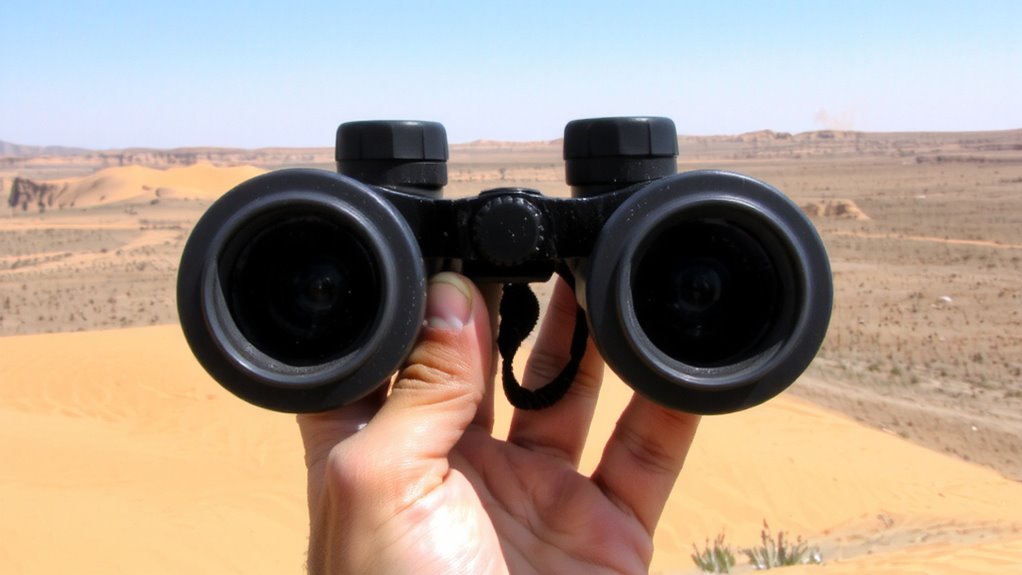
While you might be tempted to grab the cheapest binoculars you can find, survival situations demand optics that won’t fail when it matters. You need reliable magnification power and a sufficient lens diameter to gather light in low-light conditions. A 7x to 10x magnification gives you a stable image without excessive shake. Larger magnification narrows your field of view and amplifies hand movement. An objective lens diameter between 30mm and 50mm balances brightness and portability. A 10×50 setup delivers more detail than a 7×35, but it’s heavier. Waterproof and fog-proof construction is essential-nitrogen purged models prevent internal condensation. Rubber armor offers grip and shock protection. You’ll trade some clarity in dim light with smaller lenses, but portability often wins in survival scenarios. Test weight, focus speed, and durability before relying on them in the field. For versatile performance in both daylight and low-light conditions, consider models highlighted in the best binoculars for day and night viewing roundup.
Get a Clear View Quickly
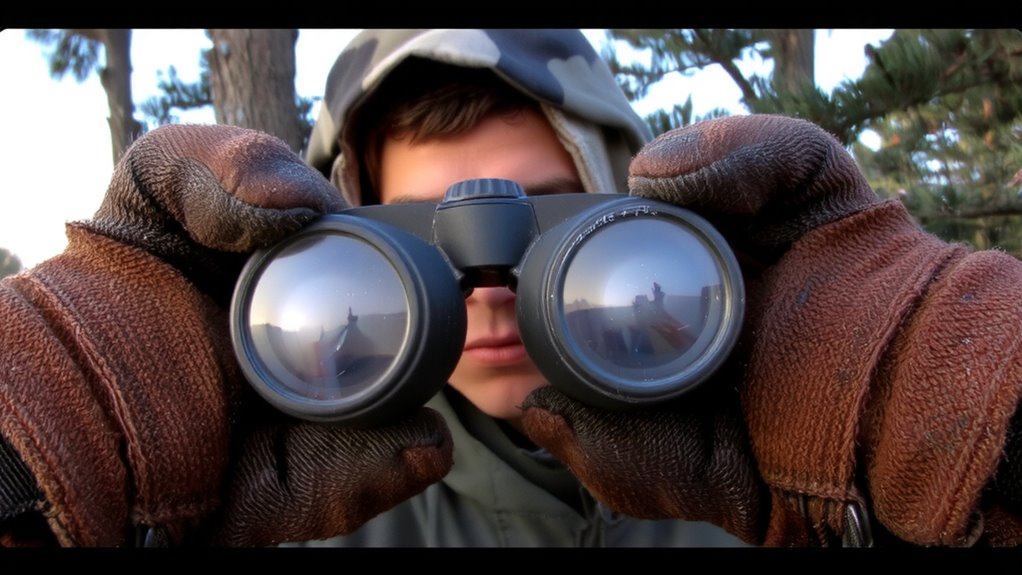
Speed counts when every second matters in the field, so focus your binoculars fast and accurately. Begin with the diopter set to zero, then adjust the central focus wheel until the image snaps into clarity. Use the focus adjustment for quick fine-tuning-most survival-grade models allow full clarity in under three turns. Misaligned lenses waste time and strain your eyes, so check lens alignment regularly; even slight offset degrades image sharpness and depth perception. You’ll need both barrels delivering a single, seamless image-double vision means realignment is due. Many rugged binoculars hold collimation well, but impacts or temperature swings can misalign them. Test before deployment. A clear, aligned view means less guesswork and faster target ID. Do this right, and you’re ready the moment the situation demands it. No frills, just function. For reliable performance in demanding conditions, consider models from the best 10×42 binoculars under $500 list to ensure optical precision and durability.
Hold Binoculars Steady in the Field
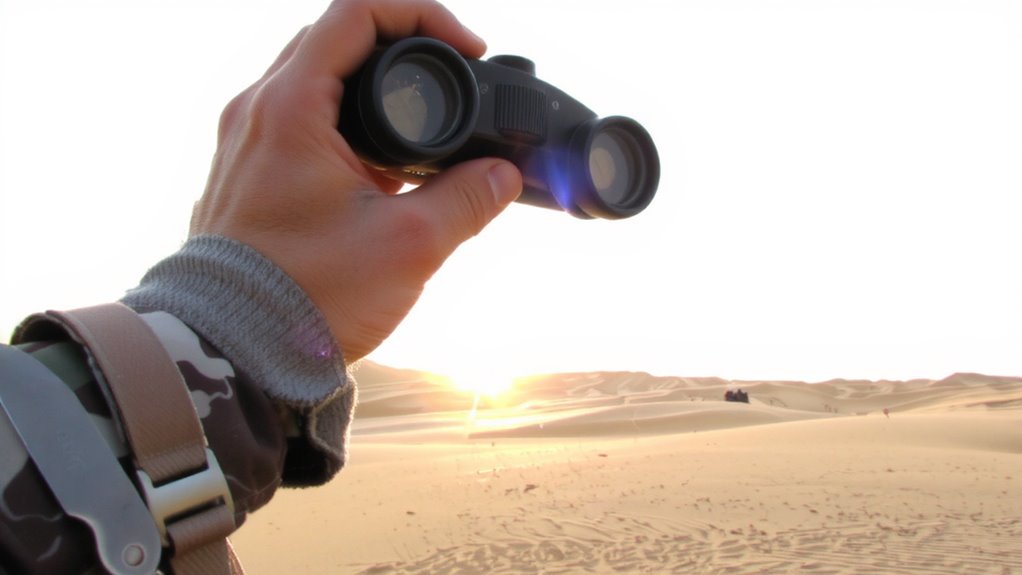
You’ll see more when your hands stay steady, especially at high magnifications where small shakes blur details. A proper grip reduces fatigue and increases control-place your thumbs forward and fingers wrapped firmly around the barrels, cradling the weight evenly. Don’t squeeze; tension causes micro-movements that ruin clarity. Your stable stance matters just as much: plant your feet shoulder-width apart, back straight, elbows tucked into your ribs. For longer glassing sessions, lean against a tree or rock to minimize sway. If you’re kneeling, brace your elbows on your knees. Even budget binoculars perform better with good field technique. High-powered models above 10x magnify hand motion, making stability essential. Image stabilization helps, but it’s not a substitute for body control. Consistent results come from repeatable form-test different holds and positions to find what works for your build and gear.
Scan for Threats and Resources
Keep your grip steady and use that stability to start scanning systematically. Begin left to right, overlapping each sweep slightly to avoid gaps. Look for movement, shape, and contrast-key indicators of threats or resources. If your binoculars include thermal imaging, use it during low light or dense cover; it detects body heat and engine warmth others might miss. Thermal helps spot humans or animals at 500+ meters, but battery use increases. Watch for signal flares-they indicate distress or marking points-but don’t assume help is near. Flares burn 30–60 seconds and are visible up to 10 km, depending on conditions. Prioritize spotting active threats over distant lights. Balance visual scanning with tech: optical clarity matters more than zoom if the image wavers. Use both natural cues and tools. Scan every hour or when terrain changes. Consistency beats speed. A quality pair of 12×50 binoculars offers the ideal balance of magnification and light gathering for hunting and surveillance, making them well-suited for extended observation in varied light conditions. Consider models designed for hunting, where best 12×50 binoculars combine durability, clarity, and ergonomic design for prolonged field use.
Spot Water, Smoke, and Animal Trails
Look for water first-damp ground, bird activity, or converging animal trails often lead to a source. Use your binoculars to scan valleys, depressions, and dry riverbeds, where water collects after rain. Identifying terrain features like these helps narrow search areas quickly. Smoke rising from a campfire or burning debris indicates human or animal presence; track its origin carefully. Animal trails, especially those winding toward lower elevations, are reliable water indicators. Track them over distance using steady sweeps. Tracking distant movement along ridgelines or clearings can reveal game paths or people. Focus on breaks in vegetation and consistent direction-these distinguish trails from random animal paths. Binoculars with at least 8× magnification improve accuracy in spotting subtle signs. Higher magnification helps but reduces field of view, making scanning slower. Balance clarity with coverage based on terrain.
Stay Aware, Save Energy
Often, staying aware means catching movement or changes in the environment before they become critical. You conserve physical endurance by minimizing unnecessary movement, using your binoculars to scan from a stable position every 10 to 15 minutes. This rhythm prevents fatigue and extends your operational time. Maintaining mental clarity is easier when you’re not overexerting-stress and exhaustion degrade judgment. Short, focused observation sessions with clear objectives improve detection accuracy without draining energy. You’ll spot threats or resources earlier, allowing better route planning and reduced exposure. Avoid marathon scans; they deliver diminishing returns and strain focus. Instead, use structured sweeps of 20-degree increments, resting your eyes briefly between. This method balances coverage with efficiency. Your awareness stays sharp, your body stays fresh, and your decisions stay grounded in real-time data. Awareness isn’t about constant vigilance-it’s about strategic observation that sustains performance.
Keep Your Binoculars Working in the Wild
A reliable pair of binoculars is only as good as its upkeep in tough conditions. You need weather resistance to handle rain, humidity, and temperature swings without foging or internal damage. Check for rubber O-rings and nitrogen purging-these guarantee lens sealing that blocks moisture and dust. Without proper sealing, debris gets inside and degrades image clarity. Rinse your binoculars with fresh water after exposure to salt or sand, then dry them thoroughly. Avoid extreme temperature changes to prevent condensation. Store them in a padded case to protect from impacts. Wipe lenses with a microfiber cloth; don’t use clothing or abrasive materials. Use lens caps always. If optics fog inside, the sealing likely failed-replace or repair it. A waterproof, fog-proof design with strong weather resistance lasts longer in survival scenarios.
On a final note
You’ll want binoculars with 8x to 10x magnification and at least a 30mm objective lens for balance between range and portability. Waterproof, rubber-armored models survive harsh conditions. A wide field of view helps scan terrain quickly, while mid-sized optics reduce shake. Spot water glints, smoke, or trails at 500+ yards with clear focus. Regular lens cleaning and proper storage keep them functional. They’re reliable only if you use them consistently and maintain them.