Conducting a Scene Assessment in a Flash Flood Zone
You’re in danger the second you hear thunder upstream-flash floods strike fast. Check water depth with a stick; 6 inches of moving water can knock you down. Flow faster than 1 mph risks vehicle loss. Head for high ground immediately, aiming at least 15 feet above flood level. Avoid canyons and eroded banks. Watch for debris flows, downed power lines, and bubbling water-signs of hidden current. Don’t enter damaged buildings-cracks mean collapse. Your best shelter? Natural elevated ground, clear of trees. Move fast, stay alert-your next decision could save your life.
Notable Insights
- Check for early warnings like dark skies, distant thunder, and sudden upstream rainfall indicating imminent flash flooding.
- Assess water depth and flow speed using a pole; retreat if water is over 6 inches deep or moving swiftly.
- Identify safe escape routes with gentle inclines, solid ground, and clear visibility toward high ground at least 15 feet above flood level.
- Watch for hidden hazards including submerged debris, downed power lines, and unstable, saturated terrain prone to collapse.
- Evaluate shelters for structural integrity-avoid buildings with cracks, sagging floors, or misaligned doors showing flood damage.
Recognize Flash Flood Danger Signs Early
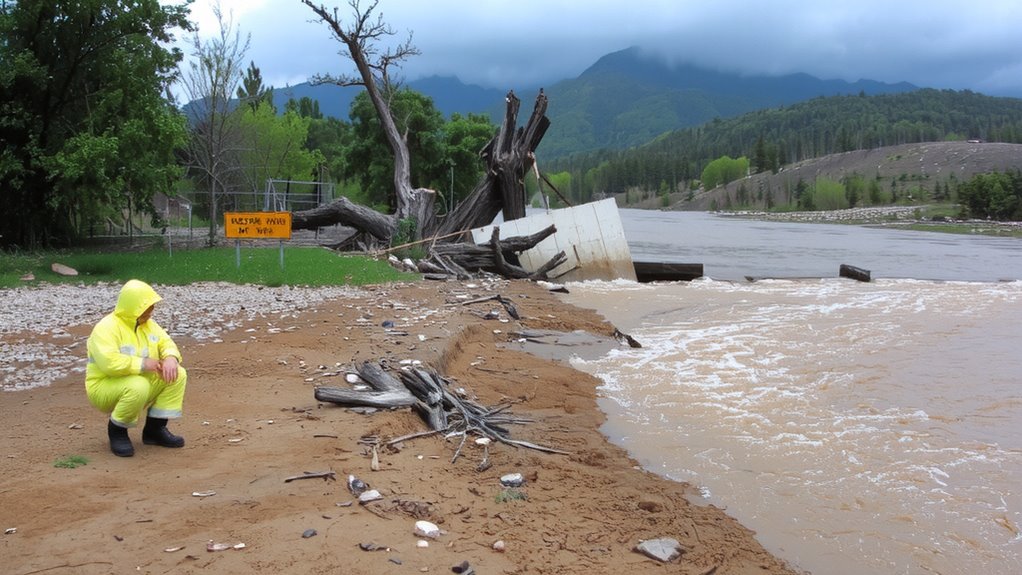
When the sky darkens and distant thunder rumbles, you’ll want to pay attention-flash floods often start with little warning. You can’t rely on visible water to know danger is near. Sudden shifts in weather patterns, like heavy downpours upstream, may not seem urgent where you are, but they can quickly become life-threatening downstream. Terrain changes, such as dry streambeds or steep canyons, funnel water rapidly and unpredictably. These areas collect runoff faster than flat ground, increasing flood speed and force. You should assess high-risk zones before conditions worsen. Elevated ground near unstable slopes or eroded banks shows recent water movement. Overhead trees with debris caught low suggest prior surges. Ignoring these cues limits your reaction time. Recognition isn’t about guesswork-it’s observing clear environmental signals. Spotting early signs gives you minutes, maybe only seconds, to move. That small window often decides safety.
Check Water Depth and Flow Speed Immediately
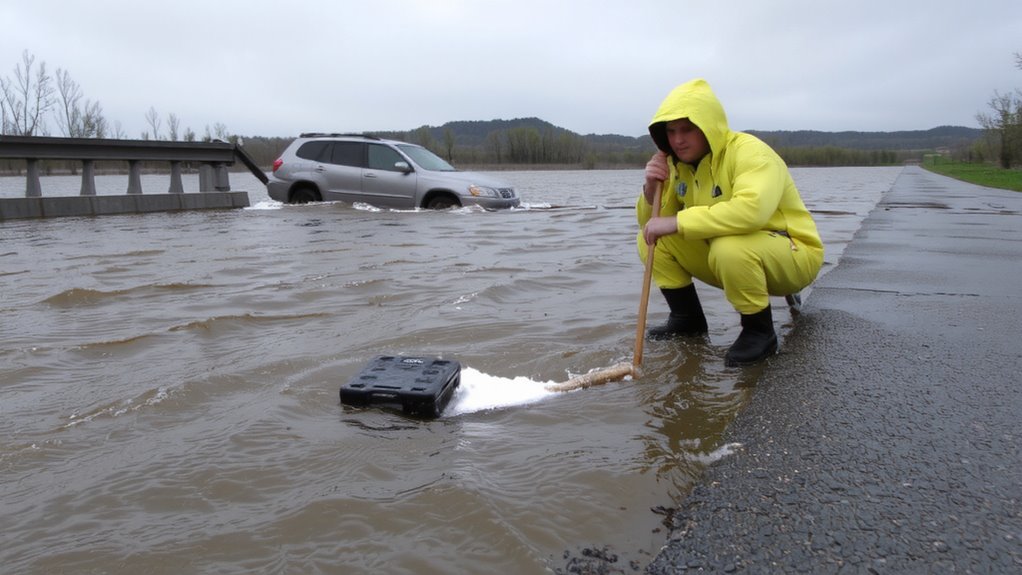
If you’re caught near moving water during a storm, you need to check depth and speed right away-every inch and second counts. Water depth matters because just 6 inches can knock you off your feet. Use a stick or pole to test depth before stepping; don’t rely on sight alone. Flow speed is equally critical-water moving at 1 mph can push vehicles off roads, and 2 mph can sweep away most people. Observe floating debris to gauge flow speed; if it’s moving fast, you shouldn’t be in it. Even shallow water with high flow speed becomes dangerous quickly. Don’t wait for confirmation-conditions shift in seconds. Assess both water depth and flow speed simultaneously. If either exceeds safe thresholds, retreat immediately. Trust measurable indicators over instinct. Moving water hides risks that aren’t visible, and delayed judgment increases danger. Your safety depends on swift, informed action.
Find Safe Exit Routes and High Ground Fast
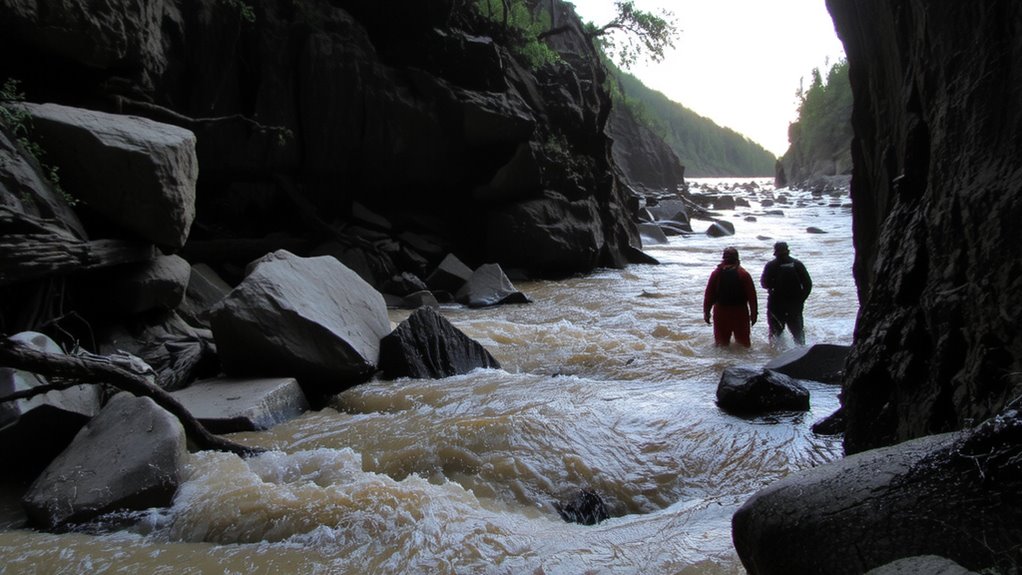
Though time is short, acting fast boosts your odds-identify at least two escape routes leading uphill or to higher ground, because one path might be blocked or too steep under stress. Use terrain analysis to pick routes with gradual inclines and stable footing. Avoid canyons, dry riverbeds, or low spots-they become death traps fast. Evacuation planning means knowing these paths before disaster hits.
| Factor | Poor Choice | Ideal Choice |
|---|---|---|
| Slope | >45° incline | <20° incline |
| Surface | Loose rock | Solid soil or bedrock |
| Obstacles | Fallen trees, debris | Clear, open path |
| Visibility | Dense brush | Unobstructed view |
Act fast but choose wisely-rushing into a bad route worsens risk. Test footing as you go. High ground means at least 15 feet above flood level. Investing in flood barriers for homes can provide critical protection while buying time to reach safety.
Spot Hidden Dangers: Debris, Erosion, and Electrocution Risks
Flash floods don’t just bring water-they bring weapons. You’re facing debris that can crush, erode, or trap. Watch for mudslide potential on steep terrain, especially where vegetation is stripped. Saturated ground won’t hold; even small slopes can give way without warning. Erosion undermines stability-paths, roads, and edges may collapse underfoot. Assume all standing water hides submerged obstacles like broken pipes, sharp metal, or downed trees. You can’t see them, but they’ll cut or pin you fast. Also, downed power lines electrify floodwater-don’t wade blindly. Use a pole to test ground ahead, but don’t rely on it fully. Voltage can spread without contact. Stay alert for bubbling water-it may signal live electricity. These risks aren’t rare; they’re predictable in flood zones. Avoid low zones after heavy rain. Move quickly, test each step, and keep clear of debris piles and leaning structures. Your margin for error is zero. Consider deploying a flood barrier to help redirect or reduce water flow in vulnerable entry points.
Check Building Stability Before Taking Shelter
A building’s appearance can deceive-what looks intact may be one tremor from collapse. You can’t trust walls that seem upright if the foundation’s compromised. Check for foundation cracks, especially new or widening ones, which signal weakened support after floodwaters recede. These fissures often mean the structure has shifted, risking total failure under stress. Assess structural integrity by examining door frames and windows-if they’re jammed or misaligned, the building has likely warped. Don’t enter if floors sag or walls lean, even slightly. Water saturation softens soil beneath the foundation, making collapse more likely. Temporary shelter isn’t worth the risk if the building can’t withstand additional pressure. Use visual clues and physical checks, not assumptions. Your safety hinges on objective signs, not appearances. Stay alert, stay outside, and choose only structures with confirmed stability.
Use Natural Barriers to Stay Safe
Your best defense in a flash flood zone is using the land’s own features to your advantage-elevated ground, dense tree lines, and natural ridges can shield you from rushing water. Seek high terrain quickly; even a few feet of elevation offers a terrain advantage. Avoid dry creek beds and valleys-they channel fast-moving floodwaters. Stay behind thick vegetation or boulders that act as natural cover, reducing exposure to debris and current. Trees and shrubs slow water flow and may prevent washouts nearby. Don’t rely on man-made barriers alone; they often fail under pressure. Natural cover is more reliable when assessed early. Terrain advantage means positioning yourself where water flows around, not toward, you. Use slopes that angle away from channels. Watch for signs of erosion-gullies form fast. If the ground feels unstable, move immediately. Staying put behind a natural barrier only works if it’s not in the flood’s path. Assess every feature quickly-your safety depends on smart, informed choices.
Decide in Seconds: Prioritize Safety Over Rescue
When seconds count, staying alive means choosing self-preservation over heroics-because no rescue attempt is worth becoming another victim. You must perform a rapid risk assessment: if water is rising faster than you can act, retreat is your only viable option. Flash floods exert enough force to knock you off your feet in under six inches of moving water. Emergency protocols don’t support impulsive entries; they demand situational awareness first. Attempting a rescue without evaluating flow speed, depth, and structural stability increases overall danger. Your survival gear-like a life jacket or throw rope-is only effective if you’re alive to use it. Prioritizing safety doesn’t mean inaction-it means following protocols that prevent additional casualties. Stick to training: call for professional help, mark the zone, and secure your position. Real effectiveness comes from disciplined judgment, not urgency-driven reflexes. You can’t help others if you’re submerged.
On a final note
You assess fast because seconds count. Check water depth-ankle-high can knock you down. Flow speed matters more than it looks; 6 inches of moving water risks falls. Avoid downed power lines and unstable ground. Seek high ground quickly, but don’t climb into attics without an escape route. Use ridges or embankments as barriers. Prioritize exit paths over saving gear. Decisions must be immediate, not emotional. Safety depends on what’s proven, not hope.