How to Build an Emergency Financial Preparedness
Set aside three to six months’ worth of expenses in a high-yield savings account with at least 4.00% APY and no fees. Cut unused subscriptions, switch to generics, and reduce dining out to free up $130+ monthly. Keep funds accessible for real emergencies like car repairs or job loss. Test the plan against a sudden income drop or $5,000 medical bill. If it holds, you’re on solid ground-see how small adjustments boost long-term resilience.
Notable Insights
- Set a realistic emergency fund goal of three to six months’ living expenses, starting with $1,000 if needed.
- Trim spending by cutting unused subscriptions, choosing generics, and reducing dining and fuel costs to save $130+ monthly.
- Store emergency funds in a high-yield savings account with at least 4.00% AP抓住机会,避免不必要的开支。
- Explore low-risk alternatives like money market accounts, short-term CDs, or Treasury bills for better returns and easy access.
- Test your plan by simulating job loss or medical bills to ensure funds cover expenses and can be accessed within 48 hours.
Set a Realistic Emergency Fund Goal
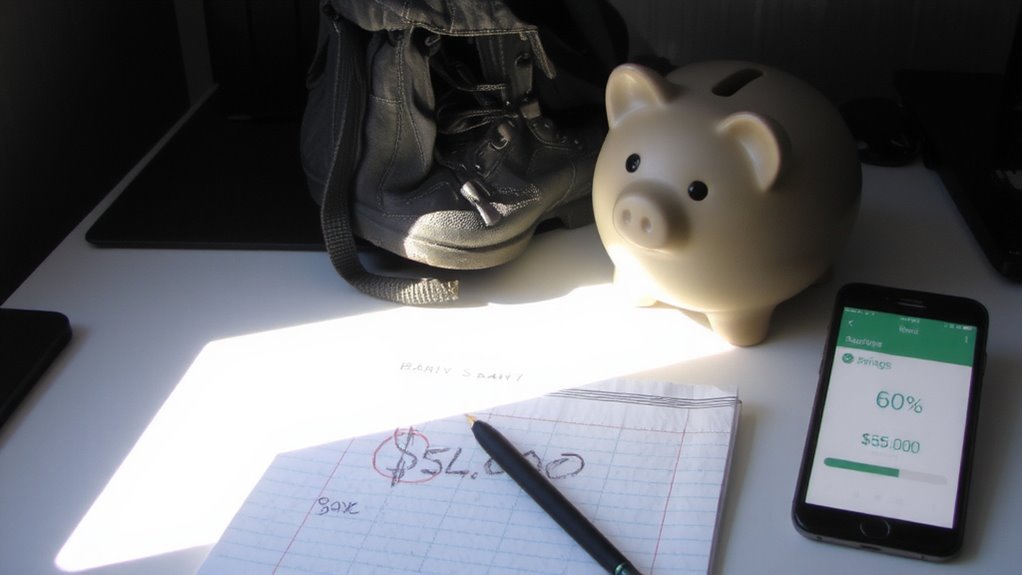
Aim to save three to six months’ worth of living expenses in your emergency fund-this range covers most unexpected setbacks, like job loss or medical bills, without overextending your budget. You don’t need to save it all at once; start small and build over time. Treat your emergency fund as a financial buffer, not a rainy day jar for minor wants. This fund is for true emergencies-car repairs, urgent medical costs, or lost income. A $1,000 starter goal works if your expenses are low, but most need more. If your monthly bills total $3,000, aim for $9,000 to $18,000. Store the money in a high-yield savings account: safe, accessible, and slightly growing. Avoid investing it-liquidity matters most. Prioritize consistency over size. Missing this step leaves you exposed when life disrupts your income.
Trim Spending Without Sacrifice
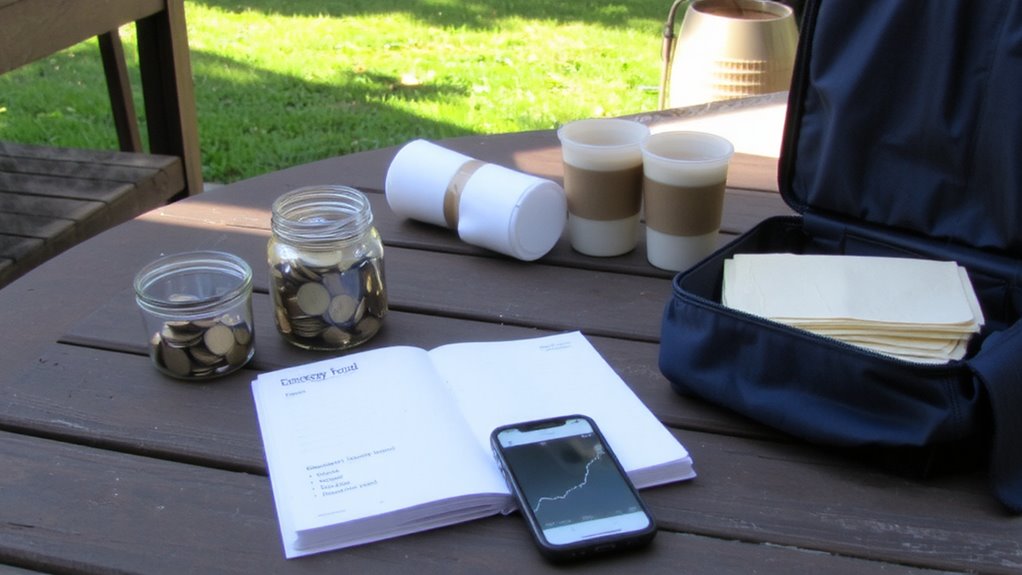
While you’re building your emergency fund, you don’t have to live like you’re broke-small, consistent cuts add up without wrecking your quality of life. Start by using a simple method to track expenses for two weeks; you’ll spot patterns you can adjust. Canceling underused services helps, so reduce subscriptions to streaming platforms, apps, or boxes you rarely use. Switching to generic brands, brewing coffee at home, or biking occasionally instead of driving all cut costs with minimal impact.
| Expense Category | Average Monthly Cost | Potential Monthly Savings |
|---|---|---|
| Subscriptions | $45 | $20 |
| Dining Out | $200 | $60 |
| Groceries | $400 | $50 |
You keep your routine intact while freeing up $130+ monthly-cash that goes straight into savings. The key is consistency, not deprivation.
Pick a High-Yield Emergency Savings Account
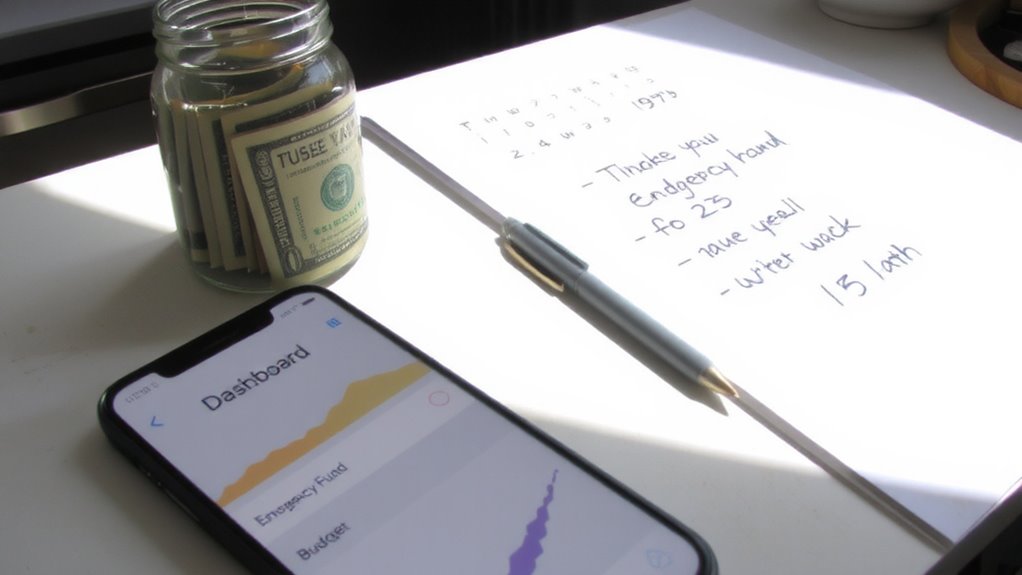
Why let your emergency cash sit idle earning next to nothing? You need a high-yield savings account that keeps pace with inflation while preserving access. Look for accounts offering at least 4.00% APY-some top options exceed 4.50%-with no monthly fees or minimum balance penalties. These account features matter because they directly impact your effective return. Equally important are liquidity options: guarantee you can withdraw funds within one to three business days without penalties. Most online banks provide this through ACH transfers or linked debit cards. Avoid accounts that restrict withdrawals or impose excessive transfer limits. Compare customer service response times, mobile app functionality, and FDIC coverage-standard at $250,000. Choose a balance between yield, reliability, and access. A high-yield account isn’t about aggressive growth; it’s about secure, functional storage for funds you might need fast.
Explore Emergency Cash Alternatives
If your emergency fund needs to stretch further than a standard savings account allows, consider short-term alternatives that balance yield and access without sacrificing safety. Money market accounts and short-term CDs often offer higher interest with minimal risk, though early withdrawal penalties can limit flexibility. Treasury bills are another low-risk option, providing competitive rates with government backing. These liquid instruments typically mature in under a year, making them practical for near-term needs. Beyond cash equivalents, build non-monetary safeguards. Barter systems let you exchange skills or goods during crises when cash is scarce. Community sharing networks-like tool libraries or food co-ops-reduce reliance on personal funds while expanding access to essentials. These strategies don’t replace emergency cash but complement it. They work best when established before a crisis, ensuring quick activation. Combining traditional and alternative resources creates a more resilient plan, balancing liquidity, yield, and real-world practicality.
Test Your Plan With Real-Life Scenarios
When life throws a sudden job loss or an unexpected medical bill your way, your emergency plan gets put to the test, and theoretical strategies won’t pay the rent. You need to simulate real crises now to see if your plan holds. Run a worst case scenario: lose income for three months and cover all essentials using only your emergency fund. Can you? Factor in an unexpected illness-add $5,000 in out-of-pocket costs. Does your fund cover it, or do you need more? Test access speed: can you withdraw funds in 48 hours? If not, adjust your savings vehicle. If your plan fails under stress, it’s flawed. Rebuild it. Real-world testing beats guesswork. Update your plan every six months or after major life changes. Preparedness isn’t hope-it’s verification. You either pass the test or find the gaps before they break you.
On a final note
You’ve set a clear goal, cut costs without losing quality, and picked a high-yield account that’s accessible and safe. Alternatives like credit lines are in place but not relied on. Your plan survives real-life tests-job loss, car repairs, medical bills-without breaking. It’s not perfect, but it’s functional, measurable, and adjustable. You know how long your fund lasts and where it falls short. That clarity is what keeps you prepared.