Assembling a Go-Bag That Includes Prescription Glasses and Hearing Aid Batteries
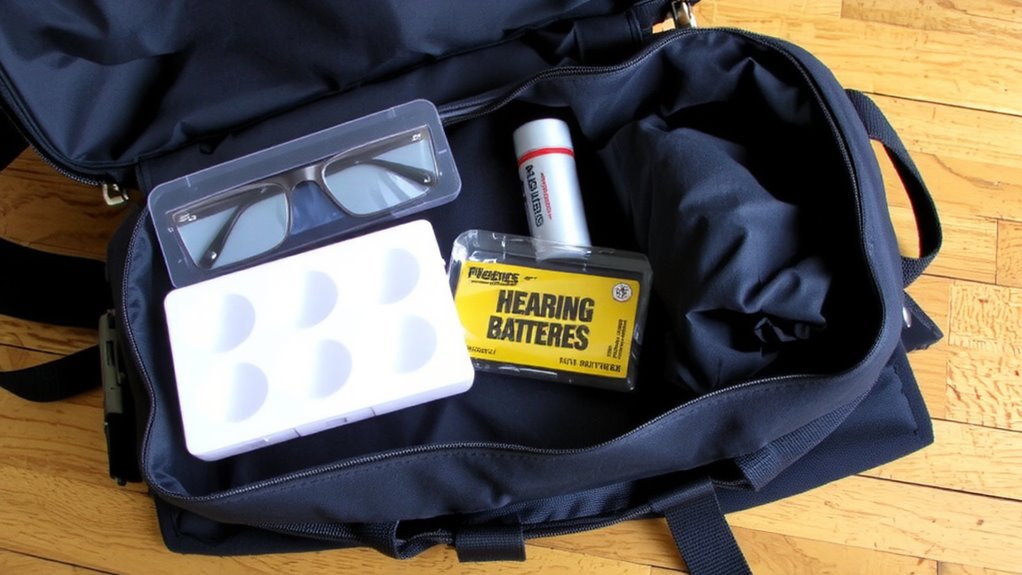
Keep your go-bag effective by including spare prescription glasses in a hard-shell case labeled clearly with your name and “SPARE GLASSES.” Store extra hearing aid batteries-types 10, 13, 312, or 675-in a dry, labeled container, and add a 5,000–10,000mAh portable charger for multiple recharges. Use a clear, zip-top pouch for fast access and visibility. Test all items every six months. You’ll want to know how each piece performs under stress.
Notable Insights
- Store prescription glasses in a hard-shell case with padding to prevent damage during evacuation.
- Pack extra hearing aid batteries by type and keep them in a labeled, dry container.
- Include lens cleaning supplies and a microfiber cloth with spare glasses for clear vision.
- Use a portable charger or power bank compatible with hearing aids for extended use.
- Organize all vision and hearing items in a clear, labeled pouch for quick access.
Don’t Overlook Glasses and Hearing Aids in Emergencies
A survival kit isn’t complete if you can’t see or hear. Visual clarity and audio readiness are essential for situational awareness, navigation, and communication during emergencies. If you rely on glasses or hearing aids, their absence can severely limit your ability to respond effectively. Most hearing aids use zinc-air batteries, which last 3–7 days under normal use; carrying spares guarantees continued function. Standard over-the-counter batteries like size 312 or 13 should be included based on your model’s specs. For glasses wearers, not having a backup can impair reading maps, checking labels, or identifying hazards. Consider your daily reliance on these devices and plan accordingly. Functional gear means little if you can’t see the dials or hear warnings. Include solutions tailored to your needs. Overlooking visual and auditory tools undermines the entire go-bag strategy. Prepare realistically.
Pack Spare Glasses in a Rugged, Labeled Case
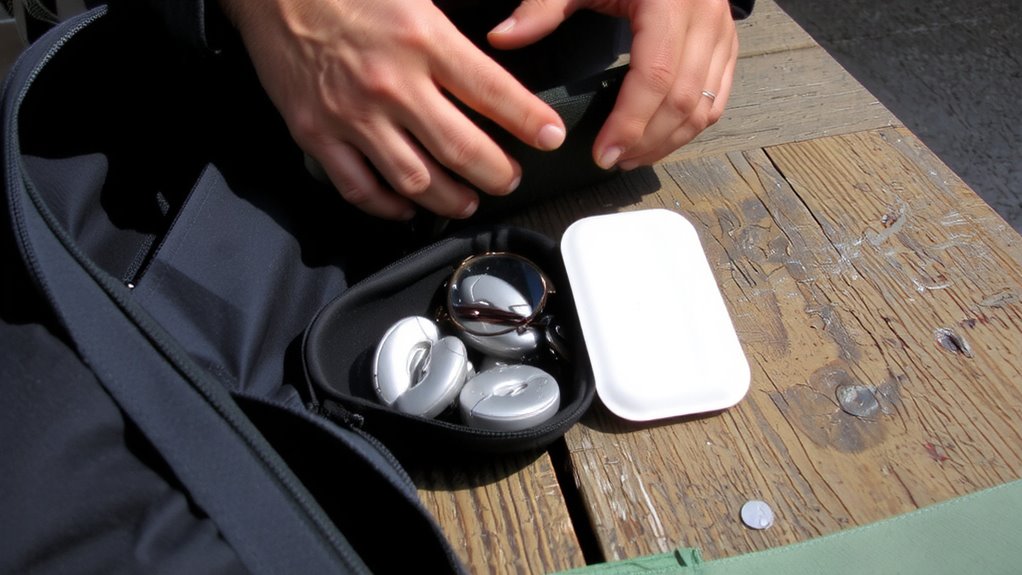
Even if you only need glasses part-time, you’ll want at least one backup pair in your go-bag-store them in a hard-shell case rated for impact resistance, like those made from polycarbonate or ABS plastic, since soft cases can collapse under pressure or fail during rough handling. Case durability matters because a cracked or deformed case might not protect your glasses during evacuation or transport. Choose a case with a secure latch and snug interior padding to prevent lens scratches. Label the outside clearly with your name and “SPARE GLASSES” in bold letters so it’s instantly identifiable. Include a microfiber cloth and a small bottle of lens cleaning solution inside the case-don’t rely on finding cleaning supplies later. A well-built case won’t guarantee your glasses survive every impact, but it substantially improves their chances in chaotic conditions. Replace worn cases regularly to maintain protection.
Keep Extra Hearing Aid Batteries and a Portable Charger
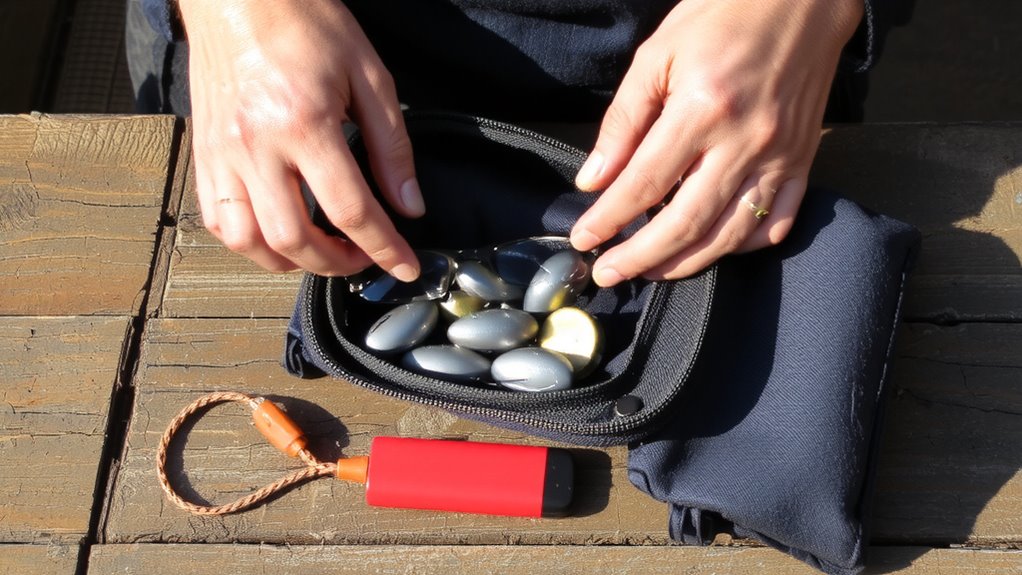
You won’t see hearing aid power on most emergency checklists, but running out of battery mid-evacuation can cut you off from instructions, warnings, or contact with others just when clarity matters most. Hearing aid batteries come in standard battery types-size 10, 13, 312, and 675-so pack extras matching your model and store them in a dry, labeled case. A portable charger compatible with your device gives you multiple recharges and reduces dependency on disposable batteries. Some hearing aids now support USB-C or wireless charging methods, which are efficient but require reliable power banks. Others still rely on zinc-air cells, which are lightweight but last only a few days. Weigh the trade-offs: rechargeables save long-term cost and waste but need access to electricity. Test your setup weekly. Include a 5,000–10,000mAh backup battery-it’s compact and typically recharges your device three to five times. For those using rechargeable hearing aids, consider pairing them with one of the best rechargeable batteries for backup power in your go-bag.
Use Clear Pouches for Quick Access to Vision and Hearing Gear
When seconds count during an evacuation, being able to grab your hearing aids, spare batteries, and prescription glasses without fumbling through layers of gear makes a real difference-so store them in a clear, durable zip-top pouch you can spot instantly in your go-bag. Use color coding to match pouches with family members or needs, improving retrieval speed. Apply waterproof labeling to maintain legibility after exposure to moisture. Clear pouches let you verify contents at a glance, reducing stress and saving time.
| Item | Benefit | Feature |
|---|---|---|
| Prescription glasses | Immediate vision access | Stays visible and protected |
| Hearing aids & batteries | Reliable function | Color-coded by user |
| Waterproof label | Endures damp conditions | Resists smudging, fading |
Check and Replace Critical Items Every 6 Months
Since some vision and hearing supplies degrade over time, you should check them every six months to guarantee they’re functional and up to date. Prescription lenses scratch, coating wears, and plastic frames weaken. Hearing aid batteries lose charge capacity, and expired spares may fail under load. Test your backup glasses for clarity and structural integrity. Confirm each battery batch date codes; replace if older than five months. Review your storage solutions to make certain they still protect against moisture and impact. Reorganize if needed to maintain fast access. Use emergency drills to simulate retrieval under stress-this exposes flaws in placement or packaging. Drills also confirm you remember where everything is after real-life bag shuffling. Rotate supplies on schedule, even if unused. Degradation isn’t always visible. Mark your calendar. Stick to the six-month rule. Consistency ensures reliability when it counts.
On a final note
You need clear vision and hearing when seconds count. Pack spare glasses in a hard case labeled with your prescription-plastics scratch, but metal frames hold up. Store extra hearing aid batteries in a dry, insulated pouch; they last 3–5 days per charge. Add a portable power bank that works in cold weather. Test replacements every six months. Skipping updates risks failure when outlets vanish. Simple, tested gear outperforms high-tech backups that fail under stress.