Ice Fishing Safety Tips and Tricks for Winter Survival Scenarios
You need at least 4 inches of clear, blue ice to walk safely-white or slushy ice is half as strong. Check thickness every 10–15 feet with a spud bar or auger, avoiding inlets and cracked zones. Dress in three layers: wicking base, insulating middle, and windproof outer. Carry ice picks, a signal mirror, and emergency supplies in a waterproof pack. Always go with a buddy and leave your plans with someone you trust. There’s more to know about staying safe when conditions shift fast.
Notable Insights
- Ensure ice is at least 4 inches thick and clear blue; avoid white or slushy ice, which is half as strong.
- Test ice thickness every 10–15 feet using an auger or spud bar for accurate, real-time safety checks.
- Wear a three-layer clothing system with moisture-wicking base, insulating middle, and windproof outer shell.
- Carry emergency gear like ice picks, signal mirror, and waterproof survival kit for self-rescue and signaling.
- Always ice fish with a buddy, establish clear signals, and share your plans with someone off-site.
Check Ice Thickness Before Heading Out
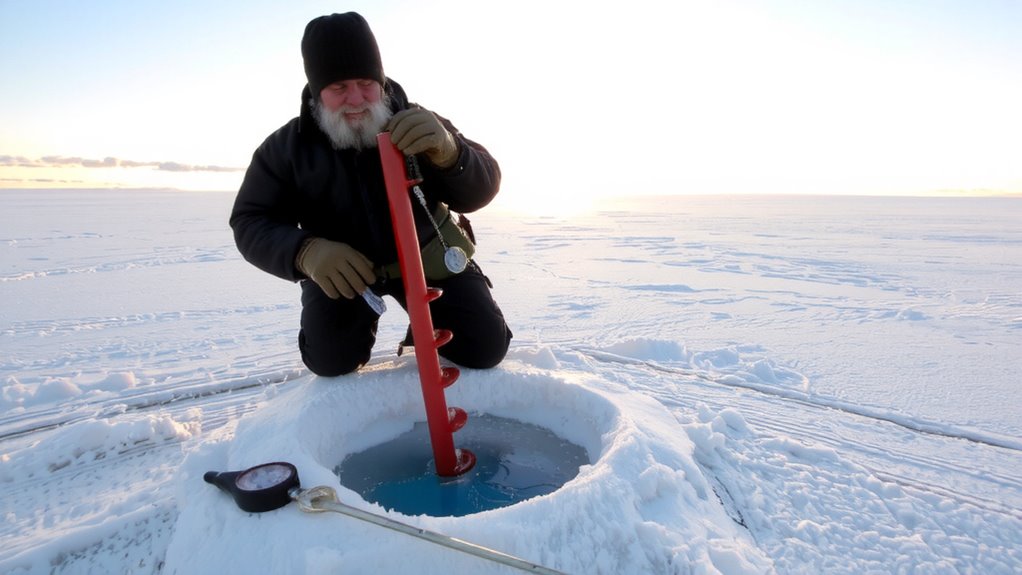
At least 4 inches of clear, solid ice is what you need for walking or ice fishing-less than that, and you’re taking a serious risk. You can’t rely on appearance alone; ice formation varies due to wind, current, and water depth. Clear ice is strongest, while white or slush游戏副本 iny ice is only about half as strong. Always test thickness every 15 feet when moving to new areas. Thaw cycles weaken ice markedly, even if temperatures drop again afterward-refreezing doesn’t restore structural integrity. Drilled holes let you measure directly: use a tape measure or ice chisel with depth markings. Avoid areas near inlets, outlets, or docks where flow disrupts ice formation. Early and late winter require extra caution due to unstable thaw cycles. Your safety depends on consistent checks, not assumptions.
Know the Safe Ice Thickness for Fishing
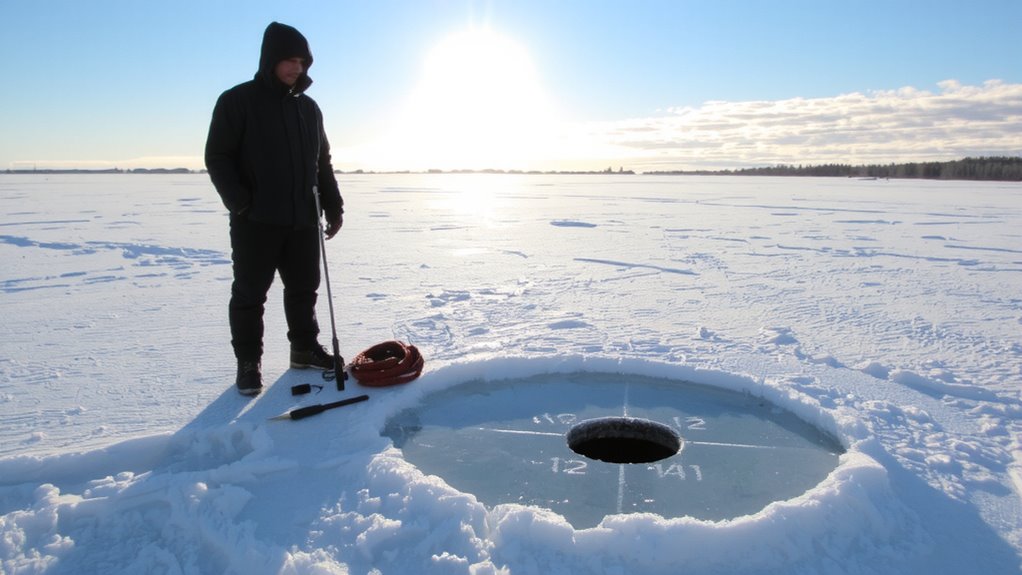
You need at least 4 inches of clear, solid ice to fish safely-it’s the minimum threshold for supporting a person on foot. Ice formation varies by water body, temperature, and time of season, so never assume uniform thickness. Clear or blue ice is strongest; avoid milky or white ice, which can be half as strong. Four inches work for walking or light use, but 5 to 7 inches are safer for groups or gear. Surface cracks are warning signs-they indicate shifting stress or weak zones caused by movement or changing temperatures. Check thickness every 10–15 feet when moving, especially near inlets, outlets, or around structures. New ice is usually stronger than aged ice with thaw cycles. If you see slush or hear cracking underfoot, leave immediately. Measuring ice depth with a spud bar or auger gives real-time data-don’t rely on visual guesswork. Safety hinges on consistent evaluation, not initial checks.
Dress in Layers to Survive Sub-Zero Temps
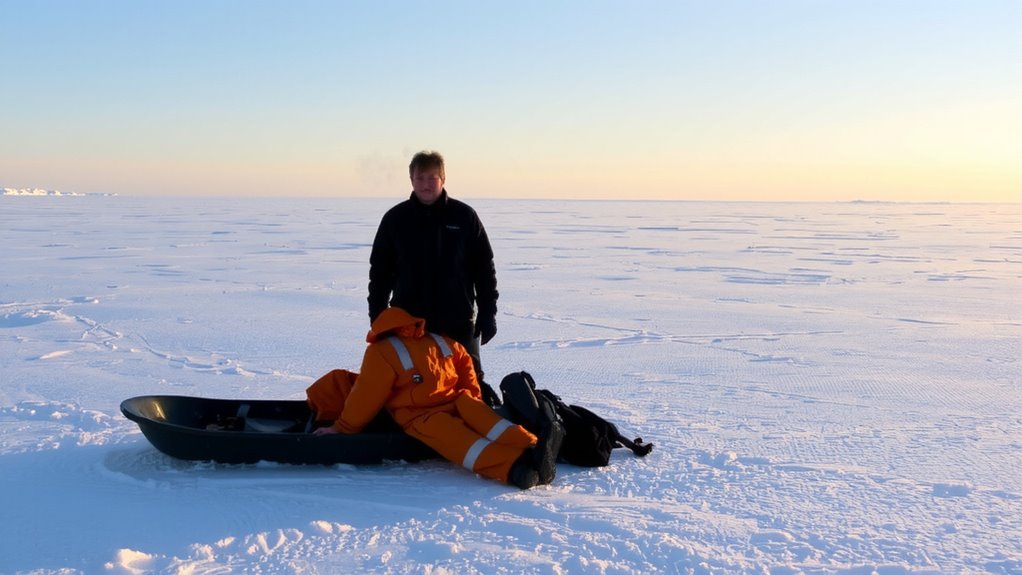
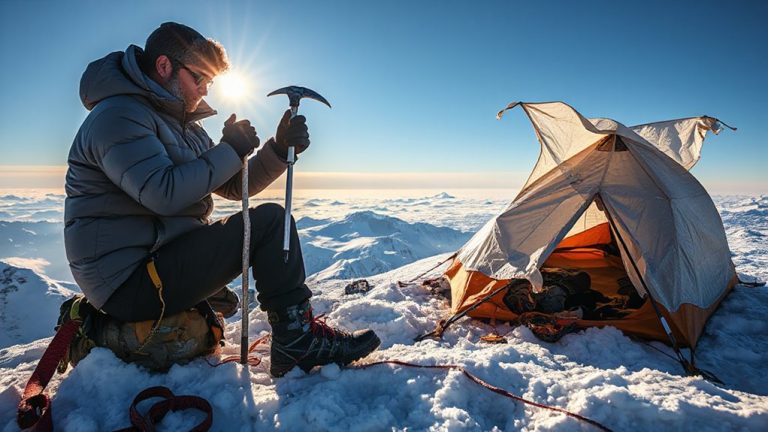
Though cold won’t slow you down if you’re dressed right, skipping layers can turn a good trip bad fast-especially when temperatures dip below zero. Wear three layers: a base layer of synthetic or wool fabric for moisture management, a middle layer like fleece or down for thermal insulation, and an outer shell that’s windproof and breathable. Cotton traps moisture and reduces insulation, so avoid it. Each layer has a role-wicking sweat, trapping heat, and blocking wind-so skipping one compromises the whole system. Real-world tests show layer wearers maintain core temperature 15–25°F better than those in single thick garments. Zipping or venting the outer layer helps regulate heat during movement. Wet skin loses heat faster, so moisture management isn’t just comfort-it’s safety. Adjust layers before you sweat heavily. This system works consistently across wind chills and activity levels, giving predictable warmth without bulk.
Carry Emergency Gear for Worst-Case Scenarios
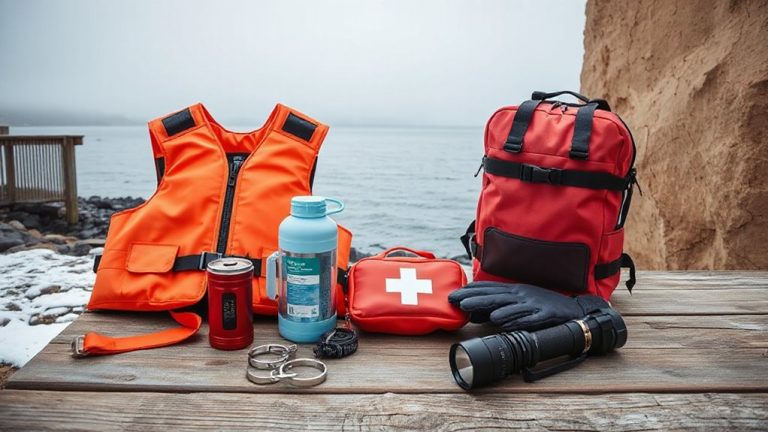
Staying warm starts with proper layering, but even the best-prepared anglers can face unexpected dangers once on the ice-like a fall through thin ice or getting stranded in a storm. That’s why carrying emergency gear is non-negotiable. A pair of ice anchors helps you pull yourself out if you break through, providing critical leverage on slippery surfaces. They’re lightweight, deploy quickly, and work effectively on most ice thicknesses. Include signal mirrors in your kit to increase visibility if you’re lost or immobile. A standard 3″ x 5″ mirror can reflect sunlight up to 10 miles under clear conditions, making it reliable for long-range signaling. Don’t rely on phone signals-weather and location often limit reception. Instead, combine ice anchors and signal mirrors with fire starters, extra batteries, and a first-aid kit in a waterproof pack. This setup covers key survival functions without excess weight or maintenance. Consider adding a compact survival kit to your gear for a pre-assembled, all-in-one solution that includes essential tools for winter emergencies.
Never Fish Alone: Always Bring a Buddy
If you’re heading out on the ice, bringing a partner isn’t just good advice-it’s a proven risk reducer. One person can spot danger the other might miss, like weak spots or shifting conditions. You can respond faster if someone falls through. Establish clear buddy signals before you go-simple gestures or sounds work best when visibility or hearing is low. These signals let you communicate urgency without confusion. Practice emergency drills together so both know how to act: one rescues, one calls for help. Drills reduce panic and improve coordination under stress. A partner doubles your gear, warmth, and decision-making capacity. Solo fishing increases exposure to risk with no backup. Even experienced anglers face sudden ice failure. Having someone there cuts survival time in cold water scenarios. You don’t need extra gear to bring a buddy-just coordination. It’s the simplest, most effective safety upgrade you can make.
Plan Your Route and Tell Someone Your Schedule
You’ve got a buddy with you, which cuts your risk considerably, but that’s not enough if no one else knows where you’re going or when you’ll be back. Share your travel plans with someone reliable before you head out. Include your route, expected return time, and exact fishing spot. This lets rescuers act fast if something goes wrong. Ice conditions can change suddenly due to temperature shifts or water currents, making previously safe areas risky. Even if you check thickness before leaving, unseen weaknesses may develop. A known schedule increases your chances of a timely search. Use a written note, text, or app-whichever delivers clear, traceable information. Don’t assume someone will notice you’re missing. Communication isn’t optional. It’s a basic safety layer. Plan carefully, report accurately, and adjust travel plans if ice conditions look doubtful. Always include an emergency preparedness checklist to ensure all critical safety items and procedures are accounted for.
On a final note
You’ll stay safe by checking ice thickness with a spud bar-4 inches for walking, 8 for groups. Dress in synthetic layers to manage moisture and heat. Carry ice picks, a throw rope, and a waterproof radio. Always go with someone; if you do go alone, mark your route and check in hourly. Cold kills quick, so skip shortcuts and trust only tested gear. Your life depends on preparation, not luck.